Ho Chi Minh City moves fast.
This private tour gives you a well-paced sweep through the city’s most important landmarks, from French-colonial icons to places locals actually use for worship and shopping. I like how the route mixes major stops with quieter, more human moments, especially at the Jade Emperor Pagoda and the War Remnants Museum. It’s also built for comfort with an air-conditioned vehicle, so you can keep your energy for walking and photos.
Two things I’d highlight right away: first, you get a lot of high-impact context in one day, so you’re not just ticking off sights. Second, it feels genuinely tailored to your group, not like you’re getting dragged around on a loud conveyor belt. One possible drawback: the day is packed with entrances and short time slots at several big attractions, so if you want long, slow museum time, you may wish you had a more flexible option.
In This Review
- Key highlights to look for
- A smart way to see Ho Chi Minh City in one day
- Independence Palace: where politics changed shape
- Saigon Central Post Office and Notre Dame: French colonial icons, explained
- Jade Emperor Pagoda: religion in daily use
- Phuongnam Lacquerware factory: seeing craft, not just souvenirs
- War Remnants Museum: the heaviest stop on the route
- Ba Thien Hau Temple and Cholon time: religion and street life
- Secret Weapon Cellar: a history stop you can picture
- The value of the $33.54 price tag
- Who this tour is best for
- Quick planning notes for a smoother day
- Should you book this private Ho Chi Minh City tour?
- FAQ
- What is the duration of the Ho Chi Minh City private tour?
- What is the price per person?
- Does the tour include pickup and drop-off?
- Is this a private tour or a group tour?
- Is there an English-speaking guide?
- Are entrance fees included?
- Is bottled water included?
- Are there times listed for the main stops?
- What should I budget for tipping?
- What is the cancellation policy?
Key highlights to look for
- French-colonial photo stops that help you understand how Saigon looked under outside influence
- War Remnants Museum for a serious, photo-heavy look at conflict and its aftermath
- Jade Emperor Pagoda and Ba Thien Hau Temple for real worship spaces, not just photo backdrops
- Lacquerware factory visit where you can watch traditional craft techniques in action
- Cholon market time at Binh Tay Market for a less-touristy shopping feel
- Secret Weapon Cellar that turns history into something you can actually picture
A smart way to see Ho Chi Minh City in one day
If you’ve only got one shot at Ho Chi Minh City, this tour is built for that. You start with heavyweight landmarks in the city center, then move out into parts of the city where daily life has a different tempo. The result is a day that feels balanced: government history, religion, craft, war, and markets all show up.
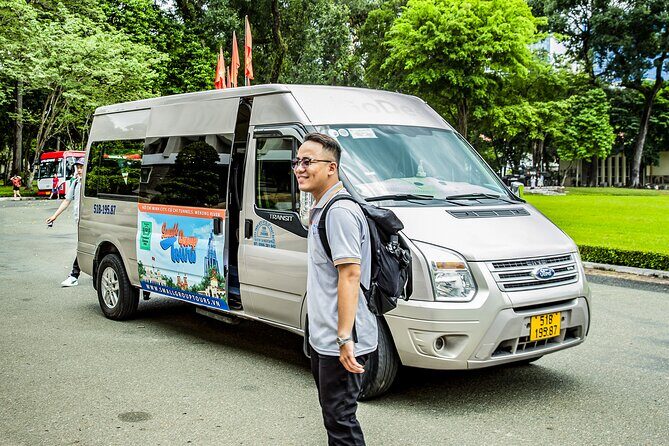
The private format matters here. Instead of constantly checking maps and crossing traffic on your own schedule, you’re guided between stops in an air-conditioned vehicle. You also get an English-speaking guide and a set of entrance fees handled for many of the core sights. That’s not just convenience. It usually means less time “figuring it out” and more time getting the story straight.
The pace is also worth noting. The day totals about 10 hours, and several stops are timed for a meaningful visit rather than an all-day linger. It’s ideal if you want breadth and context more than deep study of a single museum.
Independence Palace: where politics changed shape
Your day begins at the Independence Palace (also known as the Independence Palace of South Vietnam). It served as the residence and workplace of South Vietnamese President Nguyen Van Thieu during the past war. That matters because this isn’t a generic building you admire from the sidewalk. The rooms and layout are connected to how power operated at the time.
You’ll have about 40 minutes here, with the admission included. That’s enough time to get an overview, spot major features, and understand what you’re looking at—especially if your guide connects the building to the timeline of Saigon.
A practical tip: this is a location where you’ll probably want to pause and read signage carefully. If you rush, you’ll miss the small details that make the place make sense.
Saigon Central Post Office and Notre Dame: French colonial icons, explained
Next comes the Saigon Central Post Office. The experience is brief—about 15 minutes—but it’s a “you really should see this” kind of stop. It was built in the French colonial period, and the central location makes it an easy anchor point for understanding how Saigon’s streets were shaped.
After that, you get a short photo stop at Notre Dame Cathedral of Saigon. The stop is only about 5 minutes, with admission included, so think of it as a quick, high-impact moment. The cathedral’s role isn’t just architectural. It’s a symbol of how French influence showed up visually in everyday city life.
If you’re the type who likes architecture and city planning, these stops work well together. One is about civic function (the post office), the other is about religious and cultural presence (the cathedral). Put them in the same day and your brain starts to connect the dots.
Jade Emperor Pagoda: religion in daily use
Then you shift gears to the Emperor Jade Pagoda (Chùa Ngọc Hoàng). This visit lasts around 30 minutes and is one of those places where you can see what local people believe and how they worship.
The pagoda was built from 1892 to 1900, credited to a Chinese man named Luu Minh, who moved to Vietnam and supported his life through business. Understanding that background helps you see the temple as part of a community story, not a purely decorative stop.
Why I like this kind of visit: it’s not asking you to perform belief. It’s showing you practice—how worship happens, what people focus on, and how faith lives in the space. It’s also a great contrast after the political weight of the palace and the colonial feel of the cathedral and post office.
Phuongnam Lacquerware factory: seeing craft, not just souvenirs
After the temples, you’ll visit PHUONGNAM LACQUERWARE for about 30 minutes. This is where the tour gives you something hands-on in spirit: you learn how lacquerware is made and what the craft is actually based on.
Lacquerware as decoration was introduced from China during the first century CE. The key material is lacquer resin from a tree mixed with colored pigments. That technical detail helps. When you look at lacquerware later, you’re not just seeing shine. You’re seeing process.
This is also where your time can pay off if you’re the kind of traveler who likes to buy with confidence. If you want to bring something home, you’ll understand why pieces cost more when you see the real work behind them.
A small caution: this is still a scheduled stop, so don’t expect a full workshop experience. It’s a guided factory visit meant to get you oriented fast and leave time for the rest of the day.
War Remnants Museum: the heaviest stop on the route
No part of this tour is light, but the War Remnants Museum is the serious center of gravity. You’ll spend about 50 minutes here, with admission included. The museum was established in 1975, and it’s a compelling, photo-driven look at the impact of the war.
The collection includes images dedicated to deceased American and Vietnamese photographers and journalists from the French and American conflicts. That specific detail matters because it shifts the focus to the people who documented events—often at personal risk—and the value of photography as testimony.
What to expect: you’ll be in a space where the story is delivered through visuals and archival material, not just speeches. If you’re sensitive to war imagery, go in aware that it’s meant to be emotionally direct.
Still, it’s a must for anyone trying to understand Vietnam’s modern history beyond slogans. Pair this museum with the political setting of Independence Palace, and the day starts to form a timeline in your head.
Ba Thien Hau Temple and Cholon time: religion and street life
After the museum, the tour moves into Cholon (Chinatown) for Ba Thien Hau Temple. This stop runs about 30 minutes, with admission included. The temple is a spiritual masterpiece and one of the oldest Chinese temples in Ho Chi Minh City, built around 1760 by the Cantonese congregation.
This is a different kind of experience from the Jade Emperor Pagoda. You’ll still see worship in action, but the temple’s age and Cholon setting bring another flavor of Chinese-Vietnamese religious life. If you like comparing how communities show devotion in different places, this two-temple combination is smart.
From there, you get Binh Tay Market for about 30 minutes. This is a wholesale trading center in Ho Chi Minh City. Unlike the more tourist-focused Ben Thanh Market, Binh Tay gives you a more raw, authentic glimpse of local commerce. It’s the kind of stop where you can watch how people buy, bargain, and move goods through the market system.
One practical consideration: markets are busy and sensory-heavy. If you get tired easily, use the time to pick one or two things to focus on—spices, produce colors, or the rhythm of sales—rather than trying to take it all in at once.
Secret Weapon Cellar: a history stop you can picture
The day’s final unique element is the Hầm Vũ Khí Bí Mật Secret Weapon Cellar in District 3. It’s about 20 minutes and includes admission.
From the outside, it can look like an ordinary building, but inside you see a “hidden” Vietnam War story tied to the Saigon Rangers. This is the kind of stop that changes your understanding of history. Instead of reading about events, you’re seeing how things were staged and stored in real space.
This final segment works well after the museum and temples. You’ve gone from documented history (War Remnants Museum), to religious community life, to market street life. Then the tour brings you back to conflict in a physical, specific way.
The value of the $33.54 price tag
At $33.54 per person, the price is easiest to judge by what you’re not paying for yourself. The tour includes an English-speaking guide, an air-conditioned vehicle, entrance fees, and bottled water. There’s also pickup and drop-off within District 1 (center of city) as mentioned.
On a DIY day, entrance tickets and guided interpretation can add up fast, and you lose time while you work out routes. Here, the tour packages many of those costs and time sinks into one fee.
It’s also booked fairly far in advance (on average 58 days), which usually means people are planning carefully. If you want the private format, that’s another reason to lock it in early rather than waiting.
Who this tour is best for
This fits best if you want a single-day mix of:
- major landmarks in the city center
- religious sites where people actually worship
- one real craft stop (lacquerware)
- a museum that gives you hard historical context
- market time in Cholon
- a Vietnam War site with physical details
It’s also a good pick if you don’t want to string together multiple guides or jump between neighborhoods alone. The vehicle helps, and the guide keeps the day from turning into a checklist.
If your top priority is slow pacing—long museum reading or lots of free time—this may feel like “a lot.” But if your goal is getting oriented and leaving with a clear sense of what shaped Saigon, this route does that job.
Quick planning notes for a smoother day
Even with a schedule, your comfort choices matter. Wear shoes you can walk in comfortably, because you’ll move through several sites across different neighborhoods. Keep your camera ready for the photo-friendly architecture stops at Notre Dame and the central post office area.
Also, since bottled water is included, you can plan around that instead of spending time hunting for it mid-route. The guide can help you keep track of what to expect at each stop, which is especially helpful when time slots are short.
Should you book this private Ho Chi Minh City tour?
I’d book it if you want a guided “greatest hits with context” day. You’ll hit the French-colonial landmarks, see two major pagodas with different community backgrounds, understand lacquerware at least from the craft angle, get museum-level war context, and finish with market and a physical war-site setting.
I’d skip it or choose a different style if you strongly prefer long stays at fewer attractions, or if you know you’ll be overwhelmed by war imagery at the War Remnants Museum.
If you’re trying to make one day count in Ho Chi Minh City, this private tour is a strong deal: you get transportation, an English guide, entrance fees, and a route that ties the city’s story together in a way you can actually remember.
FAQ
What is the duration of the Ho Chi Minh City private tour?
The tour is listed as lasting about 10 hours.
What is the price per person?
The price shown is $33.54 per person.
Does the tour include pickup and drop-off?
Yes. Pickup and drop-off are offered within District 1 in the center of the city, as mentioned.
Is this a private tour or a group tour?
This is a private tour/activity, and only your group participates.
Is there an English-speaking guide?
Yes. The tour includes an English speaking tour guide.
Are entrance fees included?
Yes. Entrance fees are included for the tour.
Is bottled water included?
Yes. Bottled water is included.
Are there times listed for the main stops?
The schedule includes time allocations for each stop, including around 40 minutes at Independence Palace, 15 minutes at the Central Post Office, 5 minutes at Notre Dame Cathedral, 30 minutes at Jade Emperor Pagoda, and about 50 minutes at the War Remnants Museum.
What should I budget for tipping?
Tipping/gratuities for the tour guide and driver are not included.
What is the cancellation policy?
You can cancel for free up to 24 hours in advance for a full refund. If you cancel less than 24 hours before the start time, the amount paid is not refunded.