Street food is the fastest way to learn Saigon. This tour links you up with local-style eating in back alleys and markets, with an English-speaking guide who also points out the stories behind what you’re tasting. The big pull for me is the mix of iconic dishes and real neighborhood wandering.
I also like that the start and finish are simple. You’re picked up and dropped off at the War Remnants Museum area, then you head into District 3 and District 10 on foot—so you’re not stuck staring at menus, guessing what’s safe, or missing the good stalls.
One thing to keep in mind: it’s a walking food route for several hours. If you’re sensitive to heat, rain, or lots of steps, plan for that before you book.
In This Review
- Key things I’d highlight before you go
- War Remnants Museum to Street Stalls: The smart start
- The 4-hour route: District 3 and District 10 on foot
- The food plan: 8 classic dishes plus enough tastings to count as dinner
- Nguyen Thien Thuật: the oldest apartment stop (and why it matters)
- Flower market at night and the night-market walk
- English-speaking guides like Finn, Daniel, Long, and Chau
- Price and value: $33 buys structure, not just plates
- Logistics made easy: mobile ticket, start/finish, and timing
- Who this tour fits best
- Should you book this Saigon walking street food tour?
- FAQ
- Where does the tour start?
- Where does the tour end?
- How long is the tour?
- What’s included in the price?
- How much does the tour cost?
- What dishes are part of the tastings?
- Is pickup and drop-off provided?
- Is there free cancellation?
Key things I’d highlight before you go
- Pick-up and drop-off at War Remnants Museum makes the start feel low-stress
- District 3 + District 10 alley routes with night-market energy
- Nguyen Thien Thuat stop (the oldest apartment in the city) adds context to the food
- 8 popular Vietnamese dishes plus foods and drinks that add up to a full meal
- Night flower market stop for a strong sense of local city life
- English-speaking guides who can answer questions and adjust around preferences
War Remnants Museum to Street Stalls: The smart start
The meeting point is Bún Bò Xưa, near the War Remnants Museum area, and the tour ends back at the same place. That matters because a food tour can turn into a puzzle if you’re trying to meet up in a far-off district and later find your way home. Here, you get an organized route, then you’re released right back where you started.
This is also a practical way to time your evening. War Remnants Museum is an easy landmark to aim for, especially if you don’t want to rely on taxis or complicated directions. Once you’re with the guide, you’re taken straight into the parts of Saigon where the food is local-by-default: alley-side stalls, small places you’d likely skip on your own, and street scenes that change minute to minute.
And the tour’s format is designed for momentum. You don’t just taste a dish and move on; you walk through neighborhoods while the guide ties each stop to what people actually do—how they eat, when they eat, and why certain combinations make sense. That’s how the food stops start feeling like a guided night out, not a checklist.
The 4-hour route: District 3 and District 10 on foot
The tour runs about four hours. In that time, you’ll cover a lot of ground by walking through hidden alleyways, markets, and night scenes, mainly in District 3 and District 10. The payoff is that you see more than one “type” of Saigon food area. You get the small-stall vibe, the market vibe, and the night-market vibe, all in one outing.
District 3 is where many first-timers start looking for dinner, but the point here is that you’re not walking the main strips only. The guide takes you through back streets where the pace feels more local—vendors, flower market activity, and regular street-life you don’t stumble into if you stay on the most obvious routes.
District 10 adds variety too. Without getting too specific beyond what the tour description states, it’s the kind of shift that helps you notice how tastes and dining styles can change city to city and block to block.
One practical note: this is a walking itinerary. Even if you’re not covering extreme distances, you’ll spend real time on your feet. One review specifically calls out that rain didn’t stop the walking and that there were lots of steps. Bring a light rain layer or compact umbrella if you’re traveling during wet months, and wear shoes you trust for uneven sidewalks.
The food plan: 8 classic dishes plus enough tastings to count as dinner
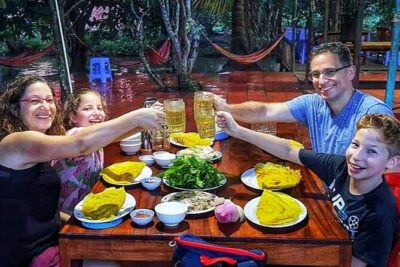
This is advertised as tasting 8 of the most popular local Vietnamese dishes over about four hours, with foods and drinks included. In practice, it often feels like more than eight items because the route builds a full eating rhythm: salty bites, noodle or soup moments, a sweet stop, and drinks along the way.
Here are the dish types the tour specifically names:
- Pho
- Bún thịt nướng (grilled pork with vermicelli-style elements)
- Bánh mì
- Nước mía (sugarcane juice)
- Bánh xèo
What I like about this lineup is that it gives you variety in texture. You get bread (bánh mì), a crispy savory pancake (bánh xèo), and noodle-based comfort (pho and bún thịt nướng). Then sugarcane juice is a smart palate reset—sweet, cooling, and easy to sip while you’re moving.
You may also encounter additional sweet and snack-style stops that show up in people’s accounts of the tour, like banana dessert or banana-flower elements, plus items such as rice-roll style dishes and noodle plates. One person even described dry noodles as a standout. The common thread is that the guide isn’t just offering one “famous dish” at each place; you’re getting small-format servings that keep your appetite active through the whole route.
And yes, the tour is meant for a hungry start. Multiple accounts stress that there’s so much food you can’t finish everything. That’s the value play: at $33 per person, you’re buying time, guidance, and a structured lineup—rather than trying to piece together a meal from scratch while also figuring out what’s good right now.
Nguyen Thien Thuật: the oldest apartment stop (and why it matters)
One of the named highlights is Nguyen Thien Thuật, described as the oldest apartment in the city. Even if you’re mostly here for food, this stop is a useful anchor. It turns the experience from purely eating into city-understanding in small doses.
Here’s why that matters for you: food in Saigon isn’t separated from daily life. People eat where they live, where they work, and where they can gather with neighbors. When your guide points out an older apartment building as part of the food route, it gives you context for how neighborhoods evolved and how street activity fits into ordinary routines.
It also breaks up the walk. You get more than a constant line of food stops. Between tastings, you get a moment that slows you down just enough to absorb what the area means—then you’re back on the move, with a better sense of why certain stalls and streets feel the way they do.
Flower market at night and the night-market walk
A “big flower market at night” is called out as a highlight, plus you’ll see night-market areas during the route. This part matters because it’s not only a photo stop. Flower markets in Vietnam are tied to daily events—religious offerings, celebrations, and everyday beauty.
So when you’re walking with your guide through that kind of nighttime scene, the smells and sounds explain the setting around your meals. You’re not just eating next to a street stall; you’re eating inside a live city ritual.
Night markets also change the way street food tastes. Expect a different pace and crowd mood than a daytime market. That’s where the tour guide’s timing helps. Instead of rushing from place to place, you’re guided to where food is actually being served and where the scene feels right—then you get a sequence of tastings that keep your appetite steady.
If you’re the type who likes both food and atmosphere, this is one of the strongest reasons to book a tour instead of going solo. You’d be able to eat on your own, sure. But you’d miss the narrative tie-in: why this street looks like this at this hour, and how that connects to what people are buying and cooking.
English-speaking guides like Finn, Daniel, Long, and Chau
The tour’s big selling point is the guide. It’s English-speaking, and accounts of guides—names like Finn, Daniel, Long, Chau, Steven, Leon, Tom, and Harry show up across people’s experiences. That gives you confidence you won’t be stuck with a language barrier when ordering or asking questions.
What I think you’ll value most is how guides handle the human side:
- They explain what you’re eating and how locals typically enjoy it.
- They answer questions about city life and food choices.
- They can be accommodating with preferences and needs.
One account mentions a guide being considerate of a partner’s mobility needs. That doesn’t mean every stop is perfectly the same for every person, but it suggests the guides pay attention to how people are doing and adjust when they can.
If you’re a first-timer in Ho Chi Minh City, this matters even more. Street food is easy to enjoy but harder to order with confidence if you don’t know what to ask for. A good guide reduces stress and helps you focus on eating instead of decoding menus.
Price and value: $33 buys structure, not just plates
Let’s talk value without pretending it’s magic. $33 per person for about four hours with an English guide plus foods, drinks, and dinner is a fair deal in Ho Chi Minh City terms—especially because you’re getting:
- A planned route through multiple districts
- Named dish categories that are classic, not random
- Drinks included (not just water)
- The time savings of not figuring out which stalls to hit in what order
Eating street food on your own can be cheaper, but it comes with a hidden cost: your time and attention. You’ll spend effort searching for places, reading menus, and guessing what’s worth your money right now. Here, you pay for the guide’s local connections and the sequencing, so the evening moves smoothly.
The other value point: you don’t just taste one thing. With the mix of pho, grilled-pork vermicelli-style plates, bánh mì, sugarcane juice, and bánh xèo, plus extra tastings that people describe such as sweet banana desserts and different noodle formats, you leave with a full meal experience.
So if you want the highest food-per-hour ratio and the easiest logistics, this price makes sense. If you already know exactly where you want to eat and you’re comfortable ordering confidently without help, you could DIY. But for most visitors, paying for structure is worth it.
Logistics made easy: mobile ticket, start/finish, and timing
This tour uses a mobile ticket, and you’ll receive confirmation at the time of booking. The description also notes that the meeting area is near public transportation, which helps if you’re not staying exactly next door.
The start and end being at the meeting point is practical. You don’t have to worry about finding your ride after you’ve spent hours walking and eating. You also don’t need to backtrack through streets you didn’t see on the way in.
One more scheduling tip: the tour is typically booked in advance (on average about 37 days ahead). That’s a good sign the dates you want can fill up. If your trip has tight timing, don’t wait until the last minute.
And again, since it’s a walking route, plan your evening around comfy shoes and weather. You’re also likely to be full by the end, so avoid scheduling anything heavy right after.
Who this tour fits best
This experience is a great match if:
- You’re in Ho Chi Minh City for a short trip and want the food highlights without spending half your day searching
- You want a guide to help you order and explain dishes
- You like walking through neighborhoods, especially at night
- You enjoy variety: noodles, bread, savory pancakes, and sweet drinks
It may be less ideal if you:
- Need a fully seated or minimal-walking experience
- Have strict dietary rules (the tour includes foods and drinks, and the dish lineup is planned rather than à la carte)
If you’re in the middle—curious but cautious—you’re still in good shape. The guide format and the structured tastings reduce the guesswork.
Should you book this Saigon walking street food tour?
I’d book it if you want Saigon food in an organized, low-stress way: four hours, an English-speaking guide, 8 named dish categories, and night-market scenes that help the food feel tied to the city instead of random.
Skip it (or at least reconsider) if you hate walking in crowds or you can’t handle extended time on your feet. Also think twice if you’re extremely picky or have strict dietary limits, since the tour is set up as a planned tasting sequence.
My rule of thumb: if your goal is to eat well and learn fast, this tour does that. If your goal is total control over exactly what you eat and where you go, you may prefer a DIY approach. Either way, you can’t go wrong by planning around appetite and comfort—this one is designed to leave you satisfied.
FAQ
Where does the tour start?
It starts at Bún Bò Xưa, 148bis Lê Thị Riêng, Phường Phạm Ngũ Lão, Quận 1, Thành phố Hồ Chí Minh, Vietnam.
Where does the tour end?
The tour ends back at the meeting point.
How long is the tour?
It’s about 4 hours.
What’s included in the price?
Included are the friendly English-speaking guide, foods & drinks, and dinner.
How much does the tour cost?
The price is $33.00 per person.
What dishes are part of the tastings?
The tour includes 8 popular local Vietnamese dishes, including pho, bún thịt nướng, bánh mì, nước mía, and bánh xèo.
Is pickup and drop-off provided?
Yes—there is hassle-free pick-up and drop-off at the War Remnants Museum.
Is there free cancellation?
Yes, free cancellation is available. You can cancel up to 24 hours in advance for a full refund.