REVIEW · VUNG TAU
Ho Chi Minh City – 3 Day Meditation & Monastic life experience
Book on Viator →Operated by The Bodhi Journey · Bookable on Viator
That bell sets the tone fast.
This 3-day meditation and monastic-life experience at Thiền Tôn Phật Quang in Vũng Tàu centers on the real rhythm of Buddhist practice, with structured help on the meditation method plus time to study core ideas behind the rituals. I like that it is not vague “sit and hope” meditation. It comes with guidance and a clear daily flow.
What really makes it click is the mix of mind training and real-world service.
You’ll do hands-on volunteer work and get practice in simple, practical tasks such as making tofu, tea, and cakes, alongside study and respectful monastic rituals focused on gratitude, loving-kindness, and compassion. In one account, a guide named Hung Nguyen helped answer questions patiently, even when communication was limited.
One consideration: the schedule is intense.
Expect an early wake-up with a great bell around 4:00, plus meditation, chanting, and a morning Qigong/martial arts session. If you’re not used to meditating or you dislike early mornings, this will feel like a serious workout for both body and mind.
In This Review
- Key highlights at a glance
- Why Thiền Tôn Phật Quang feels different from a typical retreat
- The 3-day rhythm: early bells, mindful sessions, and gratitude meals
- Day 1 (10:00 onward): welcome, vegetarian gratitude meals, and learning by doing
- Day 2 (4:00 wake-up): chanting, Qigong/martial arts, and deeper consistency
- Day 3 (4:00 wake-up to 13:00 return): final practice and letting it land
- What’s included (and what isn’t): food, drinks, and the transport gap
- Price and value: why $85 can make sense here
- Logistics you’ll want to plan before you go
- Who should book this monastery meditation stay
- My booking checklist: how to make the most of it
- Should you book the 3-day meditation and monastic life experience?
- FAQ
- FAQ
- Where does the experience take place?
- What are the main meditation and practice times?
- How long is the retreat?
- What’s included in the price?
- Is transport included?
- What should I expect to do besides meditation?
- Do I need to bring a ticket?
- What’s the cancellation policy?
Key highlights at a glance
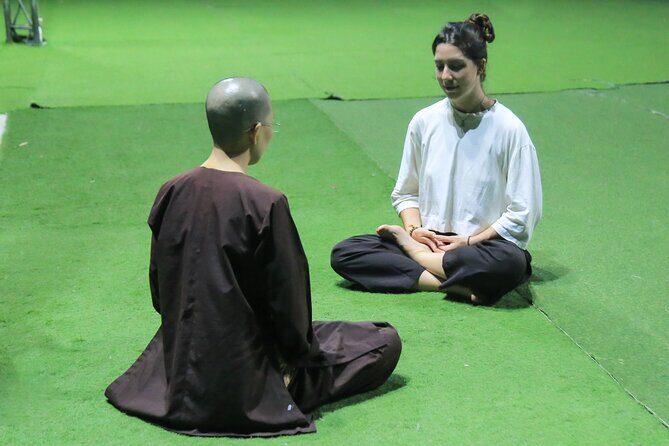
- Guided meditation method with repetition and direct instruction
- Chanting + loving-kindness/compassion rituals as daily practice
- Hands-on volunteer work plus cooking basics like tofu and tea
- Morning bells and early sessions that build focus quickly
- Qigong/martial arts to balance sitting with movement
- Friendly support (including help from Hung Nguyen in at least one experience)
Why Thiền Tôn Phật Quang feels different from a typical retreat
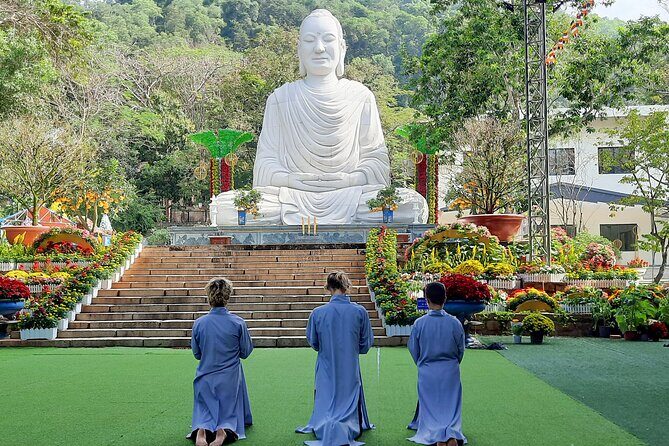
If you’re chasing “peace and quiet,” this experience gives you more than a quiet room. The whole schedule is built to train attention and attitude. You’re not just watching meditation from the outside. You’re living the monastery routine closely enough to feel how practices connect: sitting leads into chanting, and chanting leads into work, meals, and daily conduct.
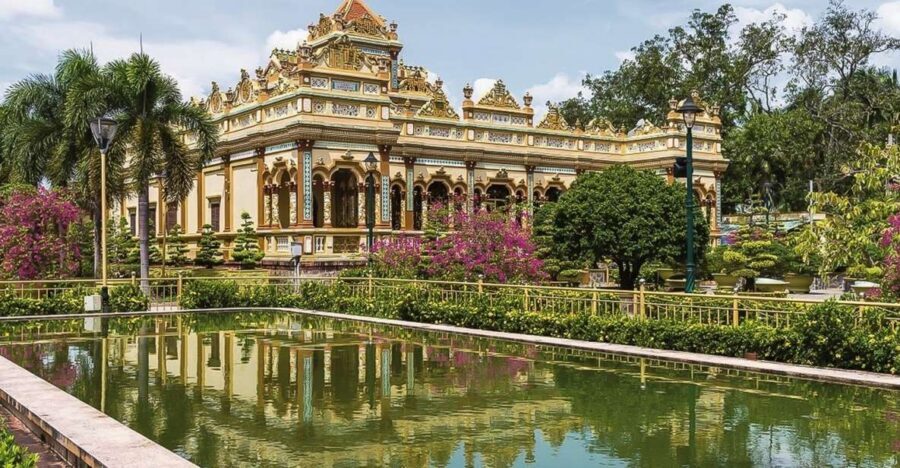
The setting also matters. Thiền Tôn Phật Quang is the center of the experience, and everything points back to it: welcome and check-in, meals, guided meditation sessions, volunteer time, and the morning wake-up bell. That repeat structure is a gift for your brain. Instead of “new activity every hour,” you get a stable pattern that helps you settle in.
One more thing I like: the focus is practical. You’re learning what to do, not only hearing philosophical talk. The experience is described as teaching the correct method of meditation and studying profound Buddhist doctrines through the routines you actually perform.
You can also read our reviews of more city tours in Vung Tau
The 3-day rhythm: early bells, mindful sessions, and gratitude meals
The itinerary is built around a repeating arc: morning wake-up, meditation and chanting, then Qigong/martial arts, breakfast, and volunteer work. Later you return for a “Mindful Odyssey” style meditation session, plus more ritual practice and gratitude-focused meals.
That structure is not random. The idea seems to be training three things at once:
1) Attention (meditation sessions at set times)
2) Emotion and intention (chanting and compassion/thankfulness rituals)
3) Embodied practice (Qigong/martial arts plus volunteer work)
You’ll notice how the days keep returning to gratitude meals. Those vegetarian meals aren’t just food stops. They reinforce mindfulness and appreciation as part of monastic life.
Also, don’t ignore the name components in the schedule. “Enlightening Mindful Odyssey” shows up on Day 1 and Day 2 as a scheduled meditation session. That tells you the retreat isn’t only sunrise practice. It keeps guiding you in the afternoon too, so you keep working on focus after the morning “freshness” fades.
Day 1 (10:00 onward): welcome, vegetarian gratitude meals, and learning by doing
Day 1 starts at 10:00 with welcome and check-in at Thiền Tôn Phật Quang (the meeting point is listed at núi Dinh, thôn Chu Hải, Phú Mỹ, Bà Rịa – Vũng Tàu, Vietnam). From there, the day quickly moves into community-style practice.
At 11:00, you’ll have a “grateful meal,” with vegetarian lunch included. This is the first taste of how the retreat blends nourishment and ritual. Even if you know nothing about Buddhist custom, the format is straightforward: you eat as part of the day’s mindfulness rhythm.
Then around 14:00, you step into the “Enlightening Mindful Odyssey” meditation session. This is one of the core guided blocks. Think of it as the retreat’s structured training time, where you’re learning the correct approach rather than just copying a posture.
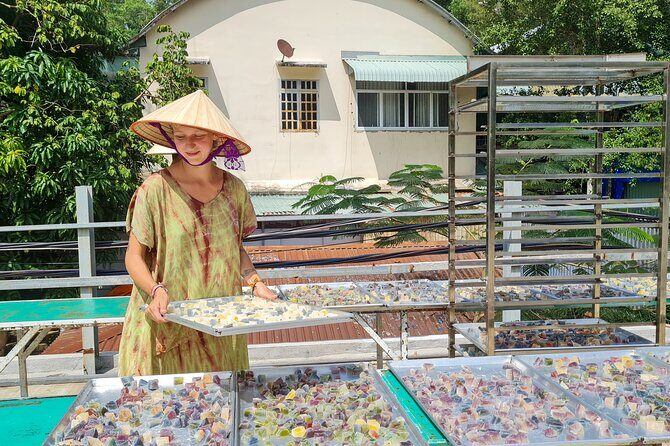
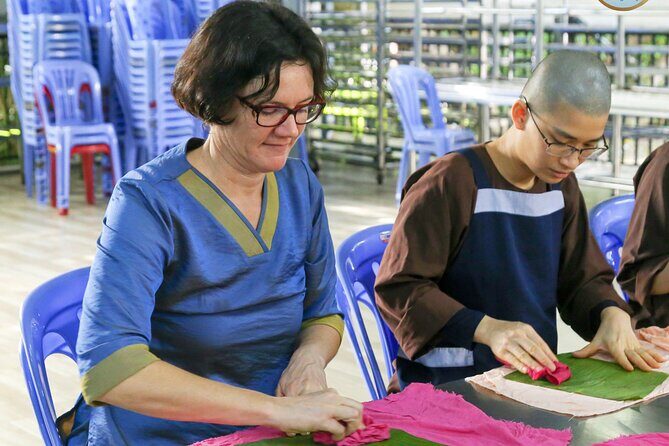
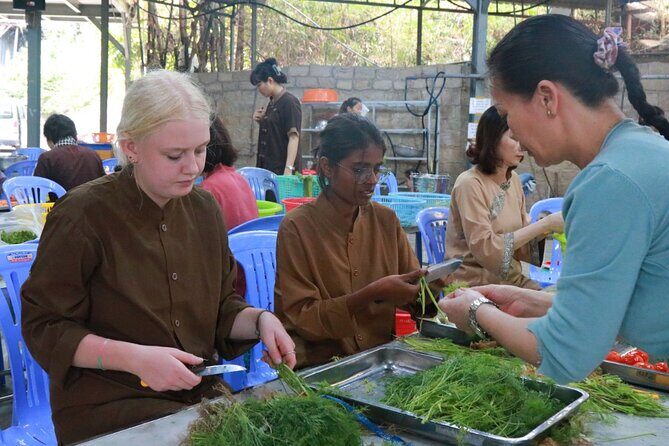
At 15:00, the schedule shifts toward “countless blessing” and volunteer work. This is where the experience becomes more than meditation. You’ll help with practical tasks tied to monastic daily life, including learning to make cakes, tea, tofu, and cooking. I like this part because it gives your mind a job. Even when meditation is challenging, the volunteer tasks keep you engaged and connected to the community.
A small practical note: if you’re the type who gets restless sitting still, Day 1’s mix of guided meditation and hands-on work is a strong entry point. You don’t only struggle through quiet. You balance it with useful activity.
Day 2 (4:00 wake-up): chanting, Qigong/martial arts, and deeper consistency
Day 2 is where the retreat really shows you its center: early mornings, repeated practice, and discipline that feels normal once you’re in it.
You’ll wake with a great bell around 4:00, then go into 4:30 meditation. At 5:30, there’s chanting. Then at 6:30, you’ll do QiGong / martial art practice.
This combo is important. Meditation trains stillness and attention. Chanting adds breath, voice, and rhythm. Qigong/martial arts shifts your training from “only sitting still” to moving with intention. For many people, that physical element makes the day more sustainable. You can’t only rely on willpower to sit through everything.
At 7:00, breakfast is included. Then at 8:00, you’re back into volunteer work. That’s a key monastic-life point: service is not a break from practice. It’s practice in a different form.
Then at 11:00, you’ll take another “grateful meal,” followed by vegetarian lunch included. Later, at 14:00, you return for the “Enlightening Mindful Odyssey” meditation session again. This second guided meditation block is the real test of whether the retreat is changing your mind, because by mid-afternoon you’ve been active and you’ve lived through the morning routine.
Some people find this day mentally challenging at first, especially if you’re not used to meditating for long sessions multiple times per day. But the structure is also what helps. There’s nowhere to get lost. The schedule guides you back again and again.
Day 3 (4:00 wake-up to 13:00 return): final practice and letting it land
Day 3 follows the early schedule again: the great bell around 4:00, 4:30 meditation, 5:30 chanting, and 6:30 QiGong / martial arts. Breakfast arrives at 7:00, then 8:00 volunteer work and a 11:00 grateful meal with vegetarian lunch included.
Then, the day has a clear endpoint. At 13:00, you return toward Ho Chi Minh City. The tour ends back at the meeting point, but the itinerary explicitly says you go back to Ho Chi Minh City at that time.
That timing matters if you’re planning the rest of your trip. This is not a “hang around until sunset” kind of retreat. It’s structured and time-bound. The best way to treat Day 3 is like a finishing ritual: show up, keep it simple, and don’t rush your mind too hard to “feel enlightened by noon.”
One more thing I appreciated in the overall description: the retreat is designed around gratitude, loving-kindness, and compassion practiced through solemn Buddhist rituals. When you do the same practices multiple days in a row, it’s easier to notice what changes in your attitude. Not necessarily dramatic fireworks. More like a quieter mental baseline.


What’s included (and what isn’t): food, drinks, and the transport gap
This experience prices at $85 per person for about 3 days with mobile ticket delivery. Food is a major part of the value here: it includes food and drinks, plus 2 breakfasts, 3 lunches, and 2 dinners.
That meal coverage is not just convenience. Meals help you stay inside the routine. You don’t spend your time hunting for food or breaking the rhythm by leaving the monastery for snacks.
What’s not included is transport. So you need to handle getting to the meeting point in the Vũng Tàu area. The tour states it is near public transportation, which helps if you’re traveling independently, but you should still plan your arrival buffer. Starting at 10:00 on Day 1 means you don’t want to cut it close.
Also, note the “maximum of 1,000 travelers” cap listed for the activity. That doesn’t guarantee it will be crowded. But it does mean the provider can run at scale. In a retreat setting, the vibe can still feel calm and respectful, especially if the group is not large at your specific session time.
Price and value: why $85 can make sense here
At first glance, $85 for 3 days sounds like a bargain. But the real question is what you get for the money.
You’re paying for a structured teaching and practice schedule, not just a quiet overnight place. The experience includes:
- Guided meditation sessions (including “Enlightening Mindful Odyssey” blocks)
- Chanting and ritual practice
- QiGong / martial arts instruction
- Volunteer work within the daily routine
- A full set of included meals and drinks
If you’ve ever paid for meditation class series in a city, you know guided sessions and ongoing support cost money. Here, the guidance is tied into the monastery routine, which is a different category than a one-hour studio class.
The main “value trade” is the early wake-up and the commitment level. If you want a relaxed, late-start vacation, this won’t match. But if you want a focused reset with structure, the price can be very fair for what is included.
Logistics you’ll want to plan before you go
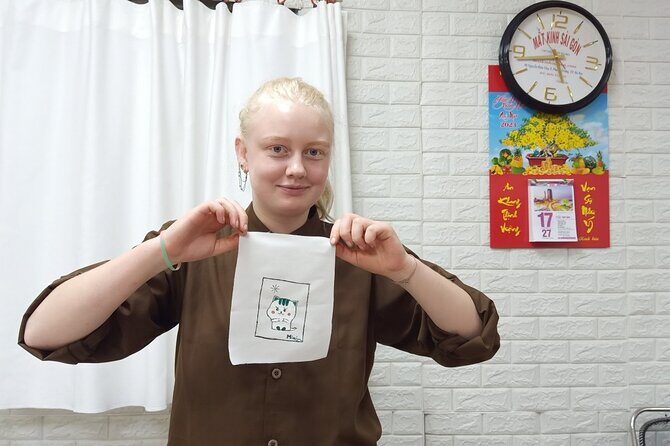
Start by aligning your expectations with the schedule. This is not a “sleep in and yoga later” getaway.
Here’s how I’d plan around it:
- Expect early mornings with guided sessions through the morning
- Be ready for meditation practice even if you’re a beginner
- Treat volunteer work as part of the experience, not something you can rush
- Wear/pack for movement, since Qigong / martial arts is on the timetable
- Bring a calm attitude. The retreat depends more on respectful participation than on language fluency
Language support isn’t spelled out in the core details. Still, at least one experience referenced a guide named Hung Nguyen who was patient and ready to clarify questions. If you speak little Vietnamese, don’t panic. Show up curious and polite, and rely on the guided structure.
Also, the tour provider is The Bodhi Journey, and you receive confirmation at booking time. The ticket is delivered as a mobile ticket, which keeps the hassle low.
Who should book this monastery meditation stay
This fits best if you want:
- A structured meditation experience where you learn the correct method, not just do “silent time”
- Daily rituals focused on gratitude, loving-kindness, and compassion
- A mix of sitting practice plus Qigong/martial arts and volunteer work
- A trip that feels grounded in monastic routine rather than tourism
It’s also a good choice if you like practical learning. The cooking-related tasks (tofu, tea, cakes) give your hands something to do while you practice patience and attention.
Who might reconsider:
- You dislike early mornings and long practice blocks
- You want fully flexible free time and a slow pace
- You want a trip with lots of sightseeing built in
My booking checklist: how to make the most of it
If you’re deciding between “I’ll try it” and “I’ll pass,” here’s the checklist that usually helps me make a call:
- Can you handle waking around 4:00 for meditation and chanting?
- Are you okay doing at least a few guided sessions even if your mind wanders?
- Do you feel comfortable with quiet rules and respectful monastic participation?
- Will you be able to show up early enough on Day 1 (10:00 start) to settle in?
If you said yes to most of those, this is likely a meaningful experience.
Should you book the 3-day meditation and monastic life experience?
Book it if you want a reset with real structure: meditation guidance, chanting, Qigong/martial arts, volunteer service, and included vegetarian meals, all centered at Thiền Tôn Phật Quang with a routine you can actually follow.
Consider another option if you want a relaxed vacation, late starts, or a schedule that leaves you lots of free time. This retreat runs on discipline. That’s the point, and it’s exactly what makes it powerful.
FAQ
FAQ
Where does the experience take place?
It takes place at Thiền Tôn Phật Quang in the Vũng Tàu area, with the meeting point listed as núi Dinh, thôn Chu Hải, Phú Mỹ, Bà Rịa – Vũng Tàu, Vietnam. The experience ends back at the meeting point.
What are the main meditation and practice times?
The schedule includes meditation and chanting in the early morning, with a wake-up bell around 4:00, meditation around 4:30, chanting around 5:30, and QiGong/martial arts around 6:30. Additional meditation sessions are scheduled around 14:00 on Day 1 and Day 2.
How long is the retreat?
It’s a 3-day experience, with approximate duration listed as about 3 days.
What’s included in the price?
The price includes food and drinks, plus dinner (2), breakfast (2), and lunch (3). Admission tickets are included.
Is transport included?
No. Transport is not included. The meeting point is listed as near public transportation.
What should I expect to do besides meditation?
You’ll participate in chanting and daily volunteer work. You’ll also learn practical tasks during the volunteer time, including making cakes, tea, tofu, and cooking.
Do I need to bring a ticket?
You’ll use a mobile ticket. Confirmation is received at the time of booking.
What’s the cancellation policy?
Free cancellation is offered. You can cancel up to 24 hours in advance for a full refund. If you cancel less than 24 hours before the start time, the amount paid is not refunded. Cut-off times are based on local time.