REVIEW · HO CHI MINH CITY
Small-group Saigon City Tour: 4-Hour Must-see Iconic Landmarks
Book on Viator →Operated by Asiana Link Travel · Bookable on Viator
History moves fast here. In just about 4 to 5 hours, you’ll see Saigon’s big turning points and its everyday street faces, guided by a Vietnamese English-speaking storyteller. This is a smart way to get your bearings fast without getting stuck in the city’s traffic chaos.
I especially like the small-group feel (max 12) and the steady pacing. I also like that hotel pickup and drop-off are included for Districts 1, 3, and 4, plus bottled water is taken care of.
One consideration: the War Remnants Museum is included but time is limited, and the visit can be emotionally intense. If you want to read every label slowly, you’ll probably wish you had longer.
Top reasons this tour is worth your time
- Iconic sites in one half-day: Reunification Palace, War Remnants Museum, Central Post Office, Jade Emperor Pagoda, and Ben Thanh Market
- Small-group attention: max 12 people, with guides who explain how each place fits into Saigon’s story
- Air-conditioned comfort: you cover distances by minivan instead of roasting in traffic
- Notre Dame is a pass-by: it’s under renovation, so you won’t stop for photos there
- Guides make it click: names like Vin, Stark, Kevin, Nam, Viet, Luan, Loi, and Anthony show up in strong reviews for clear, engaging explanations
In This Review
- A 4-Hour Saigon Primer You Can Actually Use
- Meeting Point at Asiana Link Travel and How Pickup Works
- Reunification Palace: Seeing Vietnam’s Turning Point Up Close
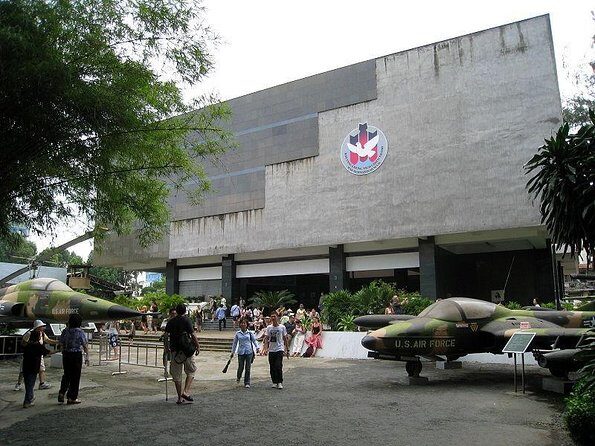
- War Remnants Museum: Powerful, One-Visit Heavy, and Time-Limited
- Saigon Central Post Office: Colonial Architecture Still Works as a Landmark
- Notre Dame Cathedral: You’ll See It, Just Not Up Close
- Emperor Jade Pagoda and Ben Thanh Market: Religion and Everyday Saigon
- Small-Group Comfort: The Minivan, the Pace, and the Guide Energy
- Price and Value: Why $30 Can Feel Like a Deal
- What to Expect Day-of (and What Might Surprise You)
- Should You Book This Saigon Landmarks Tour?
- FAQ
- How long is the Saigon city landmarks tour?
- Is pickup included, and where does it work?
- What’s the meeting point?
- Which major places are included on the tour?
- Do you stop at Notre Dame Cathedral?
- Is the tour fully guided and in English?
- Are entrance fees included?
- What’s included in the price besides the sightseeing?
- Can I cancel for a refund?
A 4-Hour Saigon Primer You Can Actually Use
If Ho Chi Minh City is your first stop in Vietnam, you need two things fast: orientation and context. This tour is built for exactly that. In one afternoon (or morning slot), you move through the city’s most recognizable landmarks and the stories behind them.
The big value is not just checking boxes. It’s how the guide ties places together—government power, war’s aftermath, colonial architecture, and the living religious life that still shapes daily Saigon. You’ll leave understanding why these buildings look the way they do and why they matter.
And yes, the day has a mood. It’s not a “party sightseeing” loop. Expect a mix of architecture, markets, and serious history in the same half-day.
Meeting Point at Asiana Link Travel and How Pickup Works
The tour meets at Mekong River Tours [Asiana Link Travel] at 60 Tôn Thất Đạm in District 1 (Bến Nghé). Most guests are picked up from hotels—your timing depends on which tour slot you book, and you’ll want to be ready at 08:30 for the morning option or 12:30 for the afternoon.
Pickup is included for Districts 1, 3, and 4. If you’re staying outside those areas, you’ll likely meet at the start location instead. Either way, the format is designed to remove friction: fewer “where do we go next?” moments, more time on-site.
Also, the tour runs with an air-conditioned minivan. That matters in Ho Chi Minh City. Even if you love walking, the combo of heat and road traffic can drain your day before you even start sightseeing.
You can also read our reviews of more city tours in Ho Chi Minh City



Reunification Palace: Seeing Vietnam’s Turning Point Up Close

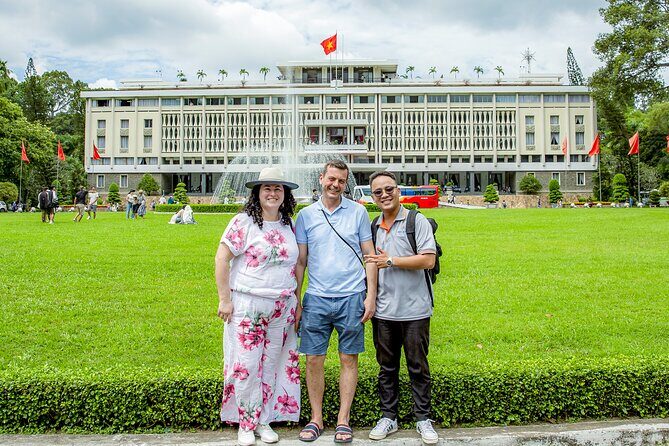
Your first major stop is the Independence Palace, often known as the Reunification Palace. This is one of those places where history isn’t abstract. You walk through rooms and halls connected to the final days of the war and the end of the old political order.
You’ll typically get around 45 minutes inside, which is enough time to see the highlights—things like the president’s office, meeting areas, and the underground spaces that add a different kind of tension to the story. The palace is built to feel like power and secrecy were in the same room.
The tour’s real strength here is how the guide frames what you’re looking at. Many guides on this itinerary have been praised for clear explanations and a sense of story. Names that came up repeatedly include Vin and Luan, with reviewers noting how the guide connected each room to what was happening outside the walls.
One more practical note: the itinerary says you explore the palace. But a past booking experience included a day when the palace was closed, and the guide substituted other sites. So treat the palace as a must-see, not a guarantee to enter every time.
War Remnants Museum: Powerful, One-Visit Heavy, and Time-Limited

Next comes the War Remnants Museum, a sobering place focused on the Vietnam War’s impact. It covers harsh realities including Agent Orange effects, war crimes, and the struggle for independence. Plan for a museum that hits hard.
You’ll have about 40 minutes there. That’s enough to absorb the overall message, but it can feel rushed if you’re the type who reads every caption closely. Several comments pointed out that people wished for more time, especially given how much emotional and factual weight is packed into the exhibits.
Here’s how I’d think about it as a visitor: museums like this don’t aim to be “balanced debate club.” They aim to be impact. If you want perspective layers, the best move is to be emotionally ready before you go in, not after.
Also, the tour tends to keep the day moving. In some reviews, the museum was described as leaving a lasting impression, while others noted it could feel one-sided if you arrive with little background. If you already know the broad timeline, you’ll likely feel more anchored while you’re there.
Saigon Central Post Office: Colonial Architecture Still Works as a Landmark
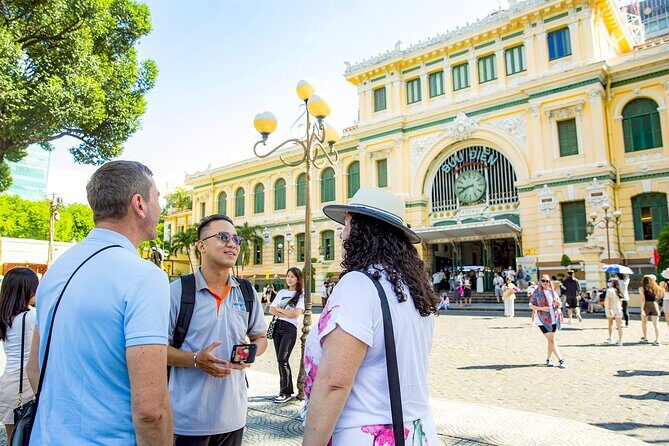
After the heavy museum stop, you get a breather with Saigon Central Post Office. This building is more than a photo stop. It’s a working historical landmark, built in the late 19th century, and it shows off French colonial architecture with a grand interior layout.
You typically spend about 30 minutes here. In that window, you can enjoy the exterior and then do a quick sweep of the interior without feeling like you’re trapped in a long walk-through. It’s a good stop when your brain needs to switch gears from war stories to built form and city life.
The value of putting this stop here is pacing. After Reunification Palace and the War Remnants Museum, you don’t just need a break—you need a different kind of connection. Colonial architecture helps you understand what “modern Saigon” looked like under past administrations, and it anchors the city’s visual identity.
Notre Dame Cathedral: You’ll See It, Just Not Up Close
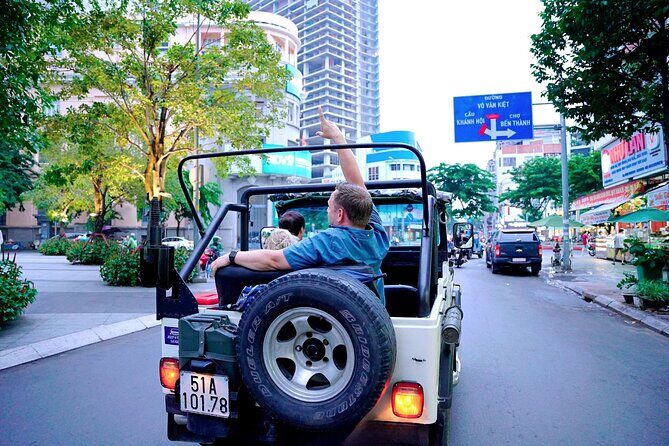
The itinerary notes that Notre Dame Cathedral is currently under renovation, so you’ll pass by without stopping. That’s a real practical point because it changes the photo and “wow factor” expectations.
This tour still gives you lots of stops, but you should treat Notre Dame like a glimpse from the sidewalk rather than a classic framed church moment. If cathedral photos matter a lot to you, it’s smarter to plan a separate stop later (or swap to another tour day).
It’s also worth knowing that one of the most common “heads up” comments from past participants was exactly this: don’t count on Notre Dame for great pictures on this particular route.





Emperor Jade Pagoda and Ben Thanh Market: Religion and Everyday Saigon
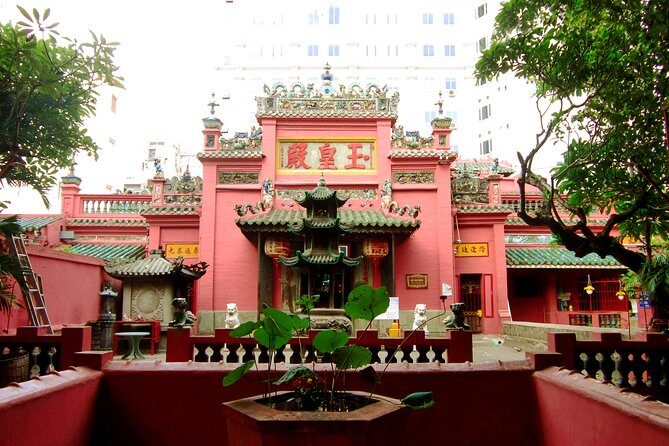
The afternoon tour’s last “life” section is the Emperor Jade Pagoda. This is the place to see intricate religious art up close—carvings, statues, and altars, all packed with detail. The stop is usually about 30 minutes, so you’ll see the key areas without turning it into an all-day sit-down.
Then you hit Ben Thanh Market, one of the oldest and most popular markets in Ho Chi Minh City. Expect a busy, sensory place—vendors selling fruit and vegetables, plus plenty of goods if you want to shop. You usually get about 1 hour here, which is enough time to wander, grab a small souvenir, and decide what you want to revisit later.
I like this pairing for a simple reason: it shows two sides of Saigon at once. Jade Emperor Pagoda gives you structure and symbolism. Ben Thanh gives you motion and variety. Put together, it helps you feel the city isn’t only its past—it’s also what people do every day.
If you’re shopping, this is also a good moment to test your bargaining instincts, but keep it relaxed. You’re not here to win; you’re here to enjoy the market’s rhythm.
Small-Group Comfort: The Minivan, the Pace, and the Guide Energy

The tour is designed as a small-group experience with a maximum of 12 travelers. That changes the feel from a crowded bus-and-blink tour. You’re more likely to hear your guide, ask questions, and get small adjustments if the day needs it.
You travel by air-conditioned minivan, and that’s not a minor detail. People often don’t realize how much energy traffic and heat steal from sightseeing days. This format keeps you moving between sites without turning the transit into the main event.
Then there’s the guide. The most praised aspect across the many guide names is not just facts—it’s clarity and tone. You’ll see strong mentions of guides like Stark, who balanced heavy subject matter with humor, Kevin, who adapted when conditions changed, and Nam, praised for being engaging and well-paced. Viet and Loi also show up as guides who kept things understandable and fun.
Even when someone wanted more time at the War Remnants Museum, the overall message was consistent: the guide explanations make the itinerary stick.
One extra comfort factor: past experiences include days when the group got so small it felt nearly private. That doesn’t mean it’s guaranteed, but it’s the kind of reality that a max-12 tour can create when schedules are light.
Price and Value: Why $30 Can Feel Like a Deal
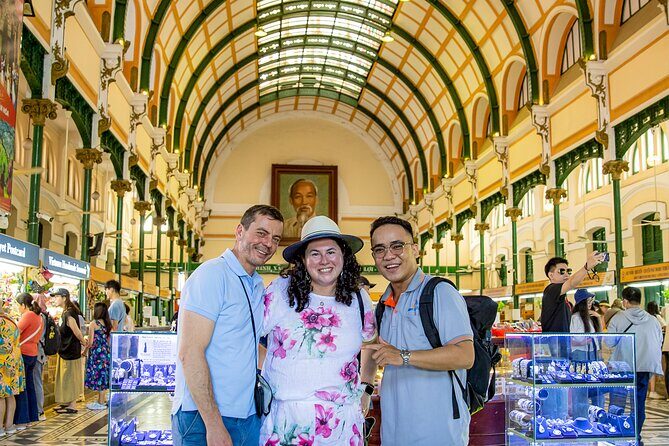
At $30 per person, this is priced like a “high-value highlights” tour, and there’s a lot included that reduces your planning load. You get transportation by air-conditioned minivan, a Vietnamese English-speaking guide, and hotel pickup/drop-off for Districts 1, 3, and 4. Entrance fees and taxes are also included, plus you get bottled water.
So your cost isn’t only “the guide.” It’s the logistics package: less time sorting out transport, fewer tickets to track, and less time waiting around. For a half-day route that covers major landmarks, that’s how you end up with good value.
There’s also practical value in the itinerary design. It hits both “big history” (Reunification Palace, War Remnants Museum) and “big city identity” (Central Post Office, Pagoda, Ben Thanh). If you’re only in Saigon for a short time, this structure helps you avoid the most common mistake: spending hours bouncing between places without understanding what you’re looking at.
What to Expect Day-of (and What Might Surprise You)
This tour is typically non-stop in the best way—meaning you’ll keep moving between stops and you won’t be stuck waiting around. Some notes about pacing suggest it’s not a slow, “stay and contemplate” day. It’s built for seeing the essentials and learning enough context to choose what to return to.
Here are the two items I’d plan around:
- Notre Dame is pass-by only due to renovation, so don’t count on it as a stop.
- Museum time is limited, especially at the War Remnants Museum, which is emotionally heavy and details can take longer than the scheduled slot.
Also, lunch isn’t clearly included. One past booking had confusion because a confirmation referenced a soft lunch, but the guide said there wasn’t any lunch. So I’d personally bring a small snack or plan a proper meal right after. Better safe than hungry.
Should You Book This Saigon Landmarks Tour?
Book it if you want a first-day framework. If you’re short on time, the mix of Reunification Palace, War Remnants Museum, colonial architecture, a major pagoda, and Ben Thanh Market is a strong “start here” package.
Skip or rethink it if:
- you want long, slow museum reading time, especially for the War Remnants Museum
- Notre Dame Cathedral photos are a top priority for your trip day
- you prefer a lighter history approach, because this route includes intense war-focused content
My take: this is a solid value, mostly because the guide storytelling helps the stops make sense, and the small-group size helps you feel like you’re on a real tour, not a hurry-up stampede.
FAQ
How long is the Saigon city landmarks tour?
It runs about 4 to 5 hours total.
Is pickup included, and where does it work?
Hotel pickup and drop-off are included only for Districts 1, 3, and 4.
What’s the meeting point?
The start point is Mekong River Tours [Asiana Link Travel], 60 Tôn Thất Đạm, Bến Nghé, Quận 1, Thành phố Hồ Chí Minh.
Which major places are included on the tour?
You’ll visit Independence (Reunification) Palace, War Remnants Museum, Saigon Central Post Office, Emperor Jade Pagoda, and Ben Thanh Market.
Do you stop at Notre Dame Cathedral?
No. Notre Dame Cathedral is under renovation, so the tour passes by without stopping.
Is the tour fully guided and in English?
Yes. The tour includes a Vietnamese English-speaking guide.
Are entrance fees included?
Yes. The tour lists all fees and taxes as included, and specific stops show admissions as included or free.
What’s included in the price besides the sightseeing?
You get air-conditioned minivan transport, hotel pickup/drop-off (Districts 1, 3, 4), a bottled water (500ml), and all fees and taxes.
Can I cancel for a refund?
Yes. You can cancel up to 24 hours in advance for a full refund.