REVIEW · HO CHI MINH CITY
Vietnam Coffee Journey – Make extraordinary tasty coffee yourself
Book on Viator →Operated by Quynh - Vietnam Coffee Journey · Bookable on Viator
Six cups, one big coffee story. This small-group class in Ho Chi Minh City uses tastings and hands-on brewing to explain how Vietnamese coffee became its own thing—right down to the tools. You’ll learn the “what” and the “why,” with Quynh guiding you through drinks and the background that shaped them.
I love two parts most. First, you get real practice using the Phin (the traditional Vietnamese coffee dripper), not just watching. Second, each coffee comes with context—history, regional habits, and how people’s tastes show up in the cup.
One consideration: you’re sampling six drinks, so if caffeine hits you hard, plan to sip slowly and don’t feel like you must finish everything.
In This Review
- Key highlights you’ll actually feel
- Meeting Quynh in District 1 and getting set up for hands-on coffee
- Your 6-drink tasting flight: a guided walk through Vietnamese styles
- What to watch for (especially if caffeine is your enemy)
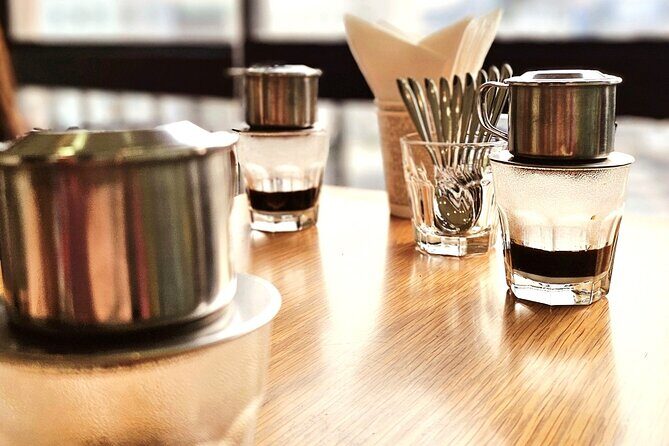
- Hands-on with the Phin: where the flavor really starts
- Making Ca phe sua and Ca phe trung without guessing
- Ca phe sua: condensed milk coffee
- Ca phe trung: egg coffee
- Why this class feels cultural, not just culinary
- Traditional vs modern: how to actually compare flavors
- Value check: what $30 buys you (and why it’s not just a tasting)
- Who should book this class, and who might skip it
- Practical tips before you go
- Should you book Vietnam Coffee Journey with Quynh?
- FAQ
- How many coffee drinks will I try during the experience?
- How long is the Vietnam Coffee Journey experience?
- Where do I meet, and where does it end?
- Is the group size small?
- Are vegetarian, vegan, or halal options available?
- Is there free cancellation?
Key highlights you’ll actually feel
- Small group of up to 6 means more time to ask questions and compare notes
- Six-drink tasting flight goes from plain black to iconic Vietnamese classics
- Hands-on Phin brewing shows how the method changes the flavor
- Ca phe sua (condensed milk coffee) and Ca phe trung (egg coffee) are front-and-center
- North vs South comparison helps you understand styles, not just recipes
- You leave with tips and recipes for adjusting sweetness and strength at home
Meeting Quynh in District 1 and getting set up for hands-on coffee
The experience starts at 27 Ngô Đức Kế in Quận 1, and it ends back there. That’s a big plus because you’re not zig-zagging across town with a coffee in one hand and a phone in the other. It’s also easy to reach since it’s near public transportation.
The setting is set up like a working coffee space: seats are available for kids/children waiting with their parents, and it’s spacious enough that the experience doesn’t feel squeezed. Service animals are allowed, too, so it’s straightforward if you travel with one.
The class is mobile-ticket based, and confirmation comes at booking. In plain terms: you show up, you brew, you taste, and you go home with clearer coffee instincts.
You can also read our reviews of more tours and experiences in Ho Chi Minh City

Your 6-drink tasting flight: a guided walk through Vietnamese styles
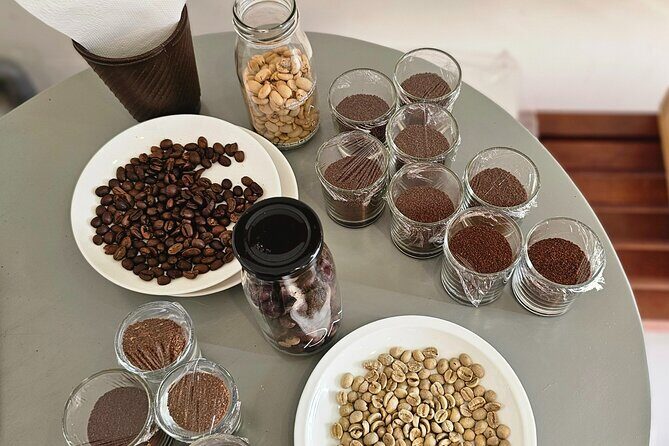
You’ll try six different Vietnamese coffee drinks during the experience. The range matters. You start from pure black coffee and work toward the most iconic versions with added ingredients. Along the way, you don’t just taste—you get the reasons behind each drink.
Here’s what makes this more useful than the typical tasting. Vietnamese coffee isn’t one single style. It’s a set of methods, habits, and local preferences that developed over time. So you’ll hear the stories and origins behind each cup, and you’ll also get “background situations” tied to the drinks. That means you’re not memorizing facts—you’re connecting flavor to culture and everyday life.
A big standout is that you’ll compare traditional vs more modern styles. That comparison is how you learn to taste like a local. You start noticing things such as bitterness, body, sweetness, and that signature roasted depth that shows up in Vietnamese beans and preparation.
What to watch for (especially if caffeine is your enemy)
Because you’re tasting multiple drinks, caffeine can add up faster than you expect. The experience notes that caffeine-sensitive travelers should consider how much they consume. My advice: sip, pause, and taste with intention instead of trying to power through all six.
Hands-on with the Phin: where the flavor really starts
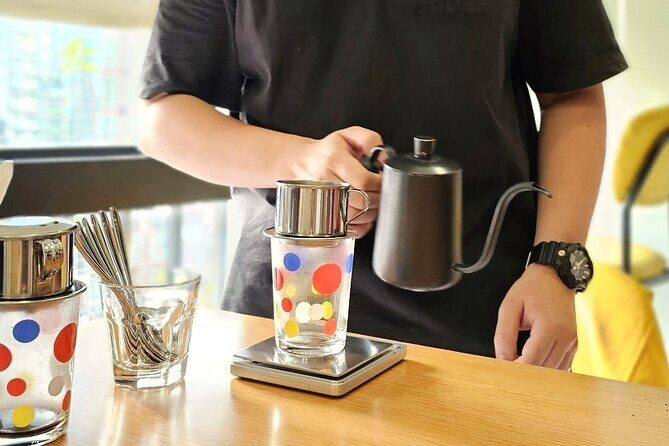
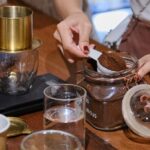
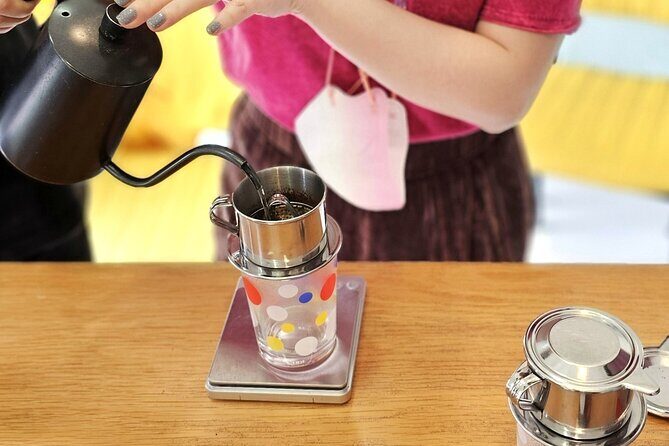
The star tool here is the Phin, the traditional Vietnamese coffee dripper. If you’ve never used one, expect a quick but practical education. You’ll learn how to set it up, how it functions, and why it makes coffee taste the way it does.
The key idea is that brewing method changes outcomes. This class focuses on how the brewing method and instrument bring out a drink’s characteristic traits. In other words, you’ll understand the mechanism, not just follow a trick. That’s what helps you later when you’re making coffee at home and your cup doesn’t taste like the one in the café.
You’ll also learn how to adjust. The experience emphasizes tips and recipes for brewing and tuning the drinks to your own preferences. That matters because Vietnamese coffee is often stronger and sweeter than what many visitors expect, so having adjustment guidance is the difference between a great first attempt and a second attempt you actually enjoy.
Making Ca phe sua and Ca phe trung without guessing
Two of the most iconic Vietnamese coffees are part of the hands-on portion:


Ca phe sua: condensed milk coffee
This is Vietnamese-style coffee with sweet condensed milk. You’ll learn how to brew the coffee using the Phin, then build the drink so you get the balance right. The lesson isn’t just about what goes in the cup—it’s about how the brewing strength and the timing affect the result.
Practical payoff for you: once you know how the Phin pulls and concentrates, you’ll be less dependent on exact measurements and more capable of dialing in the taste. If your first home version is too bitter or too strong, you’ll know what to tweak.
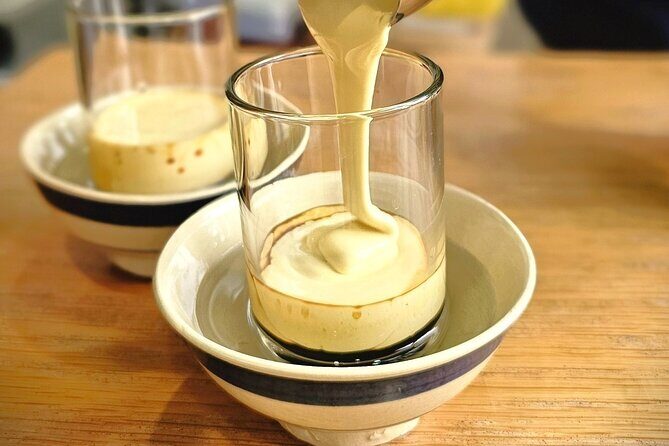
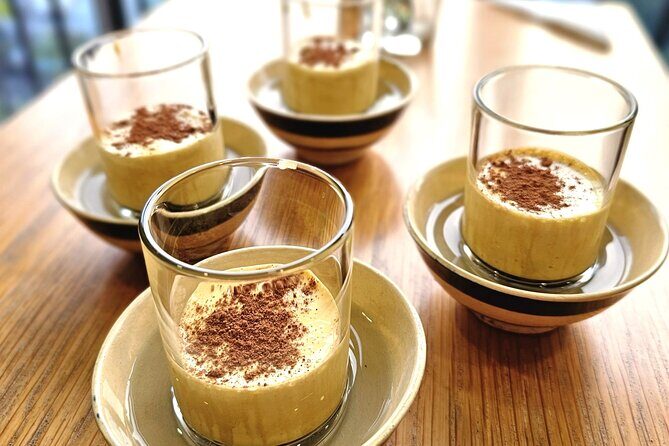
Ca phe trung: egg coffee
Then comes Ca phe trung, the famous egg coffee. This drink has an almost dessert-like character, but it isn’t just about sweetness. The egg component changes texture and mouthfeel, and it’s part of why the drink feels uniquely Vietnamese.
In the class, you’ll learn the methods to make it and you’ll taste it as part of the broader lineup. That’s smart. Egg coffee becomes easier to understand when you also have plain black coffee and condensed milk coffee in your memory.
A nice bonus here is that the class frames these drinks as more than recipes. You’ll hear the background and the people behind the drinks—how regional tastes and cultural traits show up in what’s served.
Why this class feels cultural, not just culinary
This experience aims to explain Vietnamese history through coffee. That can sound like a slogan, but here it’s tied to the drinks themselves. Coffee, for Vietnam, isn’t only a beverage. It’s social rhythm, daily habit, and a marker of regional identity.
You’ll see how coffee reflects and develops alongside Vietnamese culture and characteristics. And because you’re actively brewing and tasting, the cultural context sticks. It’s hard to forget a story about a drink when you’ve just made the same cup with your own hands.
Another thing I appreciate: it’s not presented like a lecture you’re forced to endure. The experience says it encourages lots of questions, and that’s where the learning really happens. If you’re curious about origins, technique, or just why a certain coffee style is so common, this format gives you room to ask.
Traditional vs modern: how to actually compare flavors
One of the most helpful parts of this class is the built-in comparison between traditional and modern styles. Many coffee experiences present a drink as fixed. This one gives you a framework for noticing differences.
As you move through the flight, you’ll start picking up how small changes can shift:
- how strong the roast tastes
- how the coffee body feels
- how sweetness behaves in the cup
- how ingredient choices change balance
That’s the kind of knowledge you can use quickly. The goal isn’t to make you a coffee snob. It’s to make you a confident taster—someone who can explain what you like and repeat it at home.
Value check: what $30 buys you (and why it’s not just a tasting)
At $30 per person for about 2 hours 30 minutes, you’re paying for more than a sip-and-go. You’re getting:
- a guided tasting of six drinks
- hands-on practice using the Phin
- instruction for iconic Vietnamese coffees, including Ca phe sua and Ca phe trung
- tips and recipes so you can recreate the results
- small-group attention (maximum 6 travelers)
If you’ve done other coffee tastings, you know the common problem: you taste a few things and leave with questions but no method. Here, you leave with the method, plus guidance for adjusting. That makes the price feel reasonable because it turns into something you can repeat—at home, not just in one tourist moment.
Also, a small-group size matters. With fewer people, it’s easier for the host to respond to your questions and to notice how you’re brewing.
Who should book this class, and who might skip it
This fits you best if:
- you love coffee and want more than a quick tasting
- you want to understand Vietnamese coffee through practical brewing
- you like asking questions and learning by doing
You might want to skip it if:
- you dislike coffee in general
- caffeine is an issue and you’re sure you won’t be able to pace your tasting
- you’re looking for a city sightseeing tour (this is focused on the coffee experience itself)
And because the class is hands-on with tasting, you’ll get the most value when you show up hungry for learning. Even if you only like one or two of the drinks, you’ll still learn the brewing logic that explains the differences.
Practical tips before you go
Keep these in mind so the experience stays fun and comfortable:
- Plan to take it slow with tastings if caffeine affects you.
- Come with curiosity. The class is set up to handle lots of questions.
- Wear something you can comfortably sit in while you brew and taste.
- If you need vegetarian/vegan/halal adjustments, contact the provider in advance so arrangements can be made.
Also, the class timing is listed at about 2.5 hours. One realistic expectation: conversation and tasting can stretch the session a bit, so don’t schedule a hard deadline right after.
Should you book Vietnam Coffee Journey with Quynh?
Yes—if you want an honest, hands-on Vietnamese coffee education in Saigon. This is one of those experiences where you don’t just leave with photos; you leave with technique. The Phin training, the six-drink tasting flight, and the chance to make Ca phe sua and Ca phe trung give you a complete picture you can actually use later.
Book it if you enjoy learning through tasting and brewing. Skip it if you’re not a coffee person or you know caffeine will knock you out. If that’s you, you can still take part, but you’ll want to manage your pace from the start.
FAQ
How many coffee drinks will I try during the experience?
You’ll try 6 different coffee drinks, ranging from pure black coffee to iconic Vietnamese styles with ingredients.
How long is the Vietnam Coffee Journey experience?
It lasts about 2 hours 30 minutes (approx.).
Where do I meet, and where does it end?
You meet at 27 Ngô Đức Kế, Bến Nghé, Quận 1, Ho Chi Minh City, and the activity ends back at the meeting point.
Is the group size small?
Yes. The experience has a maximum of 6 travelers.
Are vegetarian, vegan, or halal options available?
Vegetarian / Vegan / Halal options are available, but you should contact in advance to arrange them.
Is there free cancellation?
Yes. You can cancel for a full refund up to 24 hours in advance of the experience start time. If you cancel less than 24 hours before, the amount paid will not be refunded.