REVIEW · HO CHI MINH CITY
Bean to bar Chocolate Workshop in Ho Chi Minh City
Book on Viator →Operated by Ban Cacao - Vietnamese chocolate maker · Bookable on Viator
Cacao turns hands-on fast. You’ll learn the full pod-to-bar process, plus how cacao has been made into chocolate in Vietnam using local ingredients. I especially liked that this is not a lecture. You actually taste fresh cacao pods, then work through the steps to create your own bar.
Two big wins for me: first, the class lets you handle the process yourself, including husking beans and making cacao paste the traditional way. Second, you don’t leave empty-handed—you decorate your own chocolate and take it away. One thing to consider: the grinding part takes effort, so it can be tiring for kids (and anyone who gets cranky with manual work).
In This Review
- Key Highlights You Should Care About
- How a Two-Hour Bean-to-Bar Workshop Really Feels in District 1
- Finding Ban Cacao on Hàm Nghi: What to Expect Before You Start
- Pod-to-Bar Lessons: The Vietnamese Cacao Story You Actually Use
- Tasting Fresh Cacao Pods: The Step That Changes Your Expectations
- Husking Cacao Beans: The Satisfying Hands-On Part
- Granite Mortar Cacao Paste: Where the Class Earns Its Name
- Building Your Chocolate Bar From First Step to Finished Piece
- Decorating and Taking Home Your Wrapper-Made Bar
- Price and Value: What $32 Buys You Here
- Timing and Group Size: Why 2 Hours Works (If You Arrive Ready)
- Who This Chocolate Workshop Is Best For
- Should You Book Ban Cacao’s Bean-to-Bar Workshop?
- FAQ
- Where does the bean-to-bar workshop meet?
- How long is the workshop?
- How much does it cost?
- Is there a mobile ticket?
- How many people are in the group?
- What do I do during the class?
- Do we taste cacao during the workshop?
- Is there a drink included?
- Is it suitable for children?
- What is the cancellation policy for a full refund?
Key Highlights You Should Care About
- Fresh cacao pod tasting before the chocolate even starts
- Husking your own cacao beans so you see what becomes chocolate
- Traditional cacao paste made with a granite mortar (real muscle required)
- Thermometer, scale, and molds used as part of the bar-making workflow
- Your decorated bar to take home, plus wrapping paper provided
- Small group size with a maximum of 10 people, so questions don’t get lost
How a Two-Hour Bean-to-Bar Workshop Really Feels in District 1
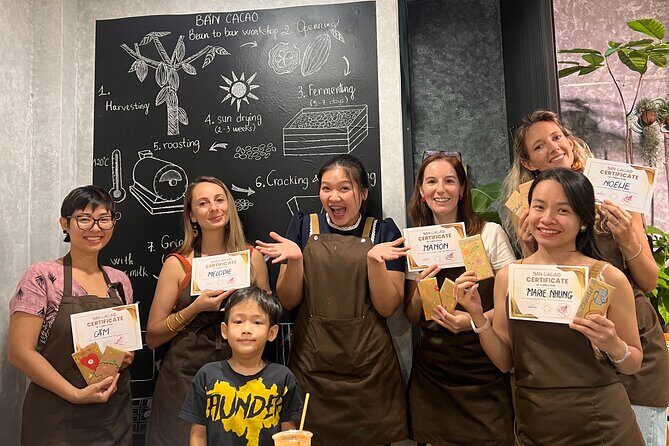
This class is only about 2 hours, so it moves. That’s a plus if you’re tired of long tours where you watch and then sprint to dinner. Here, you’re doing the work, tasting as you go, and getting a finished chocolate bar by the end.
It’s also built around the same idea that makes good food experiences click: you don’t just learn what something is. You learn what it becomes. You’ll start from cacao fruits and beans, then follow the steps that turn raw ingredients into something you can hold, break, and wrap.
The setting matters too. The workshop takes place at Ban Cacao, a Vietnamese chocolate maker, so you’re learning in the real place where the product comes from. That helps the whole process feel connected instead of random.
You can also read our reviews of more city tours in Ho Chi Minh City



Finding Ban Cacao on Hàm Nghi: What to Expect Before You Start
The meeting point is at 89/14 Hàm Nghi, Phường Nguyễn Thái Bình, Quận 1. The area is convenient if you’re using public transportation, since the workshop is described as near public transport.
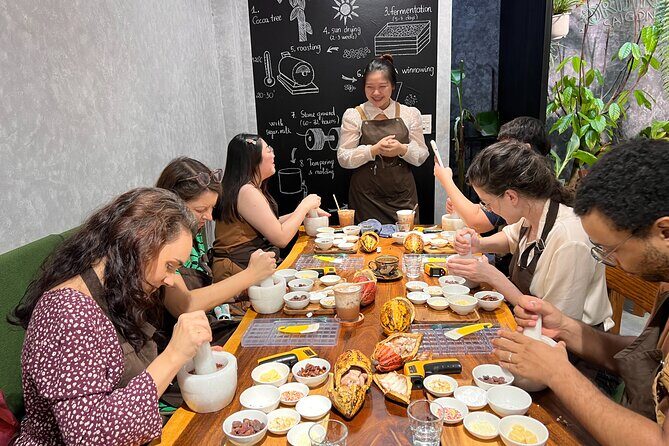
Once you arrive, you’ll be set up for a hands-on session with materials and tools ready for the group. The class runs with a maximum of 10 travelers, which keeps it calmer and makes it easier to get help when your cacao paste is thickening faster than you expected.
You’ll also get a simple, friendly rhythm for the session: short explanations, then immediate action. That pace helps if you’re curious but not trying to sit through a long talk.
Pod-to-Bar Lessons: The Vietnamese Cacao Story You Actually Use
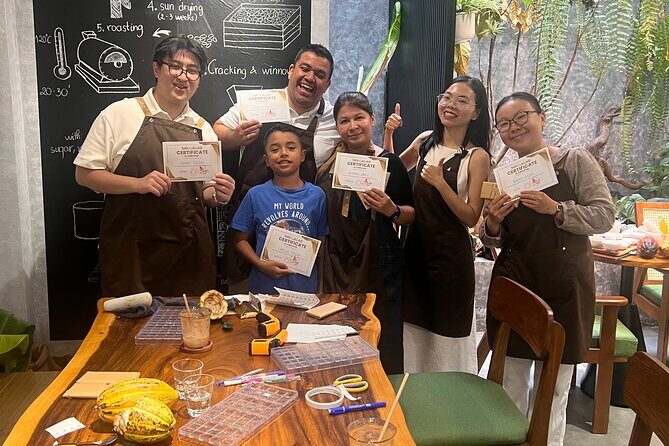
The workshop includes an explanation of the pods to bars chocolate making process, plus the history of cacao in Vietnam. You’ll also hear how Vietnamese producers make chocolate from local ingredients.
For me, the useful part is that the story is tied directly to technique. When someone explains a step in the workflow, you see why it matters right away—because you’re going to do that step next.
And since you’re making chocolate in Vietnam with materials listed for the workshop (fresh cacao fruits, cacao beans, cacao nibs, cacao butter, and cane sugar), the lesson stays grounded. It’s not just generic chocolate knowledge you could pick up anywhere.
Tasting Fresh Cacao Pods: The Step That Changes Your Expectations
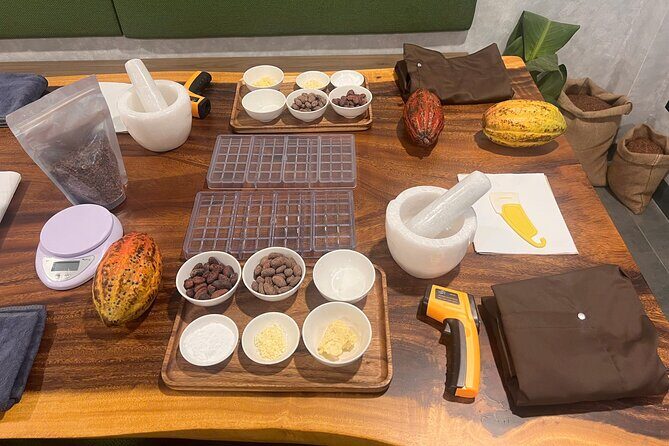
Before you get to paste and bars, you taste fresh cacao pods. This is one of the best “wait, what” moments in the class.
If you’ve only ever tasted chocolate in supermarkets, fresh cacao pods can be a shock. They taste like a plant at this stage, not like a sweet dessert. That contrast makes the rest of the process feel more meaningful.
This also sets your palate for what’s coming. When you later husk and work with the beans, you’re not guessing. You’re connecting what you tasted to what you’re handling.
Husking Cacao Beans: The Satisfying Hands-On Part
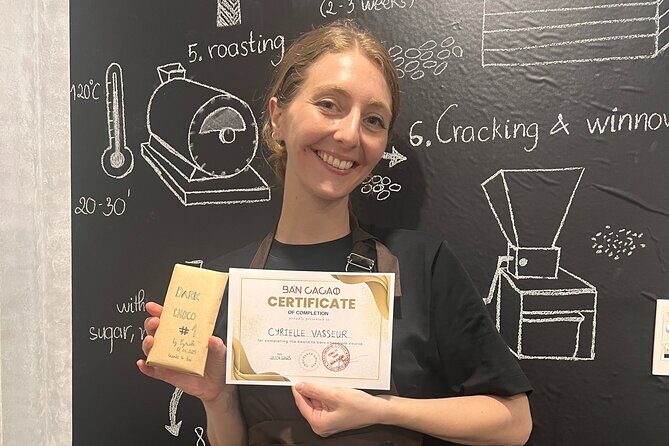
Then comes husking your own cacao beans. This is the moment where you go from ingredients on a table to raw cacao in your hands.
It’s also where the class feels like a real workshop instead of a cooking demo. You’re participating in the messy reality of the process, which is exactly what makes learning stick.
There’s a practical payoff too: husking helps you understand what gets used later. You’re not just hearing about cacao nibs—you’re moving through the steps that lead you there.
You can also read our reviews of more drinking tours in Ho Chi Minh City




Granite Mortar Cacao Paste: Where the Class Earns Its Name
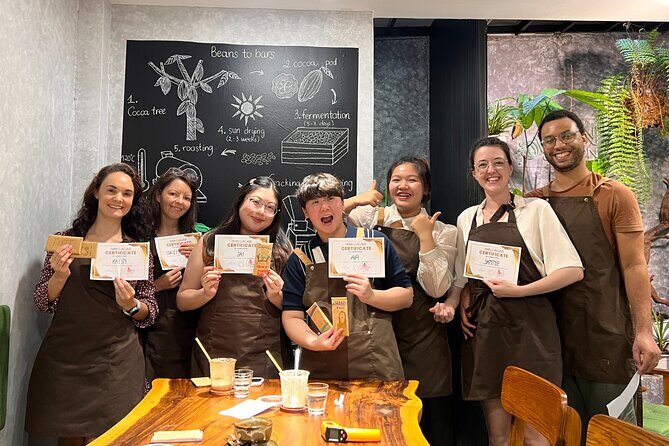
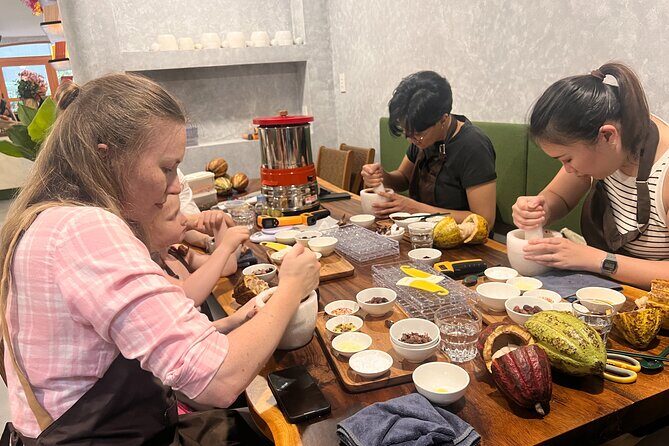
Here’s the step people remember: you make cacao paste in the traditional style with a granite stone mortar.
This is not a quick “stir and done” moment. Grinding takes time and effort, and the paste stage is one reason the workshop can be better suited for families with kids over 8 (a review specifically noted that the grinding can be tiring). If you bring younger kids, you might find they get restless unless they’re very enthusiastic about hands-on tasks.
Still, that manual step is the point. You’ll get a direct feel for how texture changes as the cacao breaks down. And because you’re using tools like a scale and a thermometer as part of the broader workflow, the process feels both traditional and practical.
Building Your Chocolate Bar From First Step to Finished Piece
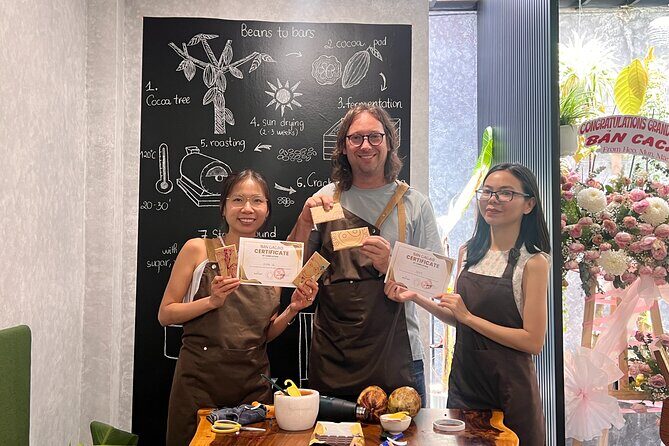
After the paste stage, you move through making your own chocolate bar from the first step to the final bar. The class includes tools like:
- thermometer (so temperature matters during the process)
- scale (for consistent measurements)
- chocolate mold (so you end up with a real shaped bar)
- wrapping paper (so you can present your finished bar)
You’ll work with the core ingredients listed for the class, including cacao butter and cane sugar. The idea is that you see how cacao becomes a sweet, structured product instead of staying as raw paste.
This section is also where the class rewards patience. Chocolate making isn’t just about mixing. It’s about controlling steps, textures, and outcomes—especially when you’re doing it yourself.
Decorating and Taking Home Your Wrapper-Made Bar
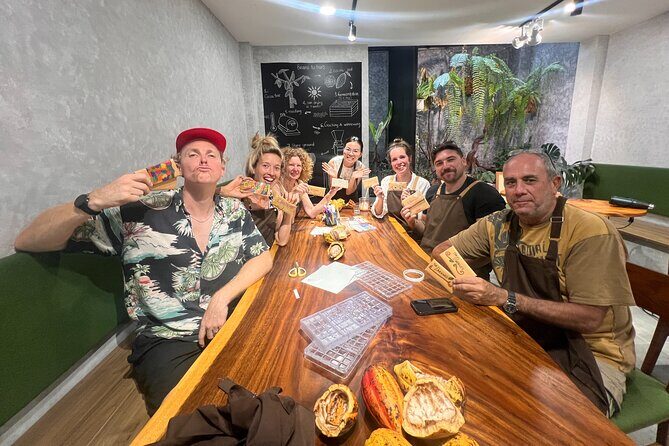
Once your chocolate is ready, you decorate your own chocolate and wrappers. The workshop provides the wrapping paper, so you can personalize what you’re taking home.
This is another highly praised part of the experience because it gives you a finished souvenir that doesn’t feel mass-produced. One review mentioned the class includes two bars you can keep after decorating wrappers, which lines up with the “you leave with your own chocolate” promise.
Either way, you’ll finish with something tangible: a chocolate bar made by you, with your own styling. In a city full of great snacks, that kind of edible memory has real staying power.
Price and Value: What $32 Buys You Here
At $32 per person, this sits in the “you’re paying for ingredients and guided hands-on work” category. And honestly, the value is strongest when you compare it to typical tastings.
You’re getting:
- a full 2-hour workshop,
- step-by-step guidance through pods to bars,
- tastings of fresh cacao pods,
- hands-on grinding with a granite mortar,
- and a decorated chocolate bar (plus wrapping paper).
On top of that, reviews mention there’s a drink included—hot or ice hot chocolate—with each participant getting one. That doesn’t make it a bargain on its own, but it’s a nice built-in perk that makes the session feel complete.
The small group size (max 10) also matters. You’re more likely to get help if your cacao paste is too thick or your questions come faster than the schedule. This is the kind of experience where attention quality affects how much fun you have.
Timing and Group Size: Why 2 Hours Works (If You Arrive Ready)
The class runs for about 2 hours, which is long enough to do meaningful work but short enough to fit into a day in Ho Chi Minh City.
If you’re the type who needs a warm-up, arrive with a little buffer time so you’re not stressed when the grinding starts. Once you hit the mortar stage, you’ll want your hands free and your brain calm.
The group size cap of 10 people also shapes the vibe. It’s not a crowded factory. It’s more like a small table workshop where everyone gets the chance to participate.
Who This Chocolate Workshop Is Best For
I’d book this if you like food that has a process behind it. You enjoy learning by doing, not just watching.
It’s also a good fit for:
- couples who want something different than the usual sightseeing circuit,
- anyone who likes edible souvenirs with real effort behind them,
- and families with kids over 8, especially if your child enjoys hands-on tasks.
If you’re bringing a younger kid, plan for patience. The grinding can be tiring, and that physical step is part of the experience—not something you can fully skip.
Should You Book Ban Cacao’s Bean-to-Bar Workshop?
I think you should book it if you want a practical, sensory experience. You’ll leave with chocolate you made, and you’ll understand how cacao moves from fruit and beans into a finished bar. That’s rare for $32 in a city where a lot of paid activities are mostly passive.
I’d skip it only if you know you hate manual tasks. The granite mortar stage takes effort, and the class is designed around that hands-on work. Also, because the workshop has a small group size, it can be popular—so don’t wait too long to reserve.
If you do book, go in with the right mindset: treat it like learning a skill. You’re not just buying chocolate. You’re making it.
FAQ
Where does the bean-to-bar workshop meet?
The meeting point is 89/14 Hàm Nghi, Phường Nguyễn Thái Bình, Quận 1, Thành phố Hồ Chí Minh, Vietnam.
How long is the workshop?
The class runs for about 2 hours.
How much does it cost?
It costs $32.00 per person.
Is there a mobile ticket?
Yes. The experience includes a mobile ticket.
How many people are in the group?
The workshop has a maximum of 10 travelers.
What do I do during the class?
You’ll go through the process from pods to bars, including tasting fresh cacao pods, husking your own cacao beans, making cacao paste using a granite stone mortar, and making your own chocolate bar.
Do we taste cacao during the workshop?
Yes. You’ll taste fresh cacao pods.
Is there a drink included?
Yes. Reviews note the class includes a drink each, with hot or ice hot chocolate.
Is it suitable for children?
It’s recommended for families with children over 8, since the grinding part can be tiring for kids.
What is the cancellation policy for a full refund?
You can cancel up to 24 hours in advance for a full refund. If you cancel less than 24 hours before the start time, you won’t get a refund.