REVIEW · HO CHI MINH CITY
City Sightseeing Saigon Bus Tour
Book on Viator →Operated by City Sightseeing Ltd - USA and Middle East · Bookable on Viator
Saigon feels simpler when you can ride. This hop-on hop-off bus tour gives you an easy way to see the big landmarks at your own pace, with an open-top deck for views and audio commentary in several languages. I also like that you’re not trapped in a strict schedule—you can jump off and back on at designated stops.
Two standout perks for me are the two-route coverage (so you’re not missing whole neighborhoods) and the practical extras: free Wi-Fi plus a guidebook with maps, recommendations, timetables, and coupons. The price is also usually easier to swallow when you treat it as transportation plus orientation, not as a single guided attraction.
The main thing to think about is comfort and weather. The upstairs/open-air option can get uncomfortable when conditions change, while the inside is air-conditioned, so you may want to switch where you sit during the day.
In This Review
- Key things to know before you ride
- Open-top views and air-conditioned comfort on Saigon’s main streets
- Two color routes: Red vs Blue and how to avoid start-point confusion
- Red Route (starts at Saigon Opera House)
- Blue Route (starts in the backpacker area)
- Switching lines
- Hop-on hop-off strategy for a first timer: make time work
- How I’d plan a 1-day ticket
- How I’d plan a 2-day ticket
- Your pacing tip
- Stop by stop: Opera House, War Remnants, markets, and major landmarks
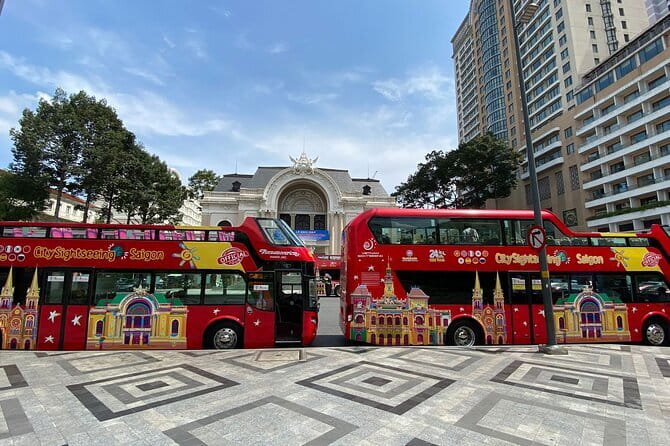
- Saigon Opera House (Stop 1, Red Route)
- Nguyen Hue Street (Stop 2, Red Route)
- Nha Rong Wharf (Stop 3, Red Route)
- Tran Hung Dao Statue area + nearby stop points (Stop 4, Red Route)
- Ho Chi Minh Campaign Museum / Museum of Vietnamese History (Stop 5, Red Route)
- War Remnants Museum (Stop 6, Red Route)
- Pham Ngu Lao Street / Beer Street (Stop 7, Red Route)
- Ben Thanh Market (Stop 8, Red Route; also a Blue Route stop)
- Independent Palace (Stop 9, Red Route)
- Saigon Notre Dame Cathedral / Central Post Office (Stop 10, Red Route)
- Markets and pagodas on the Blue Route: local flavor in smaller doses
- Ho Thi Ky Flower Market (Blue Route Stop 4)
- Ong Bon Pagoda (Blue Route Stop 6)
- Binh Tay Market (Blue Route Stop 7)
- Thien Hau Pagoda (Blue Route Stop 8)
- Van Phat Pagoda (Blue Route Stop 9)
- Guidebook, Wi-Fi, and audio commentary: getting value beyond the ride
- Price and time: is $21 really good value?
- Should you book the City Sightseeing Saigon bus tour?
- FAQ
- What’s included with the City Sightseeing Saigon bus tour?
- Do I need to pay extra for attraction entry fees?
- How long is each route?
- Where do I start the Red Route?
- Where do I start the Blue Route?
- What are the first and last departures?
- How often do buses run?
- Can I switch between routes during the day?
- Is a mobile ticket voucher accepted?
- Is free cancellation available?
Key things to know before you ride
- Two routes that actually reach the city’s headline stops
- Start times and last departures are fixed, so plan around your day
- Open-top views, but the weather can change fast—pick your seat wisely
- Easy hop-on hop-off, yet route confusion is real at first
- Audio guide is there for context, not for deep storytelling
- A free guidebook helps you turn bus stops into real plans
Open-top views and air-conditioned comfort on Saigon’s main streets
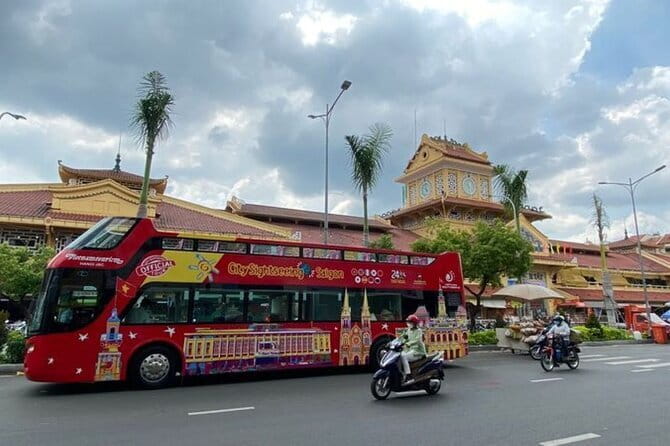
This is a classic Ho Chi Minh City hop-on hop-off setup: you ride, listen, look, and then decide what’s worth your time once you’re on the street. The bus gives you a great high-level look at Saigon’s layout, especially along the main corridors where traffic flows and the skyline shows up between buildings.
The ride itself is part of the experience because the upper/open-air deck is built for sightseeing. You’ll see more than you would on a car ride, and you’ll get those stop-and-start moments where you can actually clock where you are. That said, one practical note: the upstairs section can feel exposed when the weather shifts. If you’re riding during a hotter or more changeable part of the day, you may want to alternate—enjoy the views, then duck inside to cool down.
Audio commentary is included, and it’s available in several languages. I’d treat it as background orientation. If you expect it to be dramatic or deeply entertaining, you might feel a little underwhelmed—some people find the narration more like facts than stories. Still, it’s useful for connecting what you’re seeing to what it is.
And yes, there’s free Wi-Fi aboard. It’s handy for sanity-checking your plans, grabbing offline maps, and looking up whether you’re walking distance from the next stop or if you should stay on the route longer.
You can also read our reviews of more tours and experiences in Ho Chi Minh City.



Two color routes: Red vs Blue and how to avoid start-point confusion
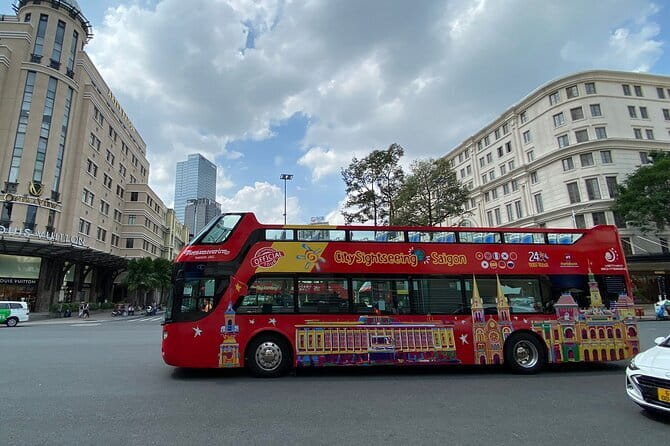
One reason this tour is popular is the two-route system. You get broader coverage than a single loop, and you can mix-and-match based on what matters most to you—museums and colonial-era landmarks on one line, plus markets and pagodas on the other.
Here’s the logistics that matter:
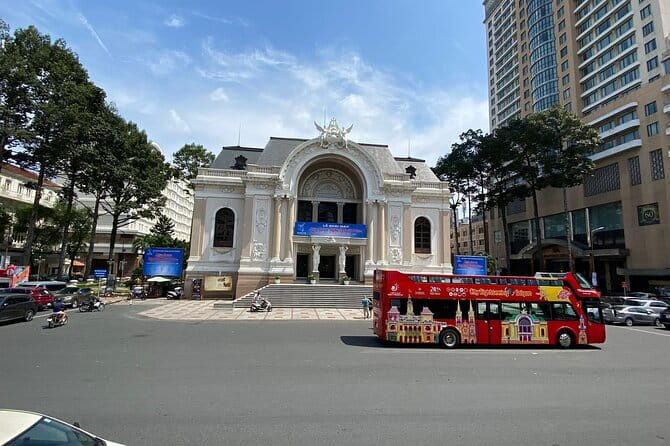
Red Route (starts at Saigon Opera House)
- First departure is 9:00am
- Last departure from Stop 1 is 4:00pm
- Tour duration is about 75 minutes
- Buses run about every 30 minutes
- Start point: Stop 1 = Saigon Opera House
- Ticket exchange counter: located on the side of the Saigon Opera House, facing the Continental Hotel
Blue Route (starts in the backpacker area)
- First departure is 9:00am
- Last departure from Stop 1 is 3:45pm
- Tour duration is about 80 minutes
- Buses run about every 45 minutes
- Starting point: 187 Pham Ngu Lao Street, with the bus stop in front of the Liberty Hotel
If you’ve ever arrived with a ticket that doesn’t match the local provider’s setup, you’ll understand the common pain point: figuring out where to actually line up. The good news is that the Opera House and the Liberty Hotel area are easy visual anchors. Once you’re standing at the right place, boarding tends to be straightforward.
One more detail that saves time: routes can be confusing because different lines may look similar at a glance. Don’t rely only on color from far away. Check the route name on the bus and confirm you’re on the right line before you roll.
Switching lines
You’re encouraged to switch for the best coverage. The guidance is specific:
- You can be advised to switch lines at Stops 6, 7, and 8 on the Red Route
- Those correspond to Stops 1, 2, and 3 on the Blue Route
That means you don’t have to force one perfect loop. You can build your day by hopping onto the line that best matches where you want to go next.






Hop-on hop-off strategy for a first timer: make time work
At around 75–80 minutes per route, this tour is not trying to replace museum time. It’s designed to give you a moving overview and then let you choose what to dig into. That’s how you get real value for the money.
How I’d plan a 1-day ticket
If you’re doing one day only, pick a main theme and let the bus fill in the gaps:
- Theme: colonial landmarks + big history stops → prioritize the Red Route highlights, then add Ben Thanh and the Notre Dame/Central Post Office area.
- Theme: markets + pagodas + local neighborhood atmosphere → focus on the Blue route’s market/pagoda sequence and use the Red route for museum anchor points.
Because frequency is regular (about every 30–45 minutes depending on the line), you can hop off for a short visit and still have time to get back on later.
How I’d plan a 2-day ticket
A 2-day pass is for people who want to slow down. Day one helps you map the city and decide what you’d actually pay to revisit. Day two is when you return to the most important stops, with less stress and fewer “we should have stayed longer” moments.
Your pacing tip
When the bus stops, don’t just look at the building. Look around: street life, entrances, shade, and how long it might take to walk to the actual attraction. Then decide if you’re doing a quick stop or a longer visit. The tour makes it easy to bounce, but your time budget still matters.
Stop by stop: Opera House, War Remnants, markets, and major landmarks
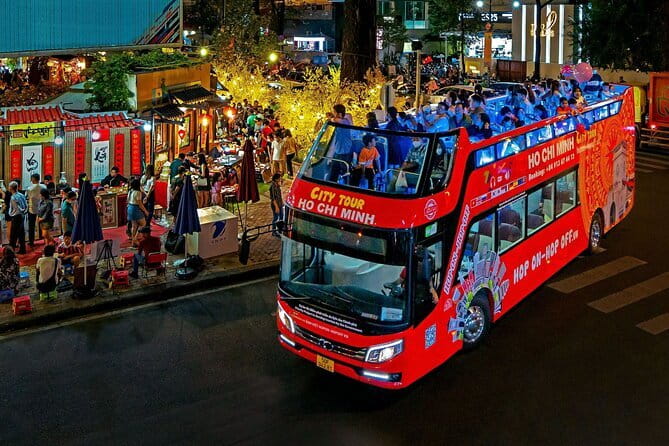
This is where the tour earns its keep. Many of the stops are the exact places you’d likely put on a first-time itinerary, and you get them without long rides across town.
Saigon Opera House (Stop 1, Red Route)
This is your main launch pad for the Red Route, and it’s also a landmark worth seeing from the street. If you want to orient yourself fast, this is a good starting point because it connects you to some of the city’s most central avenues.
Why it’s useful: you can start here, then quickly build a route toward museums and historic core sites.
Nguyen Hue Street (Stop 2, Red Route)
This is the kind of broad, main-street stretch that helps you understand how Saigon is laid out. From the bus, you get a sense of where shopping, civic spaces, and crowds cluster.
Consideration: you may want to step off briefly just to stretch your legs, then continue if you’re short on time.
Nha Rong Wharf (Stop 3, Red Route)
A waterfront stop adds variety to the mostly street-and-sightseeing day. A wharf area also tends to feel different from the big museum zones—more open, more shifting activity, and a nice break in pace.
Why it matters: it breaks up the day visually and gives you a chance to see another side of the city.
Tran Hung Dao Statue area + nearby stop points (Stop 4, Red Route)
You’ll also pass the historical/monument zone around Tran Hung Dao, a useful anchor if you’re interested in seeing how the city commemorates key figures and eras.
Practical note: you may not need a long stop here—use it as a photo or quick walk point, then move on.
Ho Chi Minh Campaign Museum / Museum of Vietnamese History (Stop 5, Red Route)
This stop is a direct path into Vietnam’s 20th-century story. Even if you don’t go inside, the museum area helps you understand the city’s relationship to the conflict and its aftermath.
Value angle: if you’re balancing museums and time outdoors, this is one of the most “worth it” add-ons because it pairs well with the next stop.
War Remnants Museum (Stop 6, Red Route)
This is the stop that turns the bus tour into a real highlight for many people. The War Remnants Museum is often treated as a must-see, and if you can only do one museum during your limited Saigon time, this is a strong candidate.
Heads-up: expect the subject matter to be heavy. Plan your emotional pacing—if you’re doing it after heat or on a tight schedule, you might prefer to start earlier.
Pham Ngu Lao Street / Beer Street (Stop 7, Red Route)
This area is famous for its energy and for being close to where lots of visitors stay. From the bus, it’s a quick orientation point, and stepping off here gives you access to street food and casual strolling.
Why it’s handy: it’s also a good base zone to reset after museums.
Ben Thanh Market (Stop 8, Red Route; also a Blue Route stop)
Markets are always a cheat code for travel. Ben Thanh gives you a chance to browse, snack, and get a feel for how people shop day to day.
Practical tip: go for 30–60 minutes first. If you love it, extend. If you don’t, you haven’t lost your whole day.
Independent Palace (Stop 9, Red Route)
This is one of the big “major landmark” stops on the list. It’s the kind of attraction that often becomes a central pillar in a first-time Ho Chi Minh City day.
Consideration: if you add it, build in enough time to actually enjoy it—not just look at it from the sidewalk.
Saigon Notre Dame Cathedral / Central Post Office (Stop 10, Red Route)
This is your postcard pairing. The cathedral-area stop and the Central Post Office area sit together conceptually: classic architecture, high visibility, and a perfect end-of-route feeling.
Why it works: it lets you close the day with something visually impressive and easy to photograph.
Markets and pagodas on the Blue Route: local flavor in smaller doses
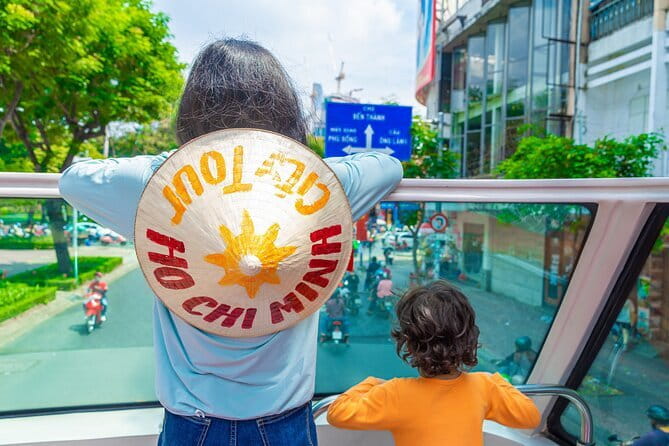
The Blue Route is where your tour starts to feel less like monuments and more like lived-in Saigon. It still includes major landmarks, but it also threads through markets and religious sites that give you variety.
Here are the Blue Route stops you’ll care about:
Ho Thi Ky Flower Market (Blue Route Stop 4)
A flower market stop changes the mood fast. Even if you only browse briefly, you’ll feel it in the air and in the color. It’s also a nice break from museum content.
Ong Bon Pagoda (Blue Route Stop 6)
A pagoda stop is a reminder that this city is still very much religious and everyday. The bus drop-off gives you the chance to take a short look and step into a quieter pocket.
Binh Tay Market (Blue Route Stop 7)
Market time is where you get shopping and atmosphere in one place. Binh Tay Market adds a different feel than Ben Thanh, so if you’re already interested in markets, this is a good pairing.
Thien Hau Pagoda (Blue Route Stop 8)
Another religious stop on the Blue line. If you like seeing how communities practice and build meaning into public spaces, this one can be a calming counterweight after bus crowds.
Van Phat Pagoda (Blue Route Stop 9)
A final pagoda stop on this list that can turn the Blue Route into more than just “shopping and photos.” It can also help you understand how different neighborhoods center their own spiritual landmarks.
Practical note: pagodas and markets usually reward slow walking. If you’re rushing, you might miss what makes the stops special.
Guidebook, Wi-Fi, and audio commentary: getting value beyond the ride

What makes this tour feel like better-than-just-a-bus is the included planning help. You get a free guidebook with:
- maps
- recommendations
- timetables
- coupons
Even if you’re using your phone for navigation, this guidebook acts like a cheat sheet when you’re deciding what to do next. It’s also useful when you’re tired and don’t want to research from scratch.
How to use it: skim it at your first stop, then mark two priorities for the day. One priority should be a major attraction (museum or landmark). The second can be flexible (market or shorter walk).
Wi-Fi is another small but real value add. It helps you:
- check bus stop locations again
- look up opening hours if you plan to step in
- coordinate with your group if you’re splitting time
As for the audio commentary, I’d use it to connect dots, not to entertain yourself. If you find it dry, switch your focus to street-level details—signs, architecture, and the flow of people around each stop.
Price and time: is $21 really good value?
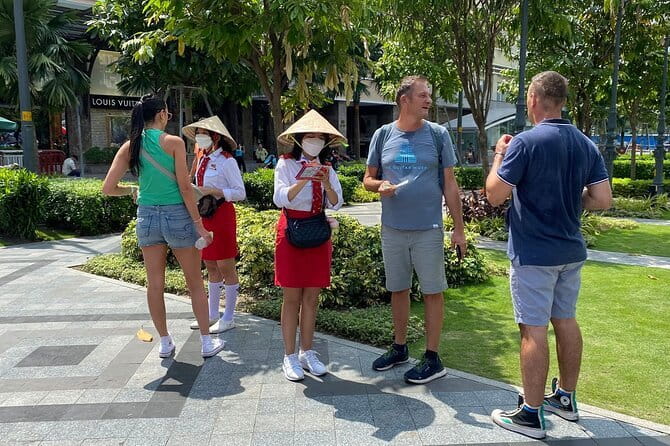
At about $21 per person, this is priced like an easy entry ticket to motion and orientation. The key is what’s included versus what you still pay for.
Included:
- 1-day or 2-day hop-on hop-off bus tour
- access to 2 routes
- stops near major sights
- free Wi-Fi
- free guidebook
- ticket exchange support at the Red Route start point
Not included:
- entry fees to attractions
- food and drink
- hotel pick-up and drop-off
- tips
So the value depends on your style. If you want to spend most of your day actually inside museums and landmark sites, the bus becomes transportation plus “first look” for where you want to spend your entry money. If you mostly want to view from the street, you might feel like you’re paying for convenience more than for experiences.
The tour duration and frequency matter here. With multiple departures, you can avoid wasting time waiting—so your day stays efficient even when you’re indecisive.
Should you book the City Sightseeing Saigon bus tour?

Book it if you’re:
- visiting Ho Chi Minh City for the first time and want a fast way to map the major areas
- tight on time and want a low-stress way to reach multiple headline stops
- the kind of traveler who likes choosing what to do once you’re right there
- interested in pairing landmark sightseeing with markets and pagodas
Skip or reconsider if:
- you dislike flexible tours and prefer fully guided, structured storytelling
- you need a highly immersive audio experience (the commentary can feel a bit plain)
- you expect the open-top option to be comfortable all day without any seat switching
If you do book, my best advice is simple: start early on the route that matches your priorities, use the guidebook to pick two targets, then ride until you hit your personal “yes, do more here” moments.
FAQ
What’s included with the City Sightseeing Saigon bus tour?
You get a 1-day or 2-day hop-on hop-off bus tour with access to two routes, stops near major sights, free Wi-Fi, and a free guidebook with maps, recommendations, timetables, and coupons.
Do I need to pay extra for attraction entry fees?
Yes. Entry to attractions is not included, so you’ll need to pay any fees directly at the attraction.
How long is each route?
The Red Route is about 75 minutes. The Blue Route is about 80 minutes.
Where do I start the Red Route?
The Red Route starts at Saigon Opera House (Stop 1). The ticket exchange counter is on the side of the Opera House, facing the Continental Hotel.
Where do I start the Blue Route?
The Blue Route starts at 187 Pham Ngu Lao Street, with the bus stop in front of the Liberty Hotel.
What are the first and last departures?
For the Red Route, the first departure is 9:00am and the last departure from Stop 1 is 4:00pm. For the Blue Route, the first departure is 9:00am and the last departure from Stop 1 is 3:45pm.
How often do buses run?
On the Red Route, buses run about every 30 minutes. On the Blue Route, buses run about every 45 minutes.
Can I switch between routes during the day?
Yes. You may be advised to switch lines at Stops 6, 7, and 8 on the Red Route, which correspond to Stops 1, 2, and 3 on the Blue Route.
Is a mobile ticket voucher accepted?
Yes. Both mobile and printed paper vouchers are accepted. Vouchers can be used any day within 12 months of the selected travel date.
Is free cancellation available?
Yes. You can cancel for a full refund if you cancel at least 24 hours before the experience start time. If you cancel less than 24 hours before, the amount you paid is not refunded.