REVIEW · HO CHI MINH CITY
Half Day Ben Duoc Tunnels Tour Ho Chi Minh City
Book on Viator →Operated by The Sun Tourist · Bookable on Viator
Under underground Viet Cong feet, war survives. The Ben Duoc experience mixes multi-level tunnel rooms with surface displays like tanks and aircraft, plus a memorial and a recreated wartime “liberated zone.” It’s not just a peek. It’s a walking lesson in how people lived and fought when everything above ground was deadly.
Two things I love about this tour are how practical the on-site explanations feel, and how much the tunnels show. An English guide can bring the story to life (you might be lucky enough to meet guides such as Thang, Thanh, Khang, Minh, Mark, or James). And you’ll get to see functional spaces like living quarters, meeting/work areas, a medical chamber, hidden storage, and the Hoang Cam kitchen smoke-disguising cooking technique.
One thing to think about: call it “half day” on the website, but the trip runs about 7 to 8 hours, and morning traffic out of central Ho Chi Minh City can add stress. Also, the gun range is optional and costs extra, so budget a little if you’re tempted.
In This Review
- Key points worth knowing before you go
- Why Ben Duoc tunnels feel different from the usual war stops
- Pickup, timing, and the District 1 traffic reality
- Quick sanity check before you book
- The on-site tunnel tour: rooms, traps, and ventilation you can see
- Fit and comfort note
- Hoang Cam kitchen: smoke-disguising cooking makes the war feel real
- Beyond tunnels: the open-air museum and wartime equipment
- Ben Duoc Memorial Temple: names engraved on stone
- The reconstructed liberated zone: wartime daily life you can picture
- The gun range option: fun for some, extra cost for everyone else
- Guides make the difference, especially for history-heavy days
- Group size, comfort, and what “included” really means
- Price value: is $29 a smart deal?
- Who should book this Ben Duoc tunnels tour?
- Should you book this tour or choose something else?
- FAQ
- What time does the Half Day Ben Duoc Tunnels tour start?
- How long is the Ben Duoc Tunnels experience?
- Is hotel pickup and drop-off included?
- Where do we meet for the tour?
- What does the $29 ticket include?
- Is the shooting gun included?
- How many people are in the group?
- Are service animals allowed?
- Can I cancel for a refund, and what happens if weather is poor?
Key points worth knowing before you go
- Hotel pickup in central District 1 plus air-conditioned transport helps the day feel easy to start.
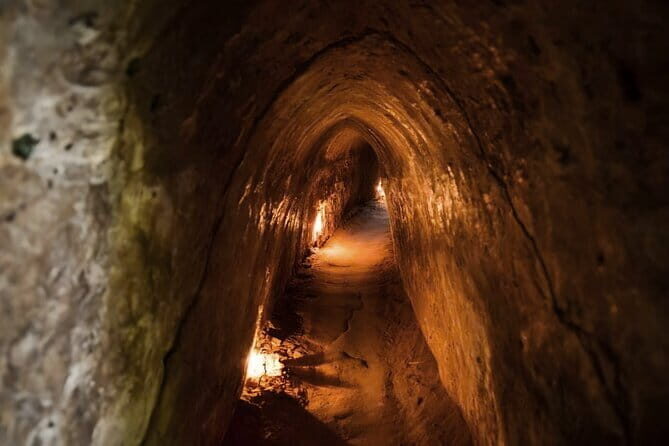
- Multi-level tunnels include real-looking living/work spaces, medical rooms, and storage areas.
- Wartime tricks you can actually see, like ventilation holes and hidden entrances/exits.
- Hoang Cam kitchen explains smoke-disguising cooking in a way that sticks.
- Open-air museum + memorial temple + recreated liberated zone gives you context, not just “tunnel tourism.”
Why Ben Duoc tunnels feel different from the usual war stops
Ben Duoc is one of those places where the war stops being an abstract idea. Once you’re inside, the details get specific: narrow passageways, underground chambers, and built-in solutions for hiding, moving, and surviving. The tour description doesn’t treat the tunnels like set dressing. It frames them as a functional system, with spaces that match day-to-day needs—living, working, meeting, and even medical care.
That matters for you because it changes what you’ll remember later. Instead of only thinking about explosions and history books, you’ll picture routine: where people might have slept, how they handled cooking, and how they kept movement quiet underground. The “Hoang Cam” kitchen, in particular, is described as a smoke-disguising cooking technique, and it’s the kind of practical wartime adaptation you can actually connect to everyday human behavior.
One more plus: the complex doesn’t stop at underground. You also get an open-air museum with aircraft, tanks, bombs, and other weapons, plus the Ben Duoc Memorial Temple with names of tens of thousands of martyrs engraved on stone tablets. Then you move into a reconstructed “liberated zone” that aims to show wartime landscapes and daily life. That pacing helps the whole story land.
You can also read our reviews of more city tours in Ho Chi Minh City



Pickup, timing, and the District 1 traffic reality
Your day starts at 8:00 AM, with pickup from centrally located hotels in Ho Chi Minh City (the standard drop-off/pickup zone is in District 1). The meeting point listed is at 203 Đề Thám, Phường Phạm Ngũ Lão, Quận 1.
The practical issue: you’re in a big city first, then heading out. One guide can be great, but Ho Chi Minh City traffic can still slow you down. And yes, the tour is commonly described as “half day,” but the experience duration is listed as roughly 7 to 8 hours. Plan for a full morning-to-afternoon day, not a quick pop-out.
You’ll travel by minivan with air conditioning, and you’ll have bottled water. That sounds small, but it helps on a long day where you’re walking, breathing recycled tunnel air, and then switching back to open-air heat.
Quick sanity check before you book
The provided itinerary text mentions Cu Chi Tunnels in one spot, while the experience title and on-site descriptions point to Ben Duoc. Before you go, confirm with the provider which tunnel complex your tour day will focus on. You want clarity so you show up expecting the right memorial/museum layout.
The on-site tunnel tour: rooms, traps, and ventilation you can see
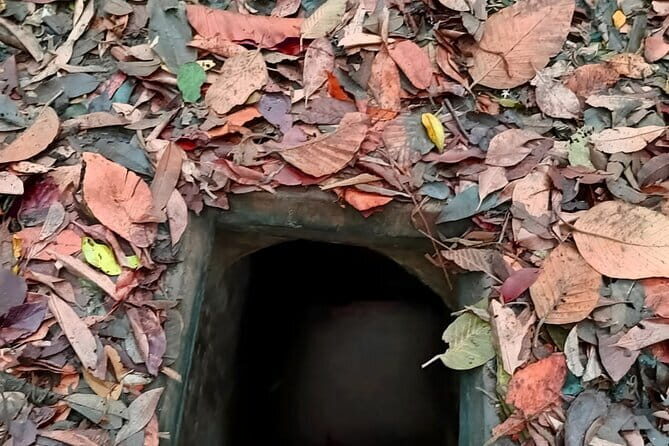
The heart of the day is the tunnel complex. This isn’t just one crawl-through. It’s a multi-level tunnel system with functional rooms, hidden access points, and built-in wartime engineering.
Here’s what you should expect to look for while you’re moving through:
- Living quarters and other daily-use spaces, so the tunnels feel inhabited rather than “storage.”
- Working and meeting areas, which helps you understand that these were not only escape routes.
- A medical chamber, a reminder that injuries were part of the war’s daily grind.
- Weapon storage and other concealed areas.
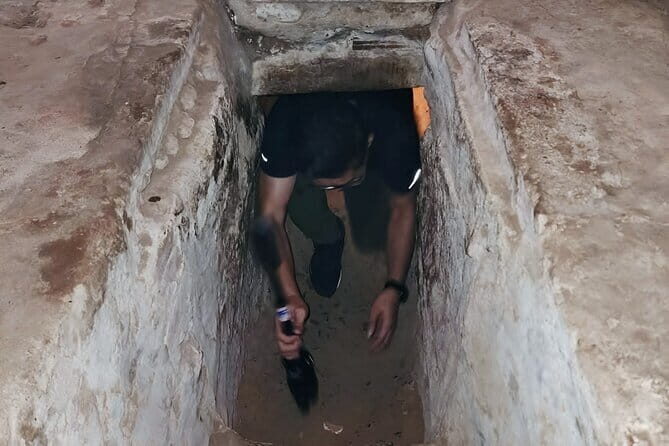
- Hidden entrances and exits plus wartime traps.
- Ventilation holes that show how they managed airflow underground.
Why this is valuable for you: it turns tunnel viewing into problem-solving. You start noticing how the tunnels solve issues like concealment, movement, and ventilation. You’ll likely come away with a clearer sense of why underground systems were crucial, not optional.
Fit and comfort note
The experience says most travelers can participate, and a service animal is allowed. Still, plan for tight spaces. The tunnels involve narrow passageways and underground chambers, so if you dislike cramped areas or struggle with uneven footing, consider your comfort level ahead of time.



Hoang Cam kitchen: smoke-disguising cooking makes the war feel real
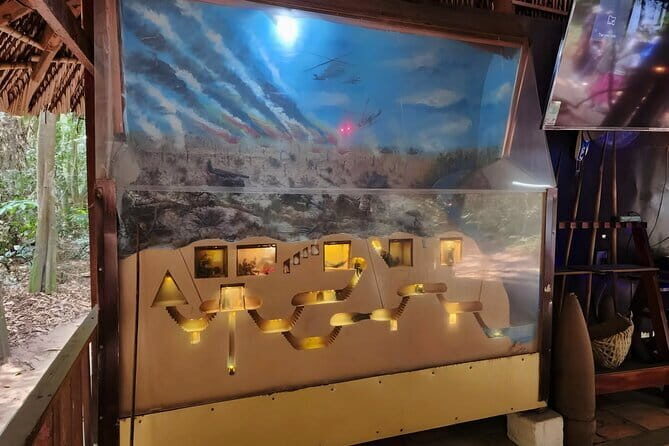
One of the most memorable specifics in the tour description is the “Hoang Cam” kitchen, described as a smoke-disguising cooking technique.
Even without getting graphic, you can understand the logic: when you’re underground and trying not to give away your position, cooking becomes more than comfort. Heat and smoke can betray you. Seeing or hearing how this method worked helps you connect engineering to daily survival.
This is the kind of detail that a good guide will tie back to the human side of history. And the reviews you’ll read for this tour repeatedly praise guides for answering questions and keeping the explanations energetic—people like Thang and Thanh are noted for their history storytelling, while Minh and Mark are mentioned for friendly, clear guidance. If your guide’s style matches those examples, the kitchen stop won’t feel like a random display. It’ll feel like a small window into what life required.
Beyond tunnels: the open-air museum and wartime equipment
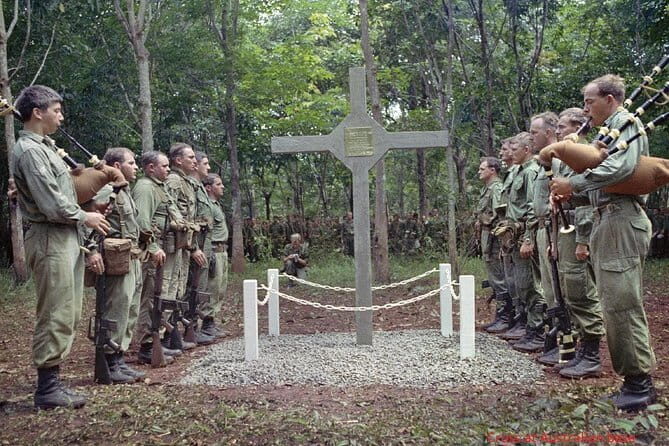
After the underground portion, the tour shifts your focus to surface displays. The open-air museum is described as featuring aircraft, tanks, bombs, and various weapons.
This part is useful because it anchors the underground story in real-world objects. When you’re inside tunnels, it’s easy to imagine the war as only concealment and movement. The museum lets you reconnect that underground system to what it was built to protect you from—and what it was built to support.
What to watch for here:
- Try to identify how the items might connect to the broader story your guide is telling.
- Ask questions if your guide brings up context like supply lines, shelter needs, or the roles of different weapons.
This is also a good moment to reset your body. Tunnel time can be a full-body experience. Open-air stops give you space to breathe and take photos (within whatever rules are posted on-site).
Ben Duoc Memorial Temple: names engraved on stone

The Ben Duoc Memorial Temple is one of the most emotionally grounded stops on the itinerary. It’s described as a place to honor fallen soldiers, with names of tens of thousands of martyrs engraved on stone tablets.
This visit matters because it changes the tone. You’re not just learning how people hid. You’re remembering that hiding and fighting had consequences measured in real lives. Even if you’re not a “memorial person,” this stop has a way of staying in your mind, mostly because the scale is clear from the stone tablets.
If you’re traveling with teens or older kids, this is often the part that clicks. It turns history from a story into a human accounting.
The reconstructed liberated zone: wartime daily life you can picture

Next is the reconstructed “liberated zone,” built to recreate wartime landscapes and daily life. This is the most “scene-setting” part of the experience, but it can still help you understand the war’s rhythm.
Why it works: it gives your brain a place to file what you saw underground. You can start linking tunnel rooms to daily routines—where people might have gone, what life may have looked like, and how the environment shaped choices.
Just keep your expectations realistic. This is a recreation. The value is in helping you connect concepts, not in expecting exactness down to every detail.
The gun range option: fun for some, extra cost for everyone else

The tour doesn’t include the shooting gun. It’s listed as an optional extra at 60,000 VND per bullet. If you want to do it, leave room in your budget.
Two practical tips:
- Decide ahead of time if you’re the kind of person who wants to try the range. If not, you can spend that time focusing on tunnels and museum details instead.
- If you do go for it, plan for it to be a distraction from the quieter, more reflective parts of the day.
This option is separate from the core tour, so it’s easy to treat as a bonus rather than a requirement.
Guides make the difference, especially for history-heavy days
This tour places a lot of weight on explanation. That’s where the guide really affects your experience. The transport and admission matter, but the tunnels and wartime details only land if someone can translate them into clear, understandable context.
The reviews associated with this tour strongly highlight guide energy and clarity, with specific names showing up again and again: Thang, Thanh, Khang, Minh, Mark, and James. Common threads in those comments include:
- Guides answering questions
- A lively, engaging style
- Stories told with pride and a firm grasp of Vietnam War context
- English that helps you follow along without needing to research every stop
If you’re booking for learning as much as sightseeing, this is a solid sign.
Group size, comfort, and what “included” really means
The tour caps at a maximum of 12 travelers. That’s not huge, and it helps you feel like you’re not just one face in a crowd. Smaller groups also make it easier for your guide to keep track of questions—especially in areas where the tunnel space gets tight.
Included items that make the day smoother:
- Air-conditioned vehicle
- Entrance fee
- Bottled water
- Hotel pickup and drop-off in the central area of District 1
- A mobile ticket
Not included:
- Shooting gun (60,000 VND/bullet)
- Tips
If you’re trying to compare value with other half-day tours in Ho Chi Minh City, this package has a few built-in wins: pickup from your area, entrance fee included, and the on-site guide. That usually matters more than saving a few dollars and losing guidance.
Price value: is $29 a smart deal?
At $29 per person, you’re paying for transport, admission, a guide, and basic comforts like bottled water. For a day that covers tunnels plus museum and memorial elements, it can feel like good value—especially because the guide is a major part of the experience.
The one caution is not the $29. It’s what you might spend on top of it:
- Optional gun range bullets (60,000 VND per bullet)
- Tips (always optional, but practical if someone kept you organized and informed)
In other words, you can do this as a straightforward cultural/educational day within budget, as long as you don’t let the extra activities quietly add up.
Who should book this Ben Duoc tunnels tour?
I’d point you toward this tour if you:
- Want a history-focused experience that’s more than a single photo stop
- Like tours where the guide helps connect underground engineering to wartime survival
- Travel with someone who appreciates memorials, not just sights
It may be less ideal if you:
- Don’t handle cramped spaces well (the tunnels involve narrow passageways)
- Want lots of free time to wander without structure (this is a guided, scheduled experience)
If you’re in Ho Chi Minh City for a short stay, this is also a strong use of time. You get tunnels, weapons displays, and memorial context in one outing rather than scattering across several separate tickets.
Should you book this tour or choose something else?
Book it if you want one guided day that explains how Ben Duoc’s tunnels worked and why they mattered, while also giving you memorial context and wartime scene-setting on the surface.
Skip or research further if:
- You’re sensitive to tight indoor spaces.
- You’re expecting a true short “half-day” with minimal travel time.
- You can’t confirm whether your specific booking day focuses on Ben Duoc or another tunnel site mentioned in some itinerary text.
One last practical thought: wear closed-toe shoes and dress for comfort. Underground spaces can be tight and you’ll be on your feet for a while, so you’ll enjoy the day more if your body feels supported.
FAQ
What time does the Half Day Ben Duoc Tunnels tour start?
The tour starts at 8:00 AM.
How long is the Ben Duoc Tunnels experience?
The duration is listed as approximately 7 to 8 hours.
Is hotel pickup and drop-off included?
Yes. Pickup and drop-off are included for centrally located hotels in District 1.
Where do we meet for the tour?
The meeting point listed is 203 Đề Thám, Phường Phạm Ngũ Lão, Quận 1, Thành phố Hồ Chí Minh 700000, Vietnam.
What does the $29 ticket include?
The ticket includes an air-conditioned vehicle, an English tour guide, entrance fee, bottled water, and hotel pickup and drop-off in central District 1.
Is the shooting gun included?
No. The shooting gun is not included. It’s listed as 60,000 VND per bullet.
How many people are in the group?
The tour has a maximum of 12 travelers.
Are service animals allowed?
Yes, service animals are allowed.
Can I cancel for a refund, and what happens if weather is poor?
You can cancel for a full refund up to 24 hours in advance. If the experience is canceled due to poor weather, you’ll be offered a different date or a full refund.