REVIEW · HO CHI MINH CITY
Ho Chi Minh City Half-day Tour
Book on Viator →Operated by BestPrice Travel., JSC · Bookable on Viator
That fast Saigon hit never really slows down. This half-day tour takes you through five major stops—history, museum exhibits, French colonial architecture, and local shopping—so you can get your bearings without eating up your whole day. It starts at 8:00 am and wraps around 12:00 pm, which is perfect when you want more time for your own wandering later.
What I like most is how efficient the route is. You cover the Reunification Palace, the War Remnants Museum, and classic sites like Notre Dame Cathedral and the Saigon Central Post Office in a single morning. I also appreciate that it’s a private tour for just your group, with an English-speaking guide plus practical extras like bottled water and wet tissue.
One drawback to consider: pickup timing. There’s been at least one report of a late pickup with no quick response to messages. If you book, I’d make sure you’re ready early and message again the morning of, so you’re not stuck waiting.
In This Review
- Key highlights worth planning for
- Half-day timing that works when your days are already full
- Reunification Palace: the war’s end, seen in one place
- War Remnants Museum: photos you can’t unsee, plus outside displays
- French colonial classics: Notre Dame Cathedral and the Central Post Office
- Shopping time at the local market: Ao Dai silk and practical shoe browsing
- Price and value: what $46 gets you for a morning of major sights
- Logistics that can make or break your morning (pickup timing matters)
- Who this half-day tour suits best
- Should you book this Ho Chi Minh City half-day tour?
- FAQ
- What time does the Ho Chi Minh City half-day tour start and end?
- How long is the tour?
- What’s included in the tour price?
- What important sights are included?
- Is lunch included?
- What’s the cancellation policy?
Key highlights worth planning for
- Reunification Palace: a single building that captures the end of the Vietnam War in 1975.
- War Remnants Museum: photo-based storytelling plus outdoor displays of US military vehicles.
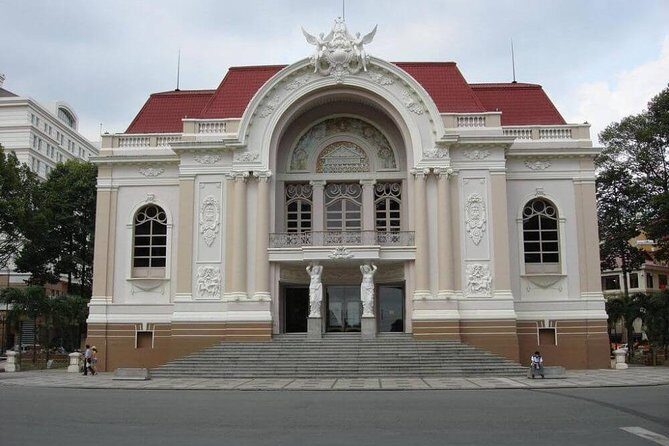
- Notre Dame Cathedral & Saigon Central Post Office: classic French colonial landmarks built over 100 years ago.
- Local market time: practical browsing for shoes and Ao Dai silk—less touristy than many shopping stops.
- Time-boxed morning: designed to finish around noon, then return you to your hotel.
Half-day timing that works when your days are already full
Ho Chi Minh City can feel like it runs on full throttle—motorbikes, commerce, street food smells, and that constant sense that something is happening. This half-day format is smart because it gives you a concentrated hit of the city’s major themes: war and its aftermath, colonial-era architecture, and daily life in the markets.
The schedule is built around a morning start. You begin at 8:00 am, and the tour ends around 12:00 pm, when the car returns you to your hotel. With a duration listed as 4 to 6 hours, plan for traffic and short transitions—especially in the morning—so you don’t feel rushed if a stop runs long or you take more time for photos.
Because it’s private, you won’t be shuffled around with a large group. That matters here: the Reunification Palace and War Remnants Museum are both places where pace changes depending on how much you want to read and look.
You can also read our reviews of more city tours in Ho Chi Minh City



Reunification Palace: the war’s end, seen in one place
The tour starts with the Reunification Palace, known for being the former residence of the President of the Republic of Vietnam. The key reason this stop sticks with people is that it’s not just a building—it’s the setting tied to a specific moment: on 30 April 1975, North Vietnam soldiers entered the building with a red flag, and the world recognized the Vietnam War was ending.
What makes this visit valuable on a half-day schedule is focus. A guide can help you look past the fact that it’s a museum-like site and instead understand how space reflects power: rooms, formal areas, and the physical layout that once supported government decision-making.
Practical advice: treat this as a “slow photo stop,” not a quick one. Give yourself a few extra minutes to look around rather than just taking wide shots at the entrance. If you move through fast, you’ll miss the details that make the story feel real.
War Remnants Museum: photos you can’t unsee, plus outside displays
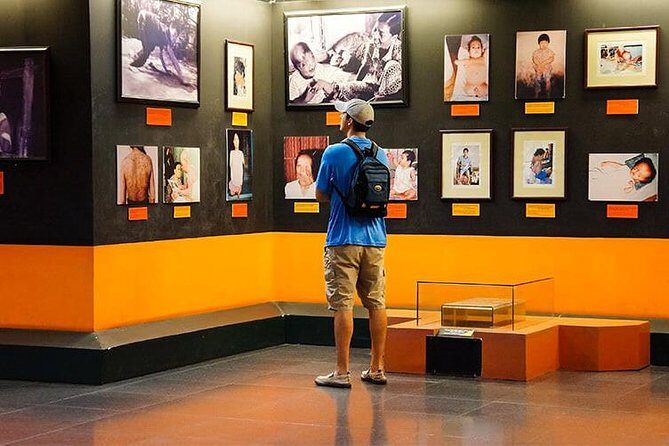
Next comes the War Remnants Museum, and it’s the tour’s emotional anchor. The exhibits include many photographs sourced from both Vietnamese and US references. That balanced mix matters because it reduces the chance you’ll only see one angle of a complicated conflict.
Outside the museum, you’ll also see US military vehicles displayed—things like tanks, jet, booms. This outdoor viewing is useful if you want an immediate sense of scale, even before you settle into the photo exhibits.
A caution that’s worth taking seriously: this is not a light-hearted stop. Plan your mindset. If you’re traveling with kids, you’ll want to decide in advance how your group handles heavy themes. The tour itself includes a general “most travelers can participate” note, but it doesn’t say the museum tone is softened for younger visitors.
Practical advice for your visit: wear comfortable shoes and keep water in mind. You’ll likely stand, walk, and spend time reading captions. If you’re sensitive to graphic imagery or extended descriptions, go section by section rather than trying to see everything at once.
French colonial classics: Notre Dame Cathedral and the Central Post Office
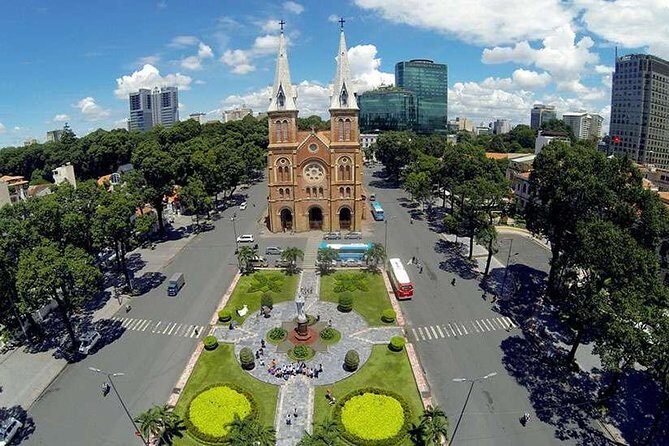
After the museum, the tour shifts gears to classic architecture. Two of the most famous (and oldest) French colonial buildings in the city are on the list: Notre Dame Cathedral and the Saigon Central Post Office, both built more than 100 years ago.
I like this transition because it helps your brain reset. After the weight of the War Remnants Museum, you get something more straightforward: tall façades, recognizable structure, and the feeling of walking through a different era of city design.
Notre Dame Cathedral is the big visual draw—especially for first-time visitors who want a “this is Saigon” landmark moment. The Saigon Central Post Office is different: it’s not just photo-worthy, it also gives you a sense of how colonial-era infrastructure helped shape daily movement and commerce.
Practical tip: these are popular photo stops, so bring patience and expect crowds around the most iconic angles. For the best experience, spend a few minutes looking for details beyond the obvious front view—doorways, interior framing (where permitted), and the way the building lines up with the surrounding streets.
Shopping time at the local market: Ao Dai silk and practical shoe browsing
The tour finishes with a local market visit. This is where the morning turns from major landmarks to everyday life. The market is described as having a wide selection of goods, ranging from shoes to beautiful Ao Dai. In practical terms, that means you can do real browsing rather than only looking at one curated souvenir stall.
Why I think this works well in a half-day tour: markets in Ho Chi Minh City are where you see how people actually live—what they wear, what they buy, and how commerce shows up on sidewalks and in stalls. It’s also a good place to pick up something useful as a memory: shoes that fit your travel wardrobe, or silk that you can bring home as a special garment or fabric keepsake.
A tip for market shopping: don’t feel pressured to buy right away. Look first, then compare. If you’re interested in Ao Dai silk, focus on what you’re actually getting—fabric feel and any details you can inspect—rather than just the visual color in a stall light.
If you’re short on time, set a budget before you walk in. A guided market visit can tempt you with many options in a short period.
You can also read our reviews of more tours and experiences in Ho Chi Minh City






Price and value: what $46 gets you for a morning of major sights
At $46 per person, this is priced as a classic “major sights” half-day. The value part isn’t just the cost—it’s what you’re effectively outsourcing.
Included:
- transfer
- English-speaking tour guide
- mineral water (1 bottle per tour)
- wet tissue
Not included:
- lunch
- personal expenses
- tips
- beverages
- VAT
Here’s the practical math from a visitor’s point of view: you’re paying for an English guide to connect the dots across multiple sites in a single morning, plus transport that saves you from coordinating and paying for separate trips between scattered parts of the city. For a first visit, that’s often worth more than it seems on paper, because it compresses decision-making. You spend your time looking at buildings and reading captions, not figuring out where to go next.
Also, because it ends around noon and returns you to your hotel, you can plan a low-stress afternoon—street food, a café break, or another museum you choose based on your interests.
Logistics that can make or break your morning (pickup timing matters)
This tour starts at 8:00 am, and the company indicates confirmation at booking. The experience provider is BestPrice Travel., JSC, and the tickets are listed as mobile ticket.
The one real red flag isn’t about the itinerary—it’s about punctuality. At least one account reported being ready for pickup between 7:30 and 8:00 am, then waiting until 8:15 with no response to messages before requesting a refund. The lesson isn’t to assume it will happen to you. The lesson is to protect yourself.
Here’s what I recommend if you book:
- Be in the pickup spot a bit early, not exactly at the start time.
- Message to confirm pickup the day before and again on the morning.
- Keep your phone handy. If your plan is time-sensitive, don’t rely on one message only.
In a city like Ho Chi Minh City, mornings can be chaotic. Even when everything goes well, traffic and coordination can stretch timelines. A little extra readiness keeps small delays from turning into a travel headache.
Who this half-day tour suits best
This tour fits best if you want a first-trip overview with real structure. It’s a good match for:
- first-timers who want the biggest landmarks without building a route yourself
- visitors who like history and documentary-style exhibits (especially with the War Remnants Museum)
- travelers who prefer a private morning plan over joining a larger group
- people who want to be back at their hotel by around lunch to continue on their own
It’s less ideal if you’re looking for a long, relaxed day with lots of free time, or if your group dislikes heavy subjects. The museum portion can take emotional bandwidth, and the half-day schedule means you’ll be moving on rather than lingering for hours.
Should you book this Ho Chi Minh City half-day tour?
If your goal is a high-impact morning with minimal planning, I’d say yes—with one caveat about pickup timing. The big draw here is how much you see in a short window: the Reunification Palace, the War Remnants Museum, two major French colonial landmarks, and a market stop for real-life shopping.
The overall score is strong: 4.8 out of 19 reviews, with 95% recommended. That tells me most people feel the tour delivers what it promises. Still, because there’s been at least one sour experience tied to late pickup and communication, your best move is simple: confirm early and wait smart.
If you’re traveling with kids or someone sensitive to war imagery, think carefully about how your group handles heavy museum content. If you’re comfortable with that, this is a solid value way to see core parts of Ho Chi Minh City before noon.
FAQ
What time does the Ho Chi Minh City half-day tour start and end?
It starts at 8:00 am. The tour finishes around 12:00 pm, when the car transports you back to your hotel.
How long is the tour?
The duration is listed as approximately 4 to 6 hours.
What’s included in the tour price?
The price includes transfer, an English-speaking tour guide, mineral water (1 bottle per tour), and wet tissue.
What important sights are included?
You’ll visit the Reunification Palace, the War Remnants Museum, Notre Dame Cathedral, Saigon Central Post Office, and a local market with items like shoes and Ao Dai.
Is lunch included?
No. Lunch is not included in the tour.
What’s the cancellation policy?
Free cancellation is available. You can cancel up to 24 hours in advance of the experience start time for a full refund.