REVIEW · HO CHI MINH CITY
Ho Chi Minh City Sightseeing Panoramic Cyclo Private Tour
Book on Viator →Operated by Vietnam - Ho Chi Minh City Package Tours · Bookable on Viator
A ride on a cyclo gives you a slower, clearer view of Ho Chi Minh City. I like that this tour is built around panoramic touring plus a friendly local rider—so you’re not stuck staring at a map while the city zips by. You’ll glide past major landmarks and also get chances to slow down for photos, ask questions, and take in everyday neighborhoods.
Two things I really like are the flexible route (you can choose a shorter highlights loop or a longer option with extra stops) and the English-speaking guide who can add context while you ride. The other plus: pickup and drop-off at your hotel keeps you from losing time to taxis and street-finding.
One possible drawback: the ride cost you see online is not the full cyclo price. You still have to pay a rider fee of 100,000 VND per hour, and that applies for each cyclo, so it can add up if you choose a longer duration or you’re riding with multiple cyclo units.
In This Review
- Key things to know before you go
- Why a panoramic cyclo tour works so well in Ho Chi Minh City
- How the private ride is structured, and what that means for your day
- The classic core route: Notre-Dame Cathedral, Nguyen Hue, and City Hall areas
- Lam Son Square theatre and the Central Post Office for the architecture lovers
- Saigon River views and Independence Palace: the big pivot of the city’s story
- Longer route adds real texture: the bunker, the Pink Church, and coffee-area scenes
- Rider fee, timing, and the real cost of comfort
- What the guide actually does (and why it affects your photos)
- Best for who should book this cyclo panoramic tour
- Should you book this panoramic cyclo tour? My practical call
- FAQ
- How long is the Ho Chi Minh City panoramic cyclo tour?
- What is the price per person?
- Does the tour include hotel pickup and drop-off?
- Is the tour private?
- Is there an English-speaking guide?
- Do I have to pay an extra rider fee for the cyclo?
- Can the itinerary be customized?
- Can we stop for photos during the ride?
- Is government tax included?
- Is free cancellation available, and up to when?
Key things to know before you go

- You can pick your time window: options run about 1 to 3 hours (and the concept is also offered in 1-, 2-, 3-, or 4-hour styles).
- Hotel pickup and drop-off means you start and end without logistics stress.
- Stops include the big hits and the surprises: Notre-Dame Cathedral, Central Post Office, Independence Palace, plus extras on longer routes.
- River views are part of the plan, so you’re not only staring at street corners.
- Your route can pause for photos—just tell the guide or rider.
- English guide + local rider teamwork makes it easier to understand what you’re looking at.
Why a panoramic cyclo tour works so well in Ho Chi Minh City
Ho Chi Minh City is not a place you understand from a few photos. It’s loud, fast, and visual—so the best way to “get the city” is to move through it slowly enough to notice details. A cyclo does that. You sit higher than you would on foot, you’re not fighting traffic like pedestrians do, and you pass by buildings and street scenes in a way that feels closer to how people actually live here.
This particular tour leans into the idea of a panoramic ride: you keep rolling between key sights rather than bouncing around with long gaps. And because it’s a private tour, your group sets the pace. If you want time at a cathedral front, you can ask. If you want a quick stop for a photo and then back on the road, you can do that too.
One practical bonus is orientation. Even when you’re not chasing every landmark, the ride helps you learn the city’s major corridors—places like Nguyen Hue Boulevard and the central district streets where many famous buildings sit close together. By the end, you usually feel like you know where you are relative to the bigger sights, which makes later self-guided wandering much easier.
Also, the vibe is relaxed. A cyclo isn’t designed for racing. That suits a city where “seeing everything fast” often turns into “seeing nothing clearly.”
You can also read our reviews of more city tours in Ho Chi Minh City



How the private ride is structured, and what that means for your day
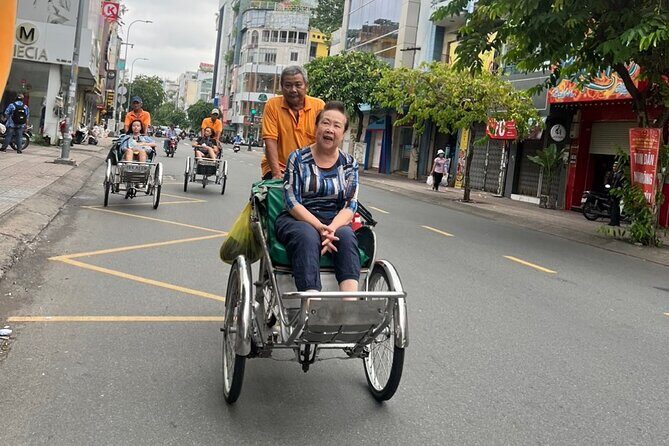
This is set up as a private tour/activity, meaning only your group participates. That matters because you’re not sharing your guide’s attention with strangers who are trying to keep a rigid schedule. You can ask questions in real time, request a stop, and adjust how often you want photo breaks.
The timing is flexible. You’re choosing a tour length around 1 to 3 hours (approx.), and the broader concept includes 1-, 2-, 3-, and 4-hour options. Shorter tours focus on the highlights; longer tours add more neighborhoods and lesser-seen sites. If you’re tight on time—say you only have a morning or late afternoon—this is easier than committing to a full-day plan.
Pickup and drop-off are part of the package. That’s not a small detail. In District 1, traffic can be annoying, and finding the right drop-off point can waste time. With hotel pickup, you can spend that energy on the route itself.
One more “day planning” point: the tour is designed so you can stop for photos whenever you want. That means the ride time can stretch a bit depending on your group. If you have a later dinner reservation or another booking, I’d give yourself buffer time—because the joy of this tour is stopping where you care.
The classic core route: Notre-Dame Cathedral, Nguyen Hue, and City Hall areas
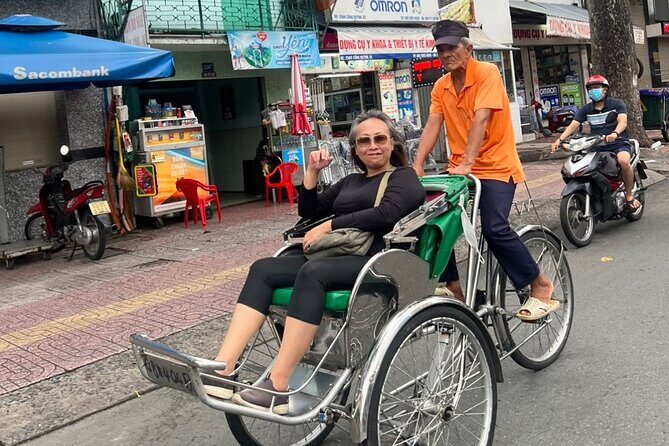
A big part of why this tour works is that it starts with recognizable central sights and keeps them spaced out. In a short ride, you get the visual anchors that help you understand the city’s layout and influences.
You’ll pass by and stop near Notre-Dame Cathedral of Saigon. This is one of the city’s most photographed religious landmarks, and seeing it from the cyclo is a good way to take it in without turning it into a “rush through the front gates” experience. The rider moves slowly enough that you can get decent angles for photos, and the guide can offer simple orientation so it doesn’t feel like you’re only reading a sign.
Next is Nguyen Hue Boulevard in District 1. This is a key downtown artery, and it’s where the city’s energy shows up fast—broad road, major buildings, constant movement. Even if you don’t get out to walk much, just seeing it from the cyclo helps you connect the city’s “main show street” to the surrounding landmarks.
From there, you’ll glide past the People’s Committee headquarters—a landmark built during the French colonial period, constructed from 1898 to 1908 and inaugurated in 1909. Buildings like this matter because they explain why certain areas still feel architectural and administrative in tone. You’re not just seeing a pretty facade; you’re seeing a clue about how the city developed.
Lam Son Square theatre and the Central Post Office for the architecture lovers
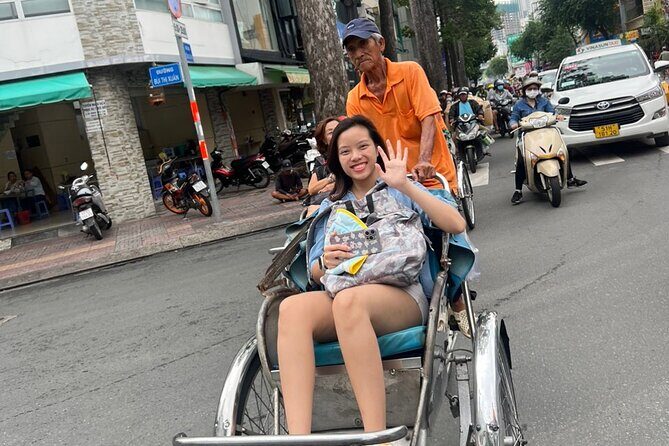
If you like architecture you can recognize from a distance, this section is for you. You’ll head through central streets where important public buildings sit in view or within short reach.
The tour includes a major theater with a facade facing Lam Son Square and Dong Khoi Street (District 1). You don’t need to know every name to appreciate the setting. Seeing a theatre facade from the cyclo gives you a sense of place—how it aligns with nearby streets and squares—and it’s a good photo stop without spending your whole time in crowds.
Then comes one of the most memorable stops in the central route: Saigon Central Post Office. This building is described as French-built over about five years, from 1886 to 1891. I like this stop because it’s not just “look at the outside.” It’s the kind of place that connects past and present—postal service as infrastructure—so even a brief pause feels purposeful.
From a comfort point of view, the cyclo helps here too. You can get close to entrances and angles, then roll on when you’re ready. If you’re planning to keep walking later, this stop gives you something strong to anchor your mental map.
Saigon River views and Independence Palace: the big pivot of the city’s story
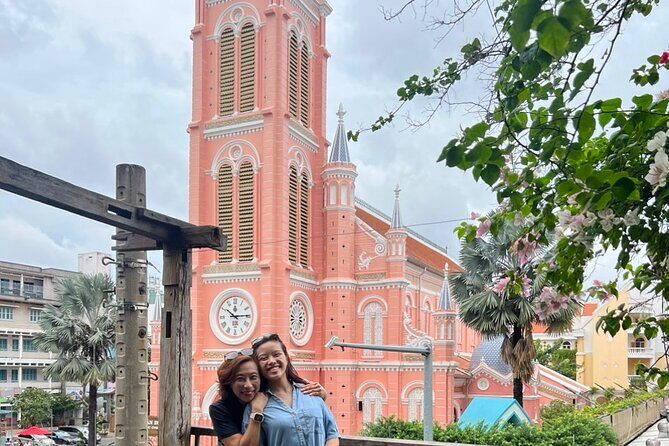
This tour doesn’t treat the city like a set of random photos. It also includes moments where you look outward, not just at facades. One stop is riding along the Saigon River to see river views and the skyline. Even if you’re not a “river person,” it’s a helpful break from dense streets. It also gives you a sense of scale—where the city breathes, not just where it crowds.
After that, you’ll reach Independence Palace, also known as the Reunification Convention Hall. This is the kind of landmark that can feel heavy even when you’re just viewing it from the outside. The tour’s approach—short stops, slow ride, guide context—helps it land better than a rushed sightseeing sprint.
Independence Palace is tied to modern Vietnamese history and political change, so it’s worth treating this as a thinking stop. If your group likes photos, you’ll get those. If your group likes understanding, you’ll have time to ask the guide what to notice.
A helpful tip for this part: if you’re not sure where to look, ask your guide. Guides on this style of tour are used to helping people get the right perspective fast—especially when you’re moving on a vehicle rather than standing in one place for long.
You can also read our reviews of more private tours in Ho Chi Minh City






Longer route adds real texture: the bunker, the Pink Church, and coffee-area scenes
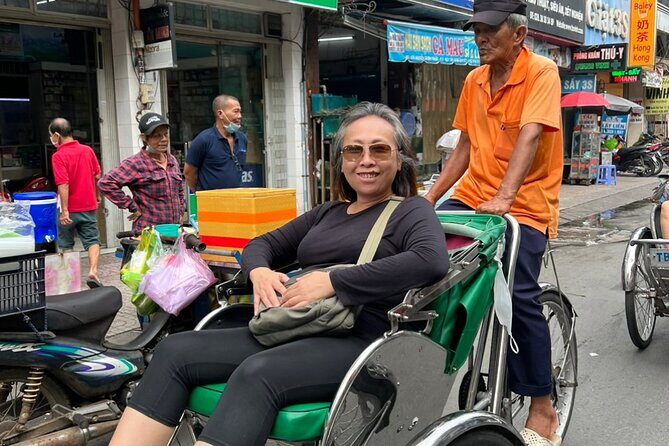
The best reason to choose the longer option is simple: you stop feeling like you’re only seeing the city’s headline page. On extended routes, the tour includes additional stops that add texture and contrast.
One standout is the visit near a secret bunker beneath a café in downtown. This bunker is described as a hiding place for nearly two tonnes of Vietcong weapons used during the 1968 Tet Offensive—a turning point in the war. Even without going deep into every historical detail, seeing the site in the city’s current setting makes the past feel less abstract. It’s also a memorable photo opportunity because it’s so unexpected.
Next, you may get Tan Dinh Church, often called the Pink Church. This is a Catholic church in Tan Dinh parish. It’s the kind of stop that adds color and visual surprise—something you can’t fully get from the central core route.
On longer tours, you may also pass by or stop around places like Coffee Apartment, Ho Thi Ky Market, Bui Vien Street, and a Temple. Not all of these will be on every duration option, but the idea is consistent: more local flavor, more everyday scenery, and more variety between landmarks.
There’s also a route area linked to war-era housing described as apartments constructed in 1968 after the Tet Offensive, originally housing soldiers serving in the US military during the Vietnam War. Those apartments are noted as being adjacent to Bàn Cờ Market. Again, this kind of stop benefits from guide context, because it’s easy to see buildings and miss what changed over time.
Rider fee, timing, and the real cost of comfort
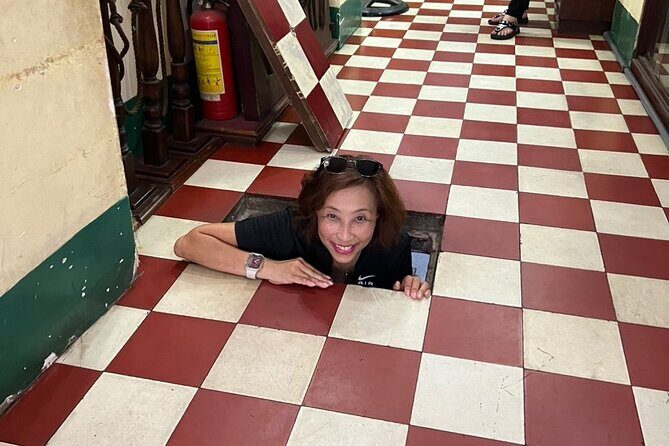
Let’s talk money in plain terms. The tour price is shown at $31.57 per person, and it includes things like pickup and drop-off at your hotel, an English-speaking tour guide, flexible itinerary, and government tax.
But the main extra is the Cyclo Rider Fee of 100,000 VND per hour, and it applies per person/cyclo as stated. That means your final cost depends on how long you book. If you choose a 2-hour tour versus a 3- or 4-hour tour, the rider fee changes the math.
Here’s how I’d think about value: this tour is paying for three things working together—local rider time, a guide, and the convenience of being picked up and dropped off. If you’ve never ridden a cyclo, the rider fee is part of what makes it possible. The comfort and the slow panoramic pacing can be worth it compared with bouncing around by taxi and trying to find photo angles.
Also, because it’s private, you’ll feel the guide’s value more. On a shared bus tour, you might get “here’s the landmark.” On a private cyclo, you tend to get better attention and more practical guidance about what to look for and where to pause.
One caution: if your schedule is fragile, keep it flexible. One unhappy story tied to a time-change issue highlights a real-world truth—if your plans shift late, it can affect what happens next. So if you’re doing this between other strict commitments, build a buffer.
What the guide actually does (and why it affects your photos)
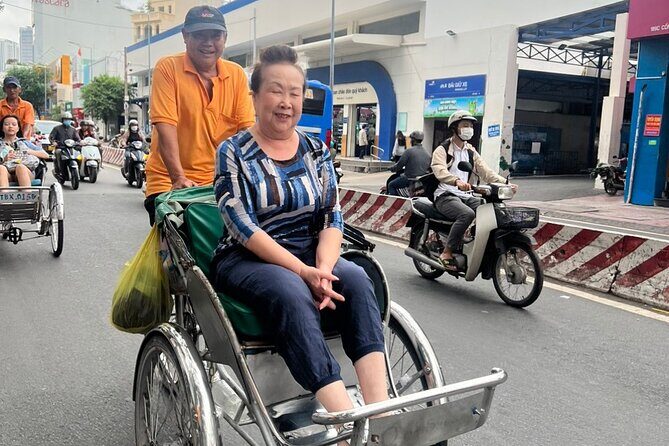
The tour lists an English speaking tour guide, and the best moments tend to come when the guide gives you quick context at major stops. You’re not waiting for a long lecture. You’re getting just enough to turn a building or street into something meaningful.
In one set of experiences, a guide named Paul stood out for being friendly, knowledgeable, and very good at taking photos along the way. That matters because a cyclo is moving. It’s easy to get blurry shots if you’re trying to manage your phone and your timing at the same time. When the guide helps with photo pacing, you get better results without stress.
You also benefit from the rider’s local sense. The cyclo rider isn’t just pedaling; they’re also navigating traffic and positioning for views. That’s why it feels “easy” rather than chaotic.
If you want great photos, here’s the simple strategy: ask your guide before you stop what they recommend photographing, then tell them where you want your group’s shot. When you do that, you’ll get more than random snapshots—you’ll get images that actually tell a story.
Best for who should book this cyclo panoramic tour
This tour is ideal if you:
- Want an easier way to get oriented in District 1 without spending the day bouncing around.
- Like history and landmarks but prefer a calmer pace than walking-only tours.
- Appreciate photo stops that don’t require you to constantly judge timing and angles.
- Have limited time and want a route that mixes major sights with optional side stops.
It may be less ideal if you’re looking for a very active walking tour. A cyclo gives you mobility and comfort, but you’re not doing long-distance foot exploration. Also, if you’re on a tight budget, the rider fee can be the deciding factor since it’s added per hour.
Best timing depends on your schedule and daylight preferences. The only guidance I can give from what’s provided is practical: you’ll cover lots of central streets and you’ll ride toward the river, so plan for normal city conditions and expect the ride to be influenced by traffic flow.
Should you book this panoramic cyclo tour? My practical call
Book it if you want a smooth first-time experience that helps you understand Ho Chi Minh City fast. The mix of big-name landmarks, easy pacing, hotel pickup/drop-off, and an English-speaking guide is built for convenience. The rider fee is the trade-off, but the comfort and panoramic flow can feel like good value—especially if you’re not trying to squeeze the city into one rushed afternoon.
Skip it or choose a shorter duration if you:
- Are very cost-sensitive and don’t want the hourly rider fee to affect your total.
- Prefer self-guided wandering where you control every step on foot.
- Have a tight timetable where any extra photo pauses could cause stress.
If you decide to go, I’d pick the duration that matches your energy. A shorter tour gets you the headline sights. A longer tour is better when you want those surprise stops like the bunker beneath a café and the Pink Church experience.
FAQ
How long is the Ho Chi Minh City panoramic cyclo tour?
The tour runs about 1 to 3 hours (approx.), depending on the option you choose.
What is the price per person?
The price is listed as $31.57 per person.
Does the tour include hotel pickup and drop-off?
Yes. Pickup and drop-off at your hotel are included.
Is the tour private?
Yes. It’s a private tour/activity, so only your group participates.
Is there an English-speaking guide?
Yes. The tour includes an English speaking tour guide.
Do I have to pay an extra rider fee for the cyclo?
Yes. The Cyclo Rider Fee is 100,000 VND per hour, and it applies for each cyclo.
Can the itinerary be customized?
Yes. The itinerary is described as flexible, so you can tailor the stops to your interests.
Can we stop for photos during the ride?
Yes. If you want to stop, you can tell the tour guide or rider, and they will stop for a while for photos.
Is government tax included?
Yes. Government tax is listed as included.
Is free cancellation available, and up to when?
Yes. You can cancel up to 24 hours in advance for a full refund. If you cancel less than 24 hours before the start time, no refund is available.