REVIEW · HO CHI MINH CITY
Private China Town Walking Tour in Ho Chi Minh City
Book on Viator →Operated by Magic Karp tour · Bookable on Viator
Your feet do the sightseeing.
This private Cho Lon Chinatown walk turns Ho Chi Minh City into a story you can actually follow, from Binh Tay Market to major Chinese temples and a church tucked into the same busy neighborhood. Expect a guided route that explains why these places sit next to each other—and what the statues, myths, and architecture mean in everyday community life.
I especially like that the tour is set up for real context, not just stop-and-snap photos. You get a guide who can adapt to what you care about—recent feedback highlights guides like Ben for humor and storytelling and Casey for tailoring the afternoon to the group. I also like the practical value: coffee or tea is included, and the stops are presented with free admission notes, so you’re not constantly hunting for entrance fees.
One thing to think about: it is a walking tour in the older districts, so you’ll want comfortable shoes and a simple plan for getting to the start area. If you’re far from the Ben Thanh zone, pickup has a cost if you’re beyond the stated 1km radius, and Grab or a short taxi ride may be the easiest option.
In This Review
- Key points at a glance
- Cho Lon Chinatown on foot: what makes this walk different
- Price and timing: does $31.63 feel fair?
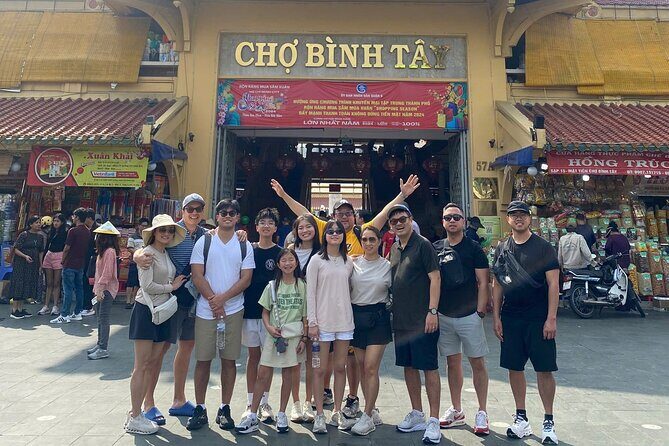
- Binh Tay Market: starting with business, color, and an origin story
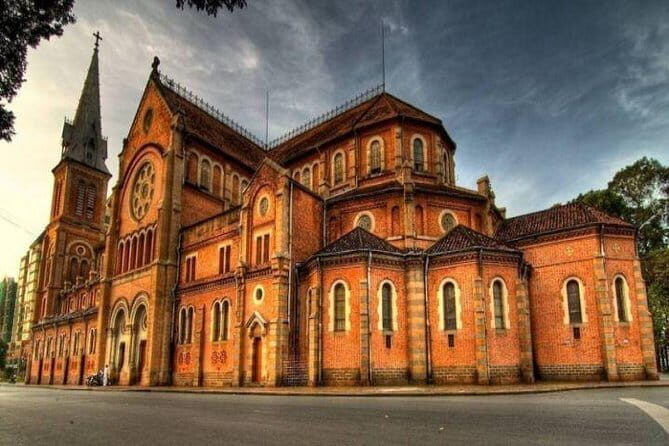
- St Francis Xavier Church in the big-market area
- Ong Bon Pagoda: the God of the Sky and architectural clues
- Ba Thien Hau Temple: myths of the sea goddess, plus the other gods
- Nghia An Temple: Quan Cong, his horse, and money worship
- The cold sweet treat moment (and why it fits the walk)
- How the guide shapes the whole experience (Ben, Casey, and the tailoring effect)
- Getting from Quận 6 to Quận 5: where this route lands
- Who this tour suits best, and who might want a different option
- Should you book this private Cho Lon walking tour?
- FAQ
- How long is the Private China Town Walking Tour in Ho Chi Minh City?
- Where does the tour start and end?
- What is included in the price?
- Is pickup available?
- Are admissions included at the stops?
- Is this a private tour?
- Do I need to speak a specific language?
- Is the tour affected by weather?
- Can service animals join the tour?
Key points at a glance
- Cho Lon on foot with clear religious and cultural context, including how the neighborhood mixes Chinese and other influences
- Binh Tay Market first, with a guide-led walkthrough and a story tied to the market’s origins
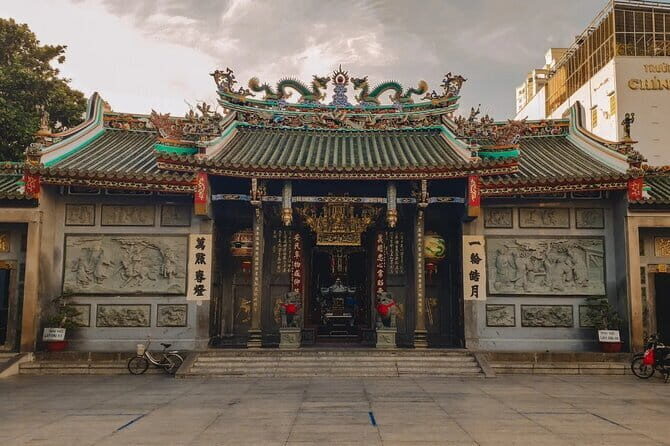
- Temples you can read like a map, from the God of the Sky at Ong Bon to the sea goddess at Thien Hau
- Nghia An Temple as a payoff stop, focused on Quan Cong (Three Kingdoms period) and the money-related worship themes
- Private tour format, just your group, with an English or Japanese guide
- Coffee or tea included, plus a chance for a cold sweet treat during the walking rhythm
Cho Lon Chinatown on foot: what makes this walk different
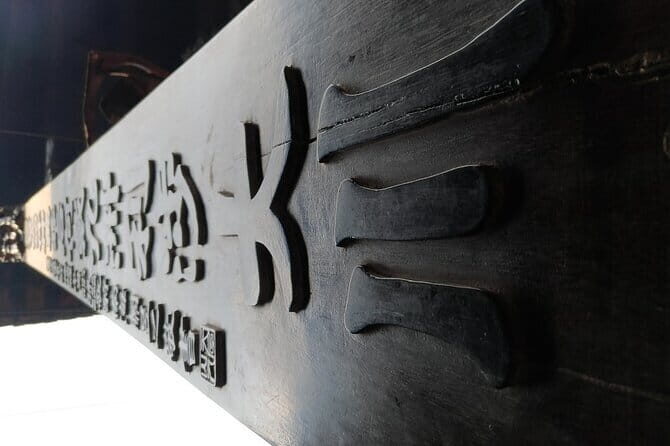
Cho Lon is where Ho Chi Minh City slows down and shows another face of Vietnam—one shaped by Chinese-Vietnamese life. This tour works because it does not treat the area like a museum. You move through streets and places people still use: markets, small religious sites, and community temples. The guide ties it together so you’re not just staring at carvings without knowing what you’re looking at.
I like that the route includes both religious spaces and a market center. Markets tell you how business and daily rhythm work; temples and churches explain the meaning behind the symbols you see. The pacing also makes sense for a 3 to 4 hour outing: you get multiple stops, but each one is short enough that you’re not exhausted before the best parts.
You’ll also get that “how did these beliefs sit together” angle. Chinese community temples often share the same geographic space with other faith buildings in the broader area, and the guide is there to point out differences in design and worship focus as you go.
You can also read our reviews of more walking tours in Ho Chi Minh City


Price and timing: does $31.63 feel fair?
At about $31.63 per person, this isn’t a budget-only tour, but it also isn’t trying to price like a private driver for half a day. The value comes from three things you get in one package: a private format, an in-person guide (English or Japanese), and private transportation with an option for pickup.
Time-wise, plan on 3 to 4 hours. That’s long enough to see the core highlights around Cho Lon, without turning your afternoon into a full-day commitment. The itinerary is built around stops of roughly 30 to 45 minutes each, plus walking between locations—so your biggest limiter will be your shoes and the heat.
One more practical detail: the tour includes a mobile ticket, and the stops are noted with free admission. That matters because it reduces surprise costs mid-walk. If you’re the type who hates pulling out your phone every 10 minutes to check fees, this schedule is calmer.
Binh Tay Market: starting with business, color, and an origin story
Your tour begins at Binh Tay Market, a logical starting point because it’s where the energy is highest. The guide takes you through the market to see how Vietnamese Chinese people do business here. That’s useful because market life is not just background scenery. It’s a window into networks—how people trade, communicate, and build community inside the market lanes.
Then you shift from browsing to meaning. At the center of the market, you hear a story about the man who created the market. Even when you think you’re only stopping for photos, these origin stories give you a mental map. You start noticing signage, stall rhythms, and how the space is organized rather than treating it like a maze.
A small caution: markets are active. Expect crowds, moving around people, and the occasional smell of food and spices. This is part of the experience, but if you’re sensitive, it’s smart to keep a light plan for breaks and water.
St Francis Xavier Church in the big-market area
Next comes St Francis Xavier Church, and this stop adds balance. A lot of Chinatown tours focus only on one belief system. Here, the guide explains the range of religions that get celebrated in this big-market neighborhood, and it places the church in the wider local context.
You’ll also hear an “untold story” angle connected to the church—why it matters as part of the area’s linkages. The point is not to turn you into a religion scholar. It’s to show how different communities can share space and still keep distinct identities.
This is also a good mental reset. After the market’s constant motion, a church stop gives you a calmer pace for listening, looking at architectural cues, and letting your brain connect the dots between Western and Eastern influences in the wider district.
Ong Bon Pagoda: the God of the Sky and architectural clues
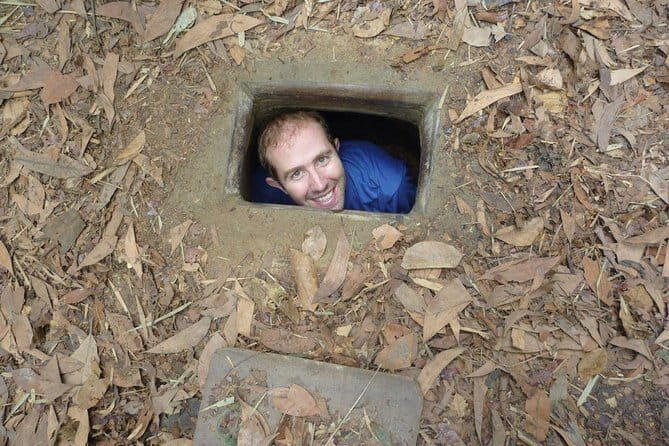
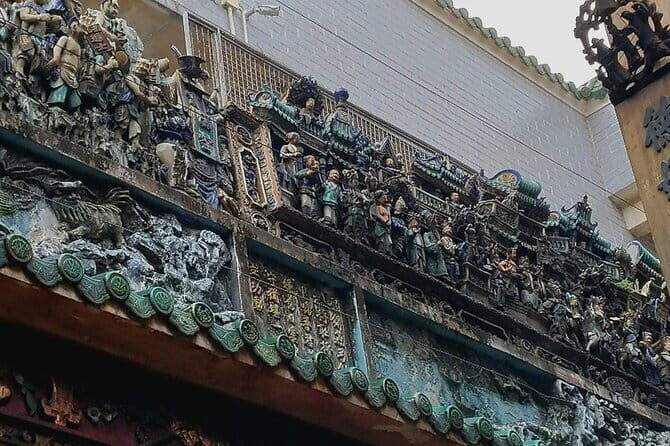
At Ong Bon Pagoda, the guide brings you close to the worship theme centered on the God of the Sky. This isn’t just about recognizing a statue name. The guide points out differences between the architect of temples in the big-market area—so you learn how local design preferences and community identity show up in buildings.
The value here is that you stop treating temple architecture like decorative clutter. You start reading it like language. Roof shapes, placement of key figures, and how spaces are arranged can hint at how a community understands heaven, weather, protection, and daily guidance.
The time on site is about 30 minutes, which is just enough to understand the main meaning without feeling rushed. If you usually like “short and clear,” this stop fits your style. If you love to linger, you might want to take a little extra time afterward on your own, but that’s a personal choice.
You can also read our reviews of more city tours in Ho Chi Minh City



Ba Thien Hau Temple: myths of the sea goddess, plus the other gods
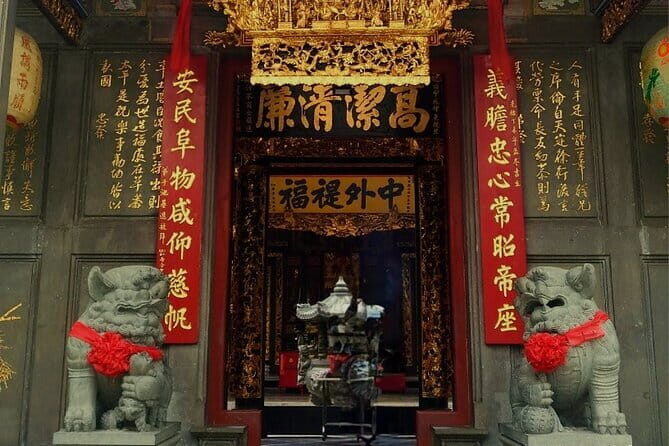
Ba Thien Hau Temple is one of the big cultural anchors on this route. You’ll hear the mythology story of Ms. Thien Hau, known in the Chinese community as the sea goddess. The guide then helps you meet the other gods in the temple.
This matters because Thien Hau worship is often linked to coastal safety and community well-being. Even if you don’t have a personal coastal background, understanding that theme makes the temple feel like a living support system rather than a set of statues.
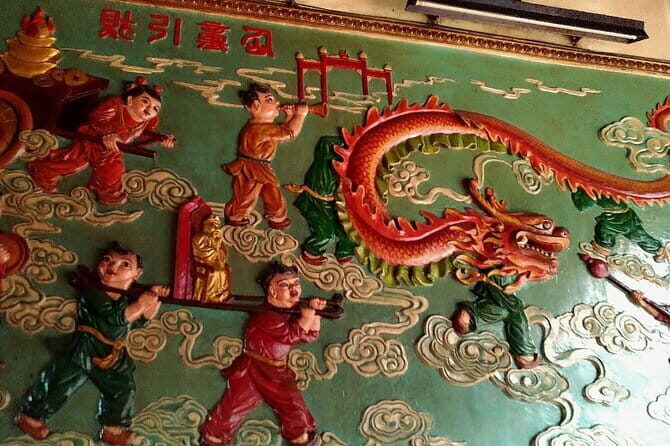
The architecture and layout also help you feel the community logic. The guide’s job is to connect what you see—figures, altars, and offerings—to why those things exist. Without that guidance, many people just walk past with a camera. With guidance, you’re actually building a mental framework of what each area inside the temple is for.
Expect about 45 minutes here. It’s long enough to feel satisfying, but not so long that you’ll start losing attention.
Nghia An Temple: Quan Cong, his horse, and money worship
The final stop is Nghia An Temple, where the focus shifts to action and protection themes through figures like Quan Cong. The guide explains Quan Cong as the general from the Three Kingdoms period (184–280), plus the idea of his famous horse. You’ll also hear about God of the money worship context.
This stop is a great payoff because it anchors everything you’ve heard earlier. Markets bring you daily livelihood. Temples bring you spiritual support for security, success, and community structure. A money-related deity theme often shows up in places like this because it reflects the real hopes people carry.
Time here is about 45 minutes, which is enough for you to ask questions, observe how worship happens, and leave with something tangible in your head. If you tend to skip the last stop because you’re tired, this is the one I’d push you to stay alert for—it’s the most clearly story-driven of the route.
The cold sweet treat moment (and why it fits the walk)
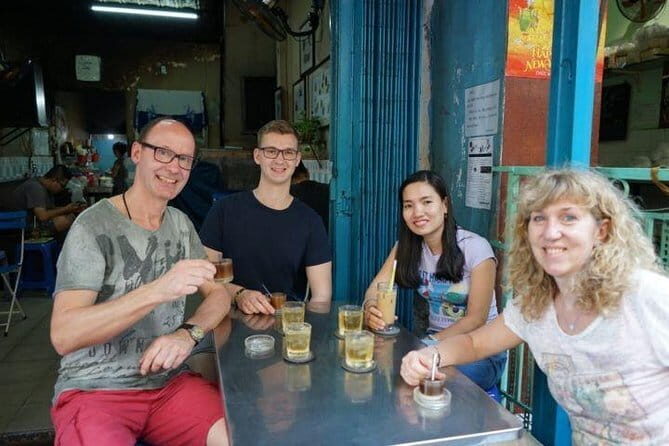
The experience includes a moment to enjoy a nice cold sweat treat during the wandering. You won’t want this to become a full meal. Think of it as a small reset: cool down, pause for a minute, and keep moving without losing the flow.
I like including a food moment on a walking route because it keeps the experience human. You’re not just passing through monuments; you’re experiencing how the neighborhood cools off during the day while people continue their routines.
Since details like exact brand or type of sweet aren’t spelled out here, the best move is to let the guide handle the timing. They’ll know when the group pace is right for a quick break.
How the guide shapes the whole experience (Ben, Casey, and the tailoring effect)
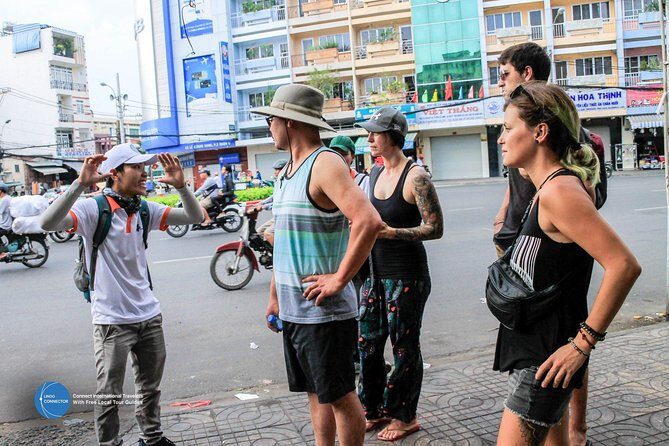
A walking tour can fail in one of two ways: the guide talks like a textbook, or the guide just points without context. This one aims for the middle. The guide explains what you’re seeing, then adds story layers that help you remember it later.
Two names show up with positive energy in feedback: Ben and Casey. Ben is described as funny and talented, and Casey is praised for being very informative and tailoring the tour to interests. You don’t have to share the same interests as the group for this to matter. Tailoring is usually about pacing, how much detail to give, and which stories land best for your questions.
Practically, your job as a visitor is simple: ask at least one question. Even something basic like why a certain deity is important in this area can turn a stop from scenic to meaningful.
Also, guides here work in English or Japanese, and that language coverage matters because it reduces the chance you’ll miss the details that make each stop worth it.
Getting from Quận 6 to Quận 5: where this route lands
The start is at Binh Tay Market, 57A Tháp Mười, Phường 2, Quận 6. The end is at Hội Quán Nghĩa An, 678 Nguyễn Trãi, Phường 11, Quận 5. That’s a useful detail because it means you’re not just looping in one tight block. You’ll be walking and experiencing the transition of the Chinatown area’s feel.
If you’re staying near the city center, plan for a short ride out at the beginning. The tour notes pickup is offered, but pickup outside a certain radius from Ben Thanh market carries a $10 per customer charge. In practice, a quick Grab or taxi hop to the start point is often easier than trying to optimize a pickup that might add fees.
If you hate logistics, the included private transportation helps. You’re not responsible for solving the route between stops; the guide and provider handle it.
Who this tour suits best, and who might want a different option
This is a strong pick if you want a local-feeling neighborhood walk with guided context. It fits couples and small groups who want a few hours that aren’t just generic sightseeing. You’ll also like it if you enjoy religious and cultural symbols explained in plain language, especially when those symbols link to daily life and community identity.
It’s also a good fit if you already saw some big Ho Chi Minh City highlights and want something more grounded in neighborhood life. This tour is built around markets and temples, not distant monuments.
You might reconsider if you need a super-relaxed outing with minimal walking. Even though the stops are time-limited, you are still doing a street-level walk in Cho Lon. Heat and crowd density can make it feel longer than the stated duration.
Should you book this private Cho Lon walking tour?
If your ideal Ho Chi Minh City experience includes markets, temples, and a guide who tells stories that make what you see feel logical, book it. At $31.63, the mix of an English/Japanese guide, coffee or tea, and the structured 3 to 4 hour route is good value for a private format. The stop order is smart too: start with market life, then connect to religious spaces, then end with the story-focused Quan Cong money-theme stop.
I’d book it especially if you want a tour that feels flexible at the human level. Feedback names like Ben and Casey point to real storytelling and tailoring, which is exactly what you want in a walking tour where details matter.
Skip it only if you’re not into walking, or if you need lots of indoor time. This experience also relies on good weather, so plan your schedule with that in mind.
FAQ
How long is the Private China Town Walking Tour in Ho Chi Minh City?
It runs about 3 to 4 hours.
Where does the tour start and end?
It starts at Binh Tay Market (57A Tháp Mười, Phường 2, Quận 6) and ends at Hội Quán Nghĩa An (678 Nguyễn Trãi, Phường 11, Quận 5).
What is included in the price?
Coffee and/or tea are included, along with private transportation and an in-person tour guide in English or Japanese.
Is pickup available?
Pickup is offered, but if your pickup location is outside 1km from Ben Thanh market, there is a $10 per customer charge.
Are admissions included at the stops?
The itinerary notes indicate free admission tickets for each listed stop.
Is this a private tour?
Yes. Only your group will participate.
Do I need to speak a specific language?
No. The guide can provide the tour in English or Japanese.
Is the tour affected by weather?
Yes. The experience requires good weather. If it’s canceled due to poor weather, you’ll be offered another date or a full refund.
Can service animals join the tour?
Yes, service animals are allowed.