REVIEW · HO CHI MINH CITY
Saigon On 2 Wheels
Book on Viator →Operated by Ho Chi Minh Scooter Tour · Bookable on Viator
Saigon looks different at scooter speed. This ride threads together serious memorial sites, lively markets, and major French colonial landmarks in just 3–4 hours—with an English-speaking guide to connect the dots while you stay out of the worst “figure it out” time. It’s a smart way to get your bearings quickly and see more than you’d manage on foot.
I especially like the small-group feel (up to 10) and the way guides can make the city story make sense. In the best outings, you’ll hear clear explanations from guides like Yang and Paul, or Binh and Ninh, plus real personality—flexible, funny, and easy to talk to while traffic does its thing.
One drawback to plan around: Independence Palace entry isn’t included, and pickup is free only for hotels in District 1 and District 3 (other areas cost extra). Also, to avoid the one-off pickup failure that can happen in any city, I’d double-check your timing and confirm details the day before.
In This Review
- Key Highlights You’ll Feel on the Ride
- Getting Oriented Fast on a Scooter in Ho Chi Minh City
- Thich Quang Duc Monument: A Serious Start That Sets the Tone
- Ho Thi Ky Flower Market: Colors, Prices, and What Gets Sold Here
- Ba Thien Hau Temple in Cholon: Chinese Sea Goddess Beliefs
- Saigon Notre Dame Cathedral: French Colonial Architecture You Can Feel
- Central Post Office: Where Old Tech Meets Vietnam’s Story
- Independence Palace: The Only Paid Entry and the War Timeline That Follows
- Ben Thanh Market and Saigon Opera House: Ending With Color and Colonial Style
- Price, Group Size, and What This Route Gives You for $15
- Small Practical Notes That Make or Break the Experience
- Who This Tour Is Perfect For (and Who Might Want a Different Plan)
- Should You Book Saigon On 2 Wheels?
- FAQ
- How long is the Saigon On 2 Wheels scooter tour?
- How much does the tour cost?
- What’s included in the price?
- Do I need to pay for any admissions during the tour?
- Is pickup available?
- Where do I meet the tour?
- Where does the tour end?
- What group size is used for the tour?
- What happens if weather is bad?
Key Highlights You’ll Feel on the Ride
- Scooter + helmet included, so you’re not hunting transport at busy hours
- English-speaking guide who can explain what you’re seeing, not just point at it
- History and everyday Saigon in one loop: memorials, temples, markets, and big landmarks
- Mostly free entry stops, so your money goes to enjoying, not ticket counting
- Built for short visits that still give you context (about 10–15 minutes per stop)
- End options: finish at Ben Thanh Market or return toward your start area
Getting Oriented Fast on a Scooter in Ho Chi Minh City
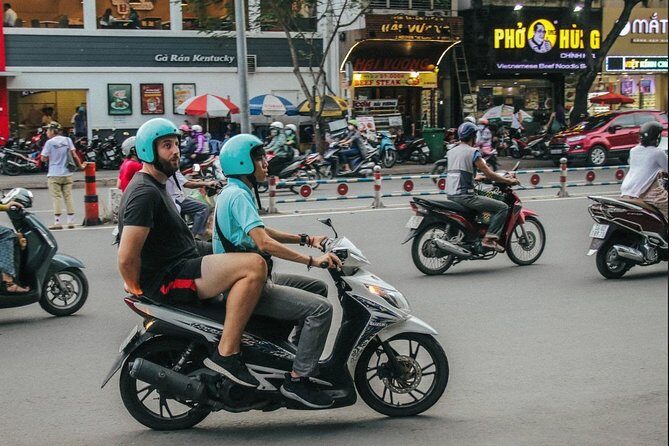
This tour is built for people who want results. You meet up around the War Remnants Museum area in District 3, then head out on a scooter through the kind of streets where walking can feel slow and confusing. In 3–4 hours, the route gives you a stack of sights that are spread around the city center and into Chinatown (Cholon), without requiring you to stitch together multiple rides.
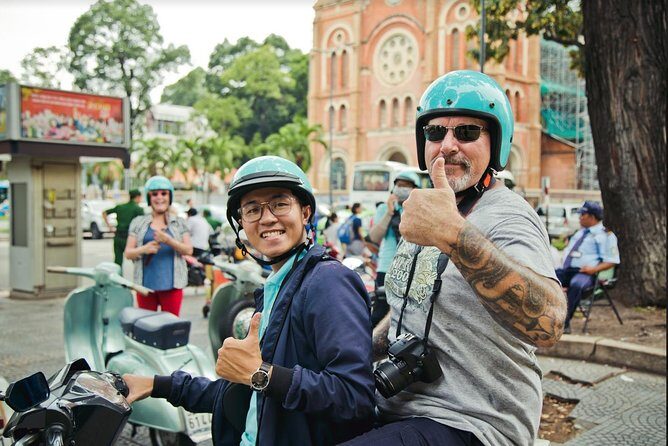
The scooter part matters. It’s not sightseeing from inside a bus window. You’re moving with the city, which means you notice the small textures—shopfront chatter, flower stalls, and temple details—before they blur into background. And because the operator provides a high-quality helmet and an English-speaking guide, you’re spending your attention on where you’re going, not on logistics.
Group size is capped at 10, which helps a lot. In places like Saigon, too many people can turn a “quick stop” into a long stall. A smaller group keeps the pace steady and the stops more enjoyable.
You can also read our reviews of more tours and experiences in Ho Chi Minh City.



Thich Quang Duc Monument: A Serious Start That Sets the Tone
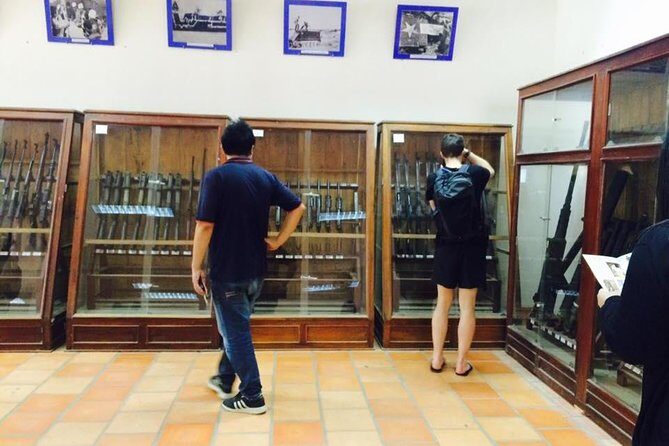
The ride opens at the Venerable Thich Quang Duc Monument. It’s a memorial tied to the monk Thich Quang Duc, who set himself on fire as a protest against the persecution of Buddhists in Vietnam. This stop works best when you slow your phone camera mode and actually look. The point isn’t spectacle—it’s context.
A good guide makes the difference here. If you’re expecting a casual photo stop, you might miss the emotional weight. But once you understand the story, the monument becomes a turning point for the whole day. It also helps you read later stops with more depth—especially when the route shifts into Vietnam’s 19th–20th century colonial and war-era landmarks.
Practical tip: dress for sun and be ready for heat. Even a short 15-minute stop can feel long if you’re sweating through the first minutes of your tour.
Ho Thi Ky Flower Market: Colors, Prices, and What Gets Sold Here
Next up is Ho Thi Ky Flower Market, one of those places where your senses get busy fast. You’ll see fresh flowers like chrysanthemum, marigold, gerbera, orchids, roses, and more. The tour description also notes that flowers come from places like Dalat and Hanoi, and even from outside Vietnam, so you’re not just looking at one local supply chain.
What makes this stop valuable is that it’s not only about the flowers. The market also sells garment-related tools and materials along with other items. So if you like everyday commerce—how neighborhoods buy what they need—this is a quick window into how Saigon functions beyond postcard sights.
The tone here shifts nicely from memorial seriousness to color and daily life. Even if you don’t buy anything, it’s a great place to practice the local rhythm: watch, smell, and take in the variety.
Small consideration: it’s a market. Expect crowds and lots of visual noise. Keep your camera hand steady and don’t let the sales pitch distract you from what’s worth seeing.
Ba Thien Hau Temple in Cholon: Chinese Sea Goddess Beliefs
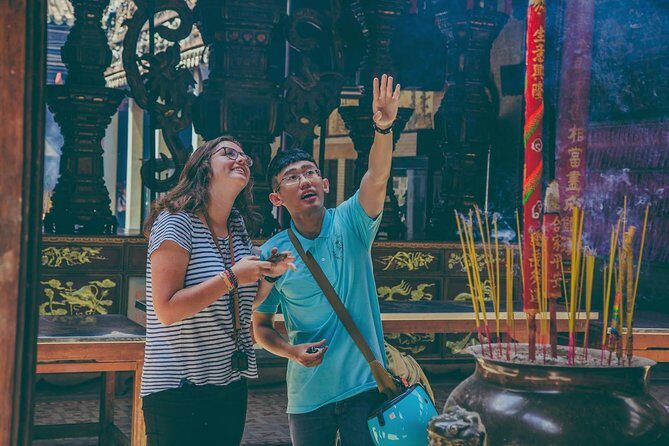
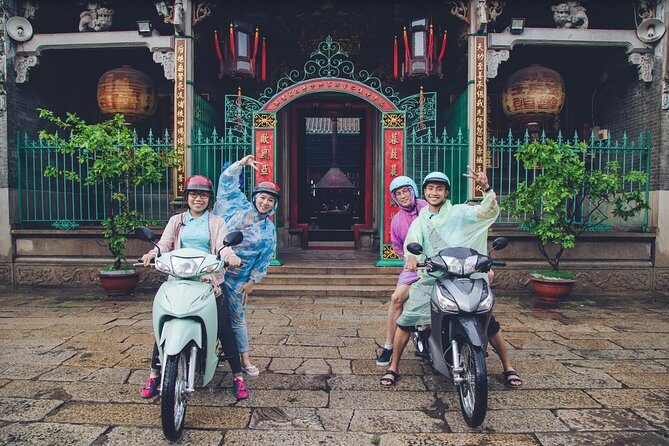
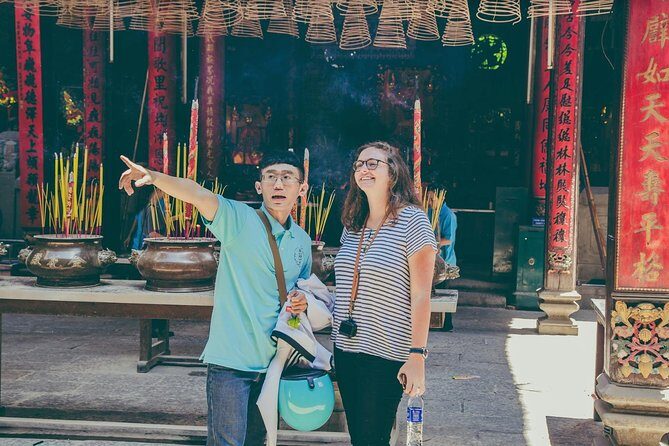
Then you move into Cholon (Saigon’s Chinatown) for Ba Thien Hau Temple. This temple is dedicated to Mazu, a Chinese sea goddess believed to protect and rescue people at sea. The background is tied to beliefs that combine parts of Taoism and Buddhism, so the religious atmosphere here feels like a cultural blend rather than one single strict lane.
This stop is short, about 15 minutes, but it’s the kind of place where the details reward attention. You’re not only looking at an ornate building. You’re seeing how communities express protection, luck, and identity. The guide’s explanation helps you connect why the temple matters, especially in a city shaped by travel, trade, and water routes.
If you’ve ever wondered why Saigon has so many layered influences—Vietnamese, Chinese, French, and more—this is one place where it becomes obvious. The culture shows up in the way the temple honors Mazu and in the way traditions merge.
Saigon Notre Dame Cathedral: French Colonial Architecture You Can Feel
After Cholon, the tour returns to big, iconic architecture: Saigon Notre Dame Cathedral Basilica. The cathedral was built between 1863 and 1880 by French colonists and modeled on Notre-Dame de Paris. It’s described as the most impressive cathedral in Vietnam and serves as the religious center for the country’s large Catholic community.
A quick 15-minute stop can still work because this is the kind of place where structure is the story. Look at the proportions. Look at the materials shipped over from France. Even if you’re not a cathedral person, you’ll likely catch how strongly the French imprint shaped the city’s visual identity.
One thing I like about including the cathedral in a scooter tour is that it gives you the “wow” stop without losing the rest of the day. On your own, you might skip it or miss the context.
Quick consideration: cathedral stops often depend on where you can walk and how busy it is. Plan to move with the group and keep the visit light, especially if there’s service activity.






Central Post Office: Where Old Tech Meets Vietnam’s Story

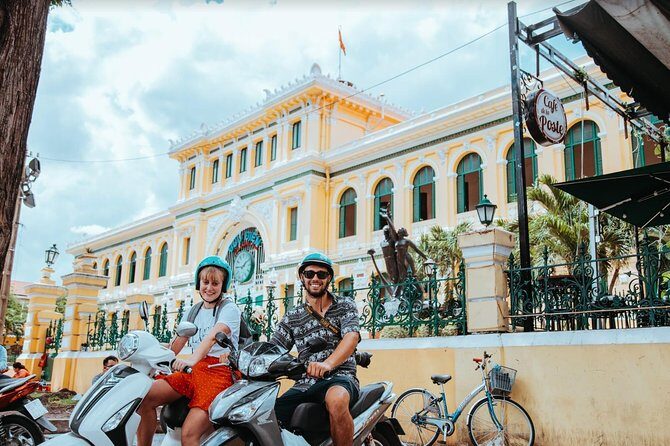
Next is the Central Post Office, constructed between 1886 and 1891. This is one of those interiors where you want to step inside and slow down. The tour description points to looping arches, intricately designed marble floors, and old telephone boxes—exactly the kind of details that make a building feel lived-in rather than museum-like.
Even more interesting is the way the building tells you what communication used to mean. There are overhead maps, including one showing telegraph lines crisscrossing Vietnam and Cambodia, and another showing the Saigon region in 1892. And at the far end, there’s a large portrait of Ho Chi Minh hanging high above everyone.
If you’re a person who likes infrastructure stories—ports, rail lines, post offices—this stop hits. It’s not just architecture. It’s a snapshot of how information traveled before email and mobile phones.
Practical tip: if you want photos, do it early in your 15 minutes. Interiors fill up faster than you expect.
Independence Palace: The Only Paid Entry and the War Timeline That Follows
The Independence Palace is the tour’s major “history anchor,” but it’s also the main place where you’ll spend extra money. Entry/admission for Independence Palace isn’t included, so budget for the ticket separately.
What you’re seeing is a landmark built on the site of the former Norodom Palace. The tour description says it was designed by architect Ngô Viết Thụ and served as the home and workplace of South Vietnam’s president during the Vietnam War. The most dramatic moment connected to this site is April 30, 1975, when a North Vietnamese army tank crashed through its gates, ending the Vietnam War during the Fall of Saigon.
Even with a short stop (about 10 minutes), it’s still worth it because the palace is one of the most direct physical reminders of a turning point in modern Vietnam. A guide helps you understand why this place is preserved in the form it is—why certain rooms and paths matter.
Consideration: since you’re paying extra here, make sure you’re comfortable with spending a bit more for the payoff. If you prefer to spend your time outside of interiors, this might be your one “ticket you accept” stop.
Ben Thanh Market and Saigon Opera House: Ending With Color and Colonial Style
The route finishes at Ben Thanh Market or returns toward the meeting point. The plan says you can finish at Ben Thanh, or you can request a return to your hotel by messaging to arrange it. Either way, Ben Thanh gives you a lively final hit—shopping energy, street life, and the kind of place where you can pick up snacks or souvenirs without feeling like you’re hunting alone.
Saigon Opera House (Ho Chi Minh Municipal Theater) is included as a free stop too, with French Colonial architecture. It’s another “look up, notice the facade” moment. When you’ve spent the day mixing memorials, markets, and post-office maps, this opera house helps you see the city’s layered past—how different eras left different styles on the same streets.
If you’re the type who hates rushed endings, ask your guide how much time you’ll have at Ben Thanh. The tour time is tight by design, but a quick plan can help you end on what you care about most.
Price, Group Size, and What This Route Gives You for $15
At $15 per person, this tour is priced like a value play, and it mostly lives up to that. Scooter and helmet are included, and you get a friendly English-speaking guide, which is the hidden ingredient that turns “seeing” into “understanding.” Most stops are free, which keeps the total cost predictable—except for Independence Palace entry.
The “what you get” formula here is pretty clear:
- You pay a low base rate for transport (scooter) and interpretation (guide).
- You avoid extra fees at several major landmarks because admission is listed as free for those stops.
- Your one built-in paid variable is Independence Palace.
The maximum of 10 travelers also helps value. You’re not stuck in a long shuffle where you spend more time waiting than looking.
If you’re comparing options: think about what’s most expensive for you—time or confusion. In a city where traffic and distances can drain energy, paying $15 to get a guided scooter loop can feel like buying back your day.
Small Practical Notes That Make or Break the Experience
Scooter tours reward people who come prepared. Wear clothes you can move in and shoes that don’t hate pavement. You’ll be in motion through busy streets, so quick-dry layers and sun protection can make the ride much more comfortable.
Also, the tour requires good weather. If weather is poor, you’ll be offered a different date or a full refund. That matters if your schedule is tight.
Finally, pickup is offered, but it’s not universal. The tour notes free pickup/drop-off only for hotels in District 1 and District 3, with an extra $3–$5 charge for others. If you’re staying elsewhere, confirm the pickup plan early so you’re not improvising at the last minute.
And yes, one unpleasant scenario can happen in any city: someone doesn’t show up or can’t reach you. To protect yourself, I’d make sure your contact details are correct and that you’re easy to find at the start time.
Who This Tour Is Perfect For (and Who Might Want a Different Plan)
This scooter loop is ideal for you if:
- You want a high-coverage introduction to central Saigon and Cholon.
- You like history, but you want it explained in real-world order, not as a textbook.
- You’re comfortable riding in busy traffic for a few hours.
It might be less ideal if:
- You dislike scooter riding or feel uneasy in dense street traffic.
- You prefer slower, longer museum-style visits instead of quick stops.
- You want every entry fee included (because Independence Palace isn’t).
For most people, it’s a strong “first pass” tour. It gives you names, places, and context—so later, when you return on your own, you’ll know what you’re looking at.
Should You Book Saigon On 2 Wheels?
I’d book it if your goal is simple: get a structured tour of major Saigon sights fast, with a guide who can explain what matters while you ride. At $15, the combination of scooter transport, free-entry stops, and English support is good value.
I’d also book it if you want a mix of categories: memorial, market, temple, cathedral, post office, war-era palace, and an opera house finish. It’s not one-note tourism.
The main reasons to pause are cost add-ons (Independence Palace entry) and pickup limits outside District 1 and 3. If you’re staying farther out or you hate last-minute surprises, confirm pickup carefully and plan to meet at the War Remnants Museum start if needed.
If you do that, you’ll come away with a clearer sense of Saigon than you’d get from wandering randomly for the same 3–4 hours.
FAQ
How long is the Saigon On 2 Wheels scooter tour?
It runs about 3 to 4 hours.
How much does the tour cost?
The price is $15.00 per person.
What’s included in the price?
You get a friendly English-speaking guide, a motorbike/scooter, and a high-quality helmet.
Do I need to pay for any admissions during the tour?
Most stops are free, but Independence Palace admission is not included.
Is pickup available?
Yes, pickup is offered. Free pick up and drop off is only for hotels in District 1 and District 3. Other areas cost an extra $3–$5.
Where do I meet the tour?
The start meeting point is near the War Remnants Museum in Phường 6, Quận 3, Hồ Chí Minh City.
Where does the tour end?
The tour typically ends back at the meeting point. It can also finish at Ben Thanh Market or return toward your hotel if you message to arrange it.
What group size is used for the tour?
The tour has a maximum of 10 travelers.
What happens if weather is bad?
The tour requires good weather. If it’s canceled due to poor weather, you’ll be offered a different date or a full refund.