REVIEW · HO CHI MINH CITY
Saigon Then & Now: A Bygone Cyclo Adventure
Book on Viator →Operated by Vietnam Tours VIP · Bookable on Viator
Four hours, and Saigon feels different. This tour is a smart mix of cyclo street time and guided history, from French-colonial landmarks to temple stops, plus photo-friendly market streets. I really like that the pacing keeps you moving like a local instead of stuck on a bus, and I also like the included pho meal that gives you a real break in the middle of the sightseeing. One thing to consider: it’s a packed route, so most stops are brief and you’ll want to come with questions if you want more conversation.
What makes this one work is the “then and now” idea played out on the ground. You start at major city-center icons and then shift outward to the neighborhoods where daily commerce is loud, visual, and totally unfiltered. If you’re the type who loves architecture and you want the practical texture of city life, this delivers.
The optional pickup and the private-group format help too. You’ll ride in cyclos (pedicabs) with a guide who can explain what you’re seeing, and guides such as Luc and Cici are specifically mentioned in the feedback as being strong on history and helpful with questions. Just remember: cyclo rides mean slower speed and frequent turns, not a straight “drive-by.”
In This Review
- Key highlights you’ll actually feel on this tour
- Cyclo Then & Now: Why pedicabs make sense in Ho Chi Minh City
- Meeting at Saigon Opera House and getting the flow right
- Central Post Office: French-Gothic details you can spot fast
- Reunification Palace: a symbol you feel in the room
- War Remnants Museum and French-colonial landmarks: understanding the story behind the streets
- Lacquer art at Dai Viet: where Vietnamese craft becomes tangible
- Ho Thi Ky Flower Market and the market-photo route: smell, color, and motion
- Electronics, motorbike parts, and fabric: the city’s practical side
- Pho 24: the included break that makes the tour worth it
- Ba Thien Hau Temple: cultural context, not just a photo stop
- What’s included for $74.11, and why it feels like a deal
- Logistics reality check: crowded streets, short stops, and how to plan
- Who this tour fits best (and who should skip it)
- Should you book Saigon Then & Now: A Bygone Cyclo Adventure?
- FAQ
- How long is the Saigon Then & Now cyclo tour?
- How much does it cost, and what’s included?
- Is pickup available?
- Where does the tour start?
- What are the main stops on the route?
- Is this tour private?
Key highlights you’ll actually feel on this tour
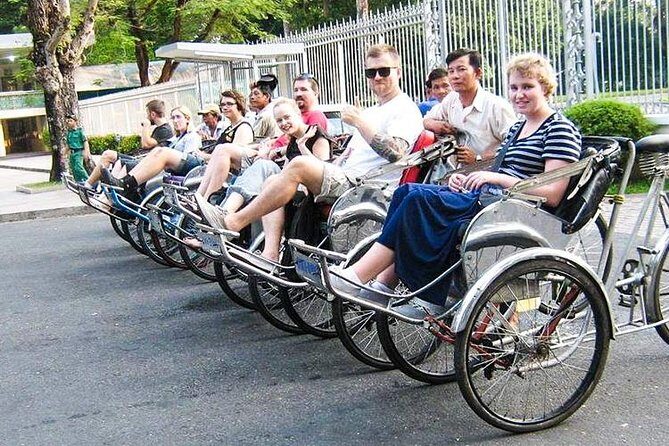
- Cyclo rides get you close to street life without the barrier of a coach window
- Short, meaningful stops at major landmarks like the Central Post Office and Reunification Palace
- Craft time at a lacquer gallery/workshop where Vietnamese artistry is the focus
- Market-photo route through the engine room of Saigon shopping, from flowers to electronics and fabric
- A real sit-down pho stop (included) instead of only snack stops
- Temple visit at Ba Thien Hau with cultural context tied to the sea goddess Mazu
Cyclo Then & Now: Why pedicabs make sense in Ho Chi Minh City
A cyclo tour is one of the best ways to understand Ho Chi Minh City because your body gets involved. You’re at human height, moving through traffic in a way that feels different than walking (and way more personal than a van). It’s a practical choice if you want photos, but also want to notice details you’d miss from behind glass.
This tour keeps that “then and now” theme going by pairing landmark sightseeing with commercial streets. Instead of only seeing museums and churches, you also get time where people trade goods every day—flowers, textiles, spare parts, and more. That contrast helps the city make sense fast, especially if it’s your first trip.
There’s also a comfort-value angle: the price includes bottled water, and you’re not expected to fend for yourself for lunch. That matters on a half-day because heat and walking add up.
You can also read our reviews of more tours and experiences in Ho Chi Minh City.



Meeting at Saigon Opera House and getting the flow right
You start at the Saigon Opera House area (07 Công trường Lam Sơn, Bến Nghé, Quận 1). The route is designed so you end back at the meeting point, which keeps things simple at the end of a busy day.
Many guests specifically note that guides met people on time, with one guide (Luc) mentioned for arriving promptly at a hotel. If pickup is offered for your booking, that can save stress—especially if you’re staying away from District 1.
Because it’s a private tour for just your group, you’re less likely to feel rushed by strangers. Still, the itinerary is full, so come ready to absorb a lot quickly. I’d treat this like a guided “map of the city’s big themes,” not a slow stroll with long museum time.
Central Post Office: French-Gothic details you can spot fast
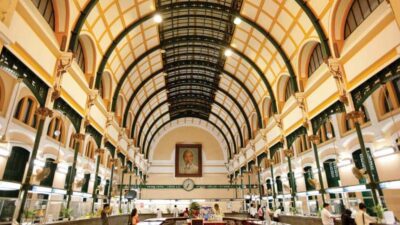
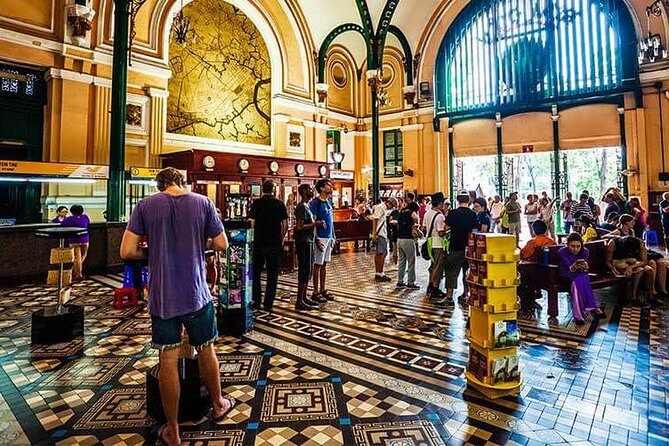
Your first big stop is the Central Post Office. It’s one of those buildings you can recognize even if you’ve only seen it on postcards, because the architecture has that unmistakable French-colonial/Gothic mix.
The practical value here is orientation. Once you see this building, you start noticing the French-era influence in the surrounding streets—straight lines, formal facades, and the way the city layout was shaped in earlier decades. You get a ticket included, but the real win is the guide’s framing: what you’re looking at is not just pretty stonework; it’s a symbol of how Saigon was organized during colonial times.
Time is short, so focus on the details you can actually see and photograph. Look for the structural rhythm, the entry area, and the way the building holds space.
Reunification Palace: a symbol you feel in the room
Next up is Reunification Palace, also known as Independence Palace. This place isn’t just about architecture—it’s a physical reminder of Vietnam’s turbulent history and the shift that followed.
The benefit of having a guide here is interpretation. A palace like this can feel like a set of rooms unless someone connects the dots between the space and the events tied to it. With a guided stop, you’re not just walking hallways; you’re learning how power was displayed and how decisions played out in real time.
You’ll have admission included, but don’t count on lingering. With a half-day format, you should be ready to move from room to room and let the guide “teach by pointing,” not by lecturing.
War Remnants Museum and French-colonial landmarks: understanding the story behind the streets

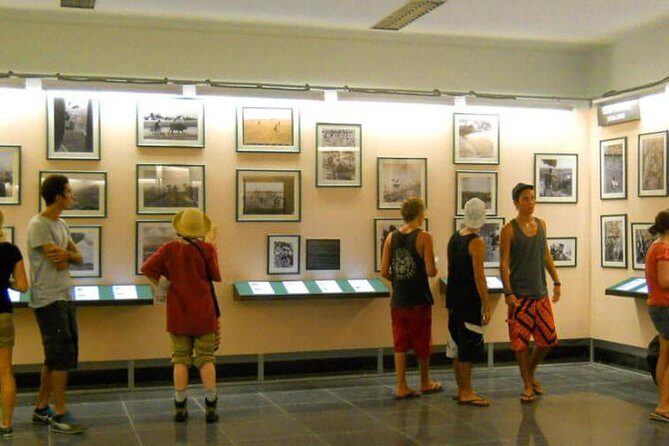
This tour’s background also includes War Remnants Museum, originally opened in September 1975. If you’ve ever wondered why Ho Chi Minh City carries certain memorial energy, this is where the context starts to come together.
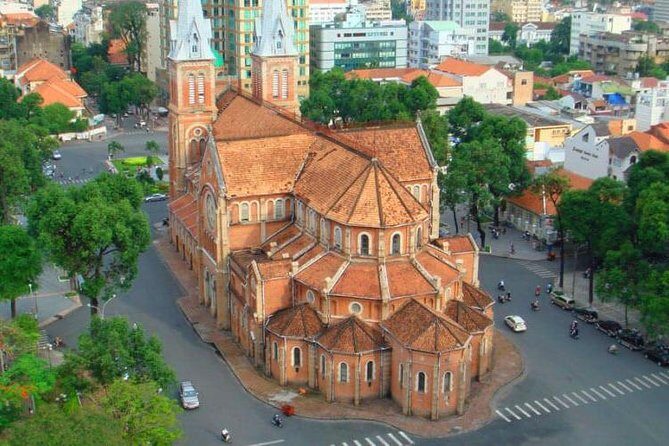
Along the way, the route also includes major French-colonial architecture like Notre Dame Cathedral and the General Post Office area. Even if you only get short visits, these landmarks anchor the “then” part of the story in something visual and walkable.
A quick word of realism: this kind of history stop can be emotionally heavy. If you know you prefer lighter pacing, you might want to mentally prepare for that shift. For most people, the payoff is big because the market streets later feel more meaningful once you understand what came before.


Lacquer art at Dai Viet: where Vietnamese craft becomes tangible
One of the most interesting stops is the lacquer gallery/workshop stop (Minh Phuong Lacquer / Dai Viet Lacquerware). This is a craft-focused visit, and that’s a nice break from war history and street traffic.
The value of this stop isn’t just shopping. It’s the chance to understand technique and tradition—why lacquerwork matters and how Vietnamese artistry shows up in objects you can actually see. If you like souvenirs, you’ll be in a better position to choose something with meaning instead of just buying something decorative.
Time is about 30 minutes here, so you’ll want to watch closely and ask questions if your guide encourages it. When guides are strong on history (Luc and Cici are mentioned for exactly that kind of interaction), the craft stop tends to feel more informative, less like a showroom.
Ho Thi Ky Flower Market and the market-photo route: smell, color, and motion
Ho Thi Ky Flower Market is a highlight of the early market stop. You’ll get a short visit, but it’s designed to give you the sensory impact of the city: color, fast movement, and the feeling that flowers are a daily part of life, not just a weekend thing.
After that, the tour becomes a photo-and-passing experience through major market streets. You can expect views and photo stops tied to the Flower Market and several specialty lanes like dog market, clothes market, chicken market, fish market, fruit market, and Binh Tay Market, plus areas tied to electronics, motorbike spare parts, and more.
Two practical notes:
- Markets can be hot and crowded even if your stop is brief, so wear breathable clothes and keep water handy (you get bottled water).
- Some market categories can be uncomfortable if you’re not expecting them. If animal-related stalls are a mental hurdle, you might want to keep your photos focused on general scenes instead of specific items.
Electronics, motorbike parts, and fabric: the city’s practical side
A big part of the route is focused on how Saigon runs. You’ll visit or pass through major hubs including:
- Nhat Tao Electronics Market, described as a large electronics and spare parts hub
- Tan Motorbike Spare Parts Market, known for motorcycle components and accessories
- Soai Kinh Lam Fabric Market, a major textile hub
- Binh Tay Market in Cholon, with a longer historical background tied to the area’s market culture
This section is valuable if you’re curious about what makes the city work day to day. It’s also excellent for photos because the storefronts and signage create a visual map of the economy.
If you’re expecting only old-school markets, this part may surprise you—in a good way. You’ll see how modern trade mixes with traditional street commerce. It’s not just sightseeing; it’s watching the mechanics of a real city.
Pho 24: the included break that makes the tour worth it
Mid-tour, you’ll stop for pho at PHỞ 24 (158D PASTEUR). You get about 45 minutes, and the pho noodle soup is included in the price.
This is one of the tour’s smartest value points. A lot of tours say “food included” and then deliver a token snack. Here, you get a full sit-down meal window with time to slow down, cool off, and reset your brain before the next cultural stop.
It also helps digestion of the itinerary. After markets and architecture, pho is the kind of comforting anchor that turns the whole day into a smoother experience.
Ba Thien Hau Temple: cultural context, not just a photo stop
The final cultural stop is Ba Thien Hau Temple in District 5. It’s dedicated to the sea goddess Mazu, and it was built in the early 19th century by Chinese immigrants.
Temple visits work best when they’re guided. The value here is that you’re not just photographing ornate details; you’re learning why the site matters and how religious traditions carried by immigrant communities shaped parts of Saigon.
Your time is about 30 minutes here, so keep your questions simple and direct. If your guide is one of the stronger communicators mentioned in feedback (Luc or Cici come up often), you’ll get more meaning out of the architecture and iconography than you would by reading on your own.
What’s included for $74.11, and why it feels like a deal
At $74.11 per person for an approx. 4-hour tour, this can be good value—especially because multiple costs are wrapped in.
Included items:
- Bottled water and food (pho noodle soup)
- English speaking tour guide
- One cyclo per person (the notes say one cyclo/richshow for each)
- Entrance fees
When a tour includes entrance fees plus a real meal, the price stops feeling like you’re paying only for transportation. You’re paying for guidance, admissions, and a structured route that would be hard to replicate on your own without wasting time.
The extra practical win is that it’s private for your group. Even if the group is small, you won’t feel like you’re competing for attention, which matters when the schedule is tight.
Logistics reality check: crowded streets, short stops, and how to plan
This tour is built for seeing a lot in half a day. That means most stops are quick, not leisurely. If you’re the type who likes soaking in museums for an hour or two, you’ll have to accept that this is a “high signal” overview route.
Also, markets mean humidity and constant movement. You don’t need special gear, but you do need to be comfortable: closed-toe shoes help, and bring something light for sun.
The cyclo ride is fun, but it’s also a reminder that you’re moving at street level. You’ll likely feel the stop-start rhythm of city traffic, which can be part of the charm if you’re flexible.
Who this tour fits best (and who should skip it)
This is a great fit for:
- First-time visitors who want a fast understanding of Saigon’s big themes
- People who enjoy street markets and want photo-friendly exposure
- Travelers who want history explained by a guide (names like Luc and Cici are mentioned for doing this well)
- Anyone who values included meal + entrance fees for a predictable experience
You might skip it if:
- You hate short museum stops and prefer slow, unstructured time
- You’re easily stressed by crowded market areas or unexpected market categories
Should you book Saigon Then & Now: A Bygone Cyclo Adventure?
If you want your first hours in Ho Chi Minh City to feel organized, human, and informative, I’d book it. The combo of cyclo riding, major landmarks, a lacquer craft stop, market streets, and an included pho meal is exactly the kind of “value stacking” that makes a half-day tour feel worthwhile.
If you’re sensitive to emotionally heavy history content, or you prefer lots of time per site, then consider whether a quick-hit itinerary matches your style. For most visitors, though, this route is a strong way to see how Saigon looked in the past—and how it operates now.
FAQ
How long is the Saigon Then & Now cyclo tour?
It runs for about 4 hours.
How much does it cost, and what’s included?
The price is $74.11 per person. Included are bottled water, food (pho noodle soup), an English speaking tour guide, one cyclo/richshow for each person, and entrance fees.
Is pickup available?
Pickup is offered. The tour starts at the Saigon Opera House area and ends back at the meeting point.
Where does the tour start?
The meeting point is Saigon Opera House, 07 Công trường Lam Sơn, Bến Nghé, Quận 1, Hồ Chí Minh.
What are the main stops on the route?
Key stops include Saigon Central Post Office, Reunification Palace, a lacquer gallery/workshop, Ho Thi Ky Flower Market, Pho 24 for lunch, Ba Thien Hau Temple, and market areas including electronics, motorbike spare parts, fabric, and Binh Tay Market. The tour also includes visits tied to War Remnants Museum and major French-colonial architecture such as Notre Dame Cathedral.
Is this tour private?
Yes. It’s listed as private, so only your group participates.