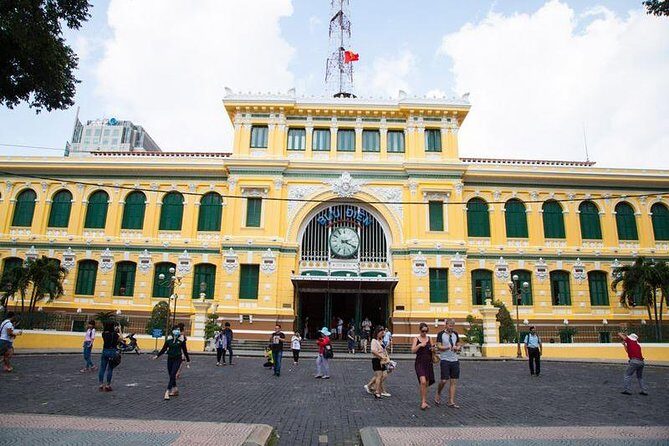
REVIEW · HO CHI MINH CITY
SMALL GROUP – Cu Chi Tunnels Half Day – Morning/Afternoon
Book on Viator →Operated by Tugo Vietnam Tour · Bookable on Viator
You can get a lot of Vietnam-war perspective fast. This small-group Cu Chi Tunnels trip is built around one big idea: see what the tunnel network was like, then understand how people survived by adapting. I like that it stays small and friendly (up to 10 people max, with an operator max of 12), and I also like that it includes everything you need: pickup, admission, and war-time food—no awkward add-ons.
One drawback to weigh: the underground parts involve crawling through very narrow, hand-made tunnels. If you’re claustrophobic or have mobility limits, you’ll want to think twice before choosing this.
The day runs about 6 hours total, with a morning schedule starting around 8:00–8:30 and returning to Sai Gon around 14:00–14:30. For most visitors, that timing is useful: it gives you a clear landmark in the day, and then you can still enjoy Saigon after.
In This Review
- Key things I’d highlight before you go
- Cu Chi Tunnels from Ho Chi Minh City: what fits into a half-day
- Pickup, vehicle, and timing: how the day stays smooth
- The documentary and the tunnel crawl: your main event underground
- War-era snacks: boiled tapioca and hot pandanus tea
- Why guides like Jacky and Xuyen change the whole experience
- Price and value: what $40 covers (and why it matters)
- Who should book this, and who should pause
- Timing in Saigon: plan your afternoon with the return time
- Should you book this Cu Chi Tunnels small-group half day?
- FAQ
- How long is the Cu Chi Tunnels half-day tour?
- Is pickup and drop-off included?
- What’s the group size?
- Is the Cu Chi Tunnels admission ticket included?
- What food is included?
- Is the tour ticket mobile?
- Do I get any help if it rains or mosquitoes show up?
- What’s the cancellation policy?
Key things I’d highlight before you go
- Very small group size keeps the experience calmer and easier to follow.
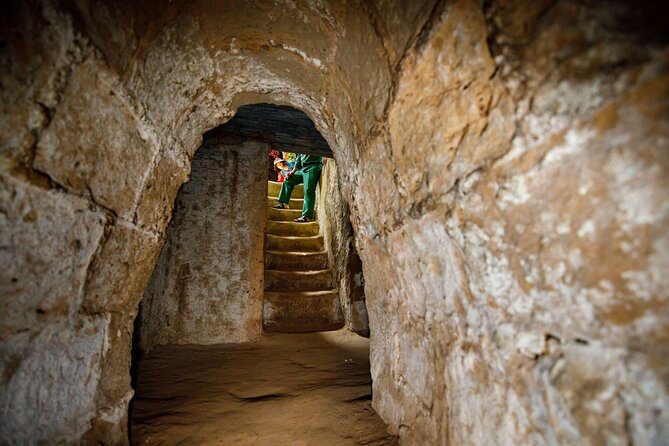
- Cu Chi tunnels, on-site, not just photos: you’ll crawl and explore the narrow sections.
- War-era food included: boiled tapioca with hot pandanus tea.
- Short documentary before entering helps you get oriented quickly.
- Guides bring the story to life with clear English and extra care when conditions change.
- Snacks and an air-conditioned car make the ride feel less like a chore.
Cu Chi Tunnels from Ho Chi Minh City: what fits into a half-day
This is a half-day format that’s long enough to feel meaningful, but short enough to stay practical. You start from Ho Chi Minh City and head out to the Cu Chi District, where the tunnels are the main event. You’ll spend time learning and exploring on-site, then head back to Saigon in the early afternoon.
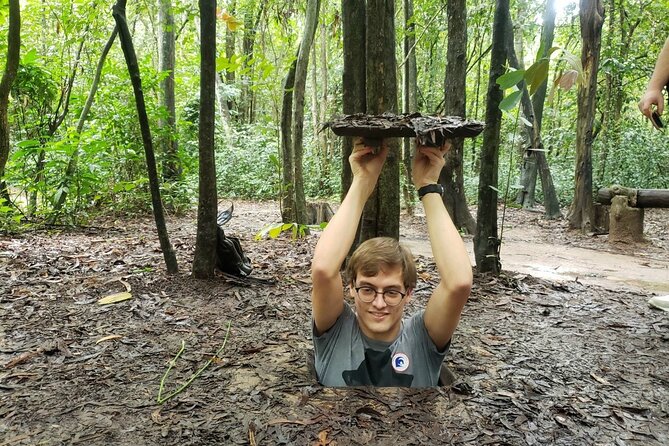
What makes this work well for a first-timer is the pacing. You’re not just dropped at a viewpoint. There’s a short documentary film first, so you’re not walking into the tunnels totally blind. Then you get about an hour exploring the tunnels themselves, including crawling through narrow sections that were made by hand during wartime.
A half-day also helps you manage energy. The physical part (crawling) is the moment you’ll feel most. Everything else is supporting context—history, how the tunnels were used, and how soldiers ate and lived. If you like your history tours to be both visual and human-scale, this format hits that sweet spot.
You can also read our reviews of more tours and experiences in Ho Chi Minh City.



Pickup, vehicle, and timing: how the day stays smooth
The tour is designed around an easy start. Pickup is offered right at your hotel, generally between 8:00 and 8:30 AM for the morning option. An air-conditioned vehicle brings you to the Cu Chi area, and the same transportation returns you to Sai Gon around 14:00–14:30.
Time-wise, expect about 45 minutes of driving before you reach the site. That matters because Cu Chi is far enough that you’ll feel the logistics on a DIY day. Here, the ride is handled, and you don’t have to figure out transport schedules.
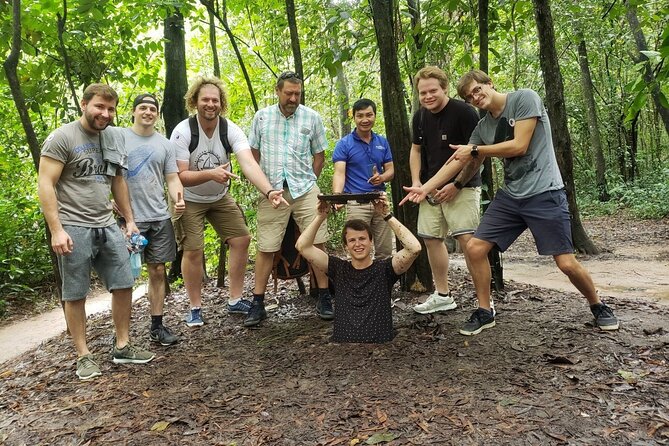
The group size is small—very small in practice. You’ll be capped at 10 people maximum, and the operator also states a maximum of 12. Either way, you’re likely to get more direct explanations and fewer waiting moments than you would on larger coach tours.
If you’re traveling solo, this is the kind of setup where you still feel looked after. If you’re traveling as a couple or with friends, the small group keeps the day from feeling like a rushed cattle line.
The documentary and the tunnel crawl: your main event underground
When you arrive at Cu Chi, you don’t start crawling immediately. First, you watch a short documentary film that explains how the tunnels were constructed and why they mattered. It’s the right length for a half-day. You get key context without having to sit through a long lecture.
Then comes the hands-on part. You’ll spend the next hour discovering the secret network and exploring sections that show how the tunnels worked in real life. The standout experience is crawling through very narrow tunnels—not roomy walking corridors. They were made by hand during the wartime, and that detail makes the physical experience feel more real.
This is also where your guide’s explanations matter. The guides on this program are repeatedly praised for giving clear, understandable explanations and answering questions without rushing you. Names you might see include Jacky, Queenie, Kim Khoa, Xuyen, and Leo. One theme across them is a teaching style that’s not just facts. It includes practical context—how people moved, lived, and adapted.
What to consider before the crawl:
- You should be comfortable with close, low spaces and slow movement.
- You’ll likely want to keep your expectations realistic. This is not a theme-park attraction; it’s a historical site.
- If you’re worried about mosquitoes or the weather, it’s smart to plan for real outdoor conditions. Guides have been known to respond quickly when mosquitoes get annoying and when rain starts.
War-era snacks: boiled tapioca and hot pandanus tea
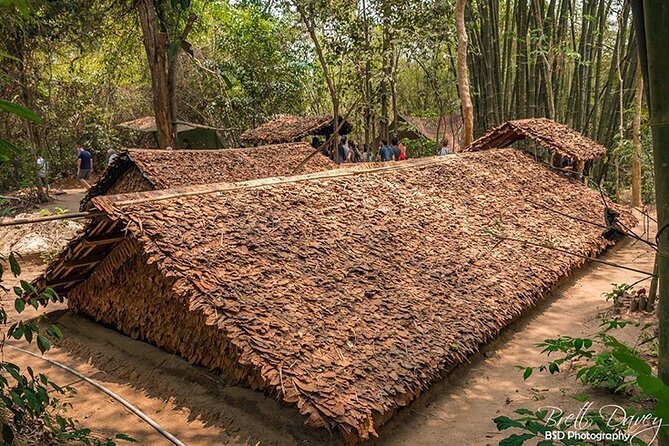
One of the nicest surprises in this tour is that the food isn’t just a token snack. During the tunnel experience, you’ll taste boiled tapioca that soldiers ate during wartime, paired with hot pandanus tea.
That pairing matters. Tapioca is simple and filling. The pandan tea adds aroma and warmth, and it helps break up the physical effort you’ll be doing underground. It also gives the day a human scale: you’re not only learning about strategy and engineering. You’re tasting how people sustained themselves.
On top of that, the tour includes snacks during the experience, which helps keep energy steady on a half-day schedule. If you usually get hungry mid-activity, this is a small detail that can make a big difference in comfort.
Why guides like Jacky and Xuyen change the whole experience
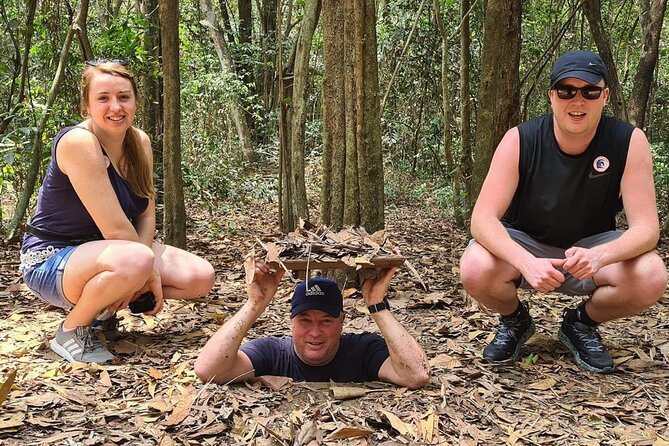
A tour can be “good on paper” and still feel flat if the guide talks like a script. This operator leans into guides who explain in a way that feels clear and personal. In the small-group format, that matters even more.
The names you may get—Jacky, Queenie, Kim Khoa, Xuyen, or Leo—show up in the guide highlights for a reason. The recurring strengths are:
- Clear, strong English (so you actually understand what you’re seeing)
- Patience with the group, including slower walkers and people who need time
- Extra care when conditions change, like getting repellent when mosquitoes bother someone, or handling drizzles so the experience stays comfortable
Some guides also bring humor and storytelling into the explanations. That turns a technical subject—tunnels, construction, survival—into something you can remember later, not just something you glanced at and forgot.
If you care about the “why” behind what you’re looking at, a guide-driven visit is the right approach. A big group bus tour might show you the site. A guide-led small group helps you understand it.




Price and value: what $40 covers (and why it matters)
At about $40, the value here comes from what’s included. You’re not paying extra for the main ticket. The admission ticket is included, and the tour also covers air-conditioned vehicle, snacks, and all fees and taxes.
That’s the difference between “cheap” and “actually affordable.” A DIY Cu Chi visit often turns into several separate charges: transport, entrance fees, and time spent arranging it all. Even if you save money on paper, you can lose time and stress—which is usually more expensive than the ticket price when you’re on a trip.
This is also a short, focused outing. You’re buying an organized day that gets you to the tunnels, keeps you on a schedule, and brings you back to Saigon with a guide. For a half-day experience, that’s strong value.
If you’re trying to choose between multiple tour options in Ho Chi Minh City, look at the whole bundle: ticket included, transport included, food included. That’s where your $40 tends to go the farthest.
Who should book this, and who should pause
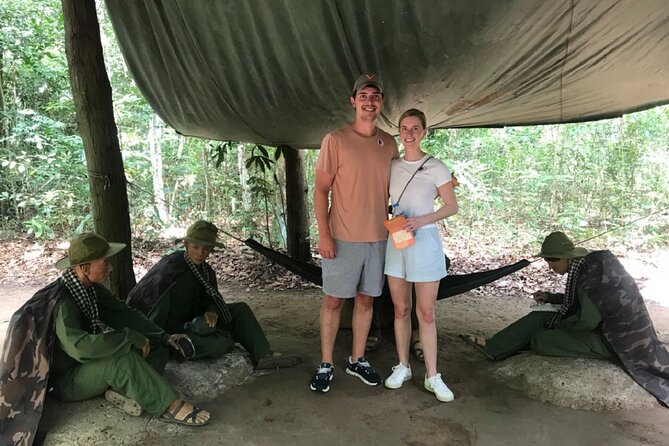
This fits best if you want:
- A small-group experience rather than a large bus crowd
- A history stop that includes hands-on exploration of the tunnels
- An organized day with pickup and drop-off
- War-time cultural context, not just a quick walk through displays
It also works well for solo travelers, families, friends, and couples, mainly because the structure reduces friction. You don’t have to manage transport or ticket timing. You also get guide attention more easily in a small group.
Who might want to think twice:
- Anyone uncomfortable with very narrow tunnels and close spaces
- Anyone with mobility limitations that make crawling difficult
- People who hate outdoor unpredictability, since the experience depends on real weather conditions (though you might get rain help if it starts drizzling)
If you’re in good general shape and comfortable with tight spaces, you’ll likely find this tour both memorable and practical.
Timing in Saigon: plan your afternoon with the return time
The morning schedule returns to Sai Gon around 14:00–14:30. That’s a helpful anchor. You can plan a late lunch, squeeze in a museum, or head to a neighborhood you’ve been meaning to explore without feeling like you’ve swallowed a whole day.
If you chose the morning departure, the main day’s workload is clear: travel out, watch the documentary, crawl and explore, then head back. When you know the return time, it’s easier to avoid stressful juggling.
If you’re doing the afternoon option, you’ll want to coordinate dinner and any other plans around the operator’s specific departure and return timing (since the exact times weren’t listed here for the afternoon slot).
Should you book this Cu Chi Tunnels small-group half day?
Yes—if you want a focused, well-supported way to see Cu Chi without the hassle of DIY logistics. The small group size, ticket included, pickup and drop-off, and the included taste of war-era food add up to strong value. And the guide experience—often praised for clear English and real patience—can turn the tunnel crawl from a physical test into a story you understand.
Skip it, or choose your comfort level carefully, if crawling through narrow spaces sounds like a bad fit for you. This tour’s highlight is the underground experience, not a relaxed stroll.
FAQ
How long is the Cu Chi Tunnels half-day tour?
It runs about 6 hours in total (approx.), including travel from Ho Chi Minh City, time at Cu Chi, and the return trip to Sai Gon.
Is pickup and drop-off included?
Yes. Pickup is offered from your hotel, and the tour includes drop-off at all guests’ locations.
What’s the group size?
It’s a very small group. The description says up to 10 people maximum, and the operator also lists a maximum of 12 travelers.
Is the Cu Chi Tunnels admission ticket included?
Yes. The admission ticket is included, and there are all fees and taxes included in the price.
What food is included?
You’ll get snacks, plus a taste of the wartime food: boiled tapioca with hot pandanus tea.
Is the tour ticket mobile?
Yes. A mobile ticket is provided.
Do I get any help if it rains or mosquitoes show up?
In at least some cases, guides provide practical help, like handling mosquito issues during the tour or dealing with drizzle and rain protection.
What’s the cancellation policy?
Free cancellation is available. You can cancel up to 24 hours in advance for a full refund. If you cancel less than 24 hours before the start time, it won’t be refunded.