REVIEW · HO CHI MINH CITY
Tales of Cho Lon Cultural Walking Private Tour
Book on Viator →Operated by SaigonWalks by Scivi Travel · Bookable on Viator
Cho Lon talks back on foot. This private walking tour in Ho Chi Minh City’s Chinatown area follows the faith, food, and migrant communities that shaped Cho Lon over time—ending at the classic Binh Tay Market. Along the way, you’ll step into community assembly halls and pagodas, then cool down with local snacks and coffee.
I especially like the way the route mixes religious landmarks with everyday market life. You also get a practical, street-level lesson in how the neighborhood works—like how people move through busy crossings—so you don’t just see sights, you learn how to navigate.
One thing to consider: it’s still a 3–4 hour walk in the street heat, and the tour works best with good weather. If you’re sensitive to sun, plan for breaks and pace yourself.
In This Review
- Key things to look forward to
- Why Cho Lon feels different from central Saigon
- Morning start at Hội Quán Nghĩa An (Nghĩa An Assembly Hall)
- Thien Hau and the Ba Chua Cholon story at Tuệ Thành Assembly Hall
- On Lang Pagoda: Ôn Lăng and the Hokkien connection
- Chợ Thủ Đô: street food and coffee that locals keep buying
- St Francis Xavier Church and the Franco-Chinese blend
- Binh Tay Market (Chợ Lớn’s Grand Market) in Sino-French style
- Price and logistics: why $32 can feel fair
- What to expect in real life while walking Cho Lon
- Who this tour is best for
- Should you book Tales of Cho Lon Cultural Walking Private Tour?
- FAQ
- How long is the Tales of Cho Lon Cultural Walking Private Tour?
- What time does the tour start, and where does it end?
- Is it a private tour?
- Are there admission fees at the stops?
- What kinds of food and drink are included during the tour?
- What happens if the weather is bad or I need to cancel?
Key things to look forward to
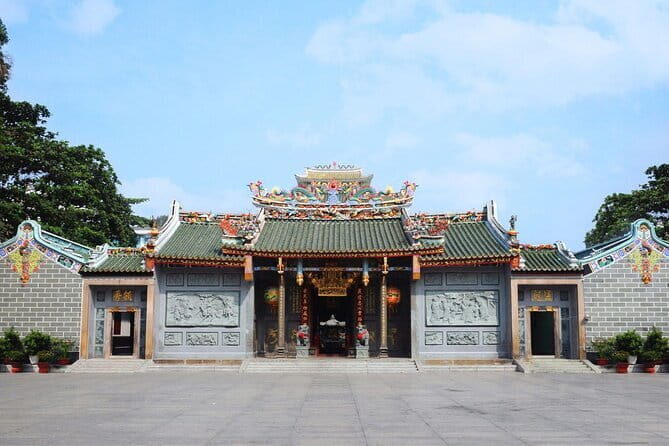
- Nghĩa An Assembly Hall at the start: a Teochew community landmark known by several names
- Thien Hau (Ba Chua Cholon) worship sites: you’ll see how one faith shows up across different halls and temples
- On Lăng / Ông Lào temple stops for a Hokkien connection to the same holy-mother devotion
- Chợ Thủ Đô eating zone: street snacks plus coffee from one of the oldest still-running stands in the city
- St Francis Xavier Church: Franco-Chinese architecture with Vietnamese influence
- Bình Tây Market’s courtyard design: Sino-French style built in 1928, with a big inner space
Why Cho Lon feels different from central Saigon
Cho Lon isn’t just a postcard Chinatown. It’s the result of waves of Chinese communities living, trading, worshipping, and organizing themselves—until the area became part of Ho Chi Minh City but kept its own character. That’s what makes a walking tour here so satisfying: you see how faith and commerce share the same streets.
This tour is built around places that Chinese community groups used as social-spiritual headquarters—assembly halls and pagodas. Instead of treating religion like a museum stop, you’ll understand why these sites mattered for real life: gatherings, support networks, and cultural continuity.
You’ll also spend time in trading streets and a major wholesale marketplace. That means you’re not only looking at old buildings. You’re walking through the kind of neighborhood rhythm that still drives the area.
You can also read our reviews of more walking tours in Ho Chi Minh City


Morning start at Hội Quán Nghĩa An (Nghĩa An Assembly Hall)
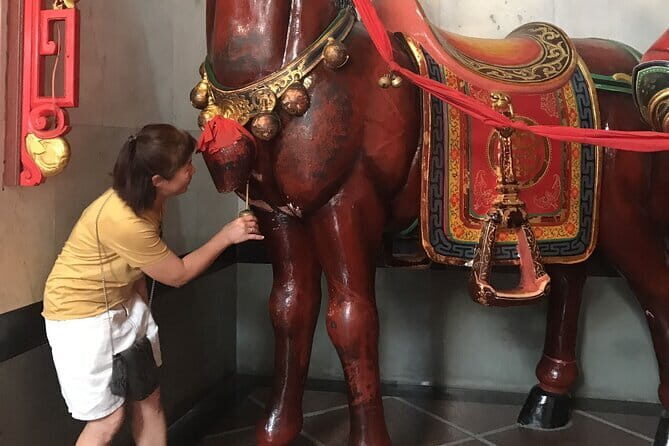
Your walk begins at Hội Quán Nghĩa An at 678 Đ. Nguyễn Trãi in District 5. Meeting here is smart because you’re starting at a community hub, not a random landmark. The front courtyard sets the tone: this is where people recognized one another, found help, and practiced shared traditions.
You’ll hear that Nghĩa An Assembly Hall has other names too, including Quan De Temple and Ong Pagoda. It’s especially significant within the Teochew community. That detail matters because Chinese communities in Vietnam were not monolithic. Different groups brought different dialects, rituals, and temple traditions, and the streets reflect that.
Plan on about 30 minutes at this first stop. It’s enough time to get the background without dragging you into a long sit-down. Also, the itinerary lists admission as free, which keeps the tour feeling efficient.
Thien Hau and the Ba Chua Cholon story at Tuệ Thành Assembly Hall
Next up is Thien Hau Pagoda—also referred to as Tuệ Thành Assembly Hall, Thien Hau Temple, or Ba Chua Cholon Pagoda. Here, the focus is worship of Thien Hau, the Holy Mother.
This stop gives you a key piece for reading the neighborhood. When you understand that Thien Hau devotion connects many Chinese community spaces, the later temple stops make more sense. You’re not just ticking boxes; you’re tracking how one belief is expressed in different buildings and community styles.
Expect around 45 minutes at Thien Hau Pagoda. Again, admission is listed as free. If you care about architecture, pay attention to how these spaces are designed for gathering and ongoing ritual—not just visiting.
On Lang Pagoda: Ôn Lăng and the Hokkien connection
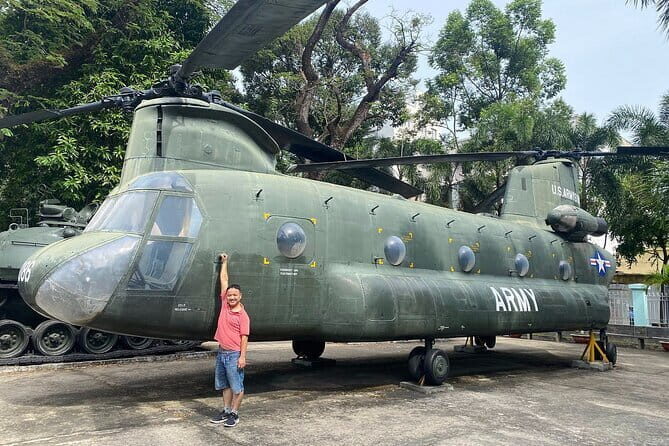
After Thien Hau, the tour moves to On Lang Pagoda, also known as Ôn Lăng Assembly Hall, Quan Âm Temple, or Ông Lào Temple. This one is tied to the Hokkien Chinese community.
What I like about this stop is that it reinforces the idea of cultural variety within the same broader Chinatown world. You’ll see how temples can carry overlapping devotions while still reflecting a community identity through the way they’re named and organized.
The itinerary notes the temple is dedicated to worship of Thiên Hậu Thánh Mẫu and other figures connected to local practice. Even if you only catch the big names, you’ll leave understanding that these places are community-centered and ongoing, not one-off tourist attractions.
You’ll spend about 30 minutes here, with admission listed as free. This is a good length for absorbing a lot of context without feeling rushed.
Chợ Thủ Đô: street food and coffee that locals keep buying
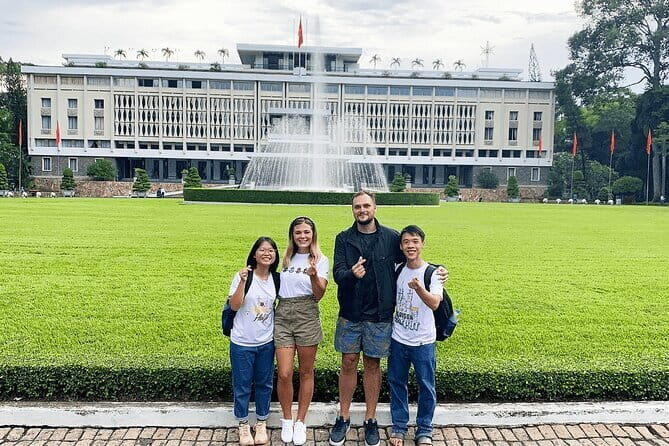
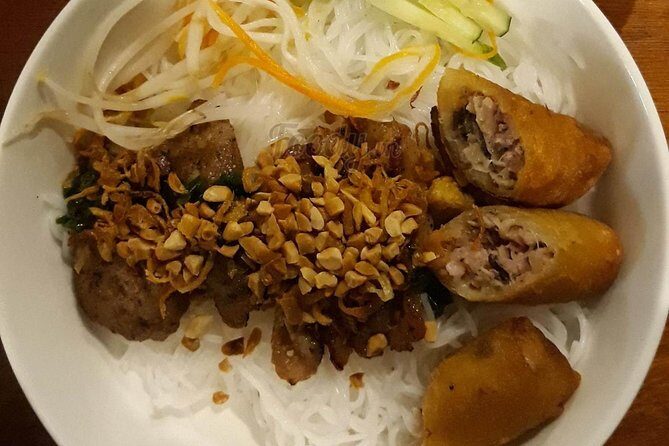
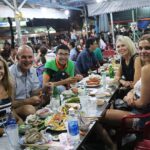
Now you shift from worship spaces to food spaces at Khu ăn uống chợ Thủ Đô. This is where the tour becomes more than “sightseeing.” You get street food, plus coffee from one of the oldest coffee stands still in business in the city, along with a traditional Cantonese snack.
Even if you’re not a coffee superfan, the coffee detail is useful. It’s a shortcut to what’s truly local here: survival through daily customers, and recipes that keep going because people still want them. Food stops like this also make the earlier temple context stick in your memory. You’re tasting a piece of the same community trade-and-living culture you just learned about.
The food/coffee segment is listed for about 45 minutes. That’s long enough to try a few items without turning it into a timed eating contest. Also, keeping this stop in the middle helps you cool down before the next architectural landmark.
You can also read our reviews of more private tours in Ho Chi Minh City



St Francis Xavier Church and the Franco-Chinese blend
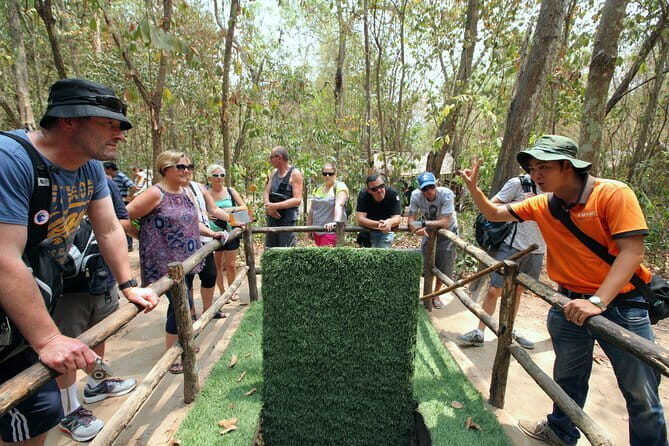
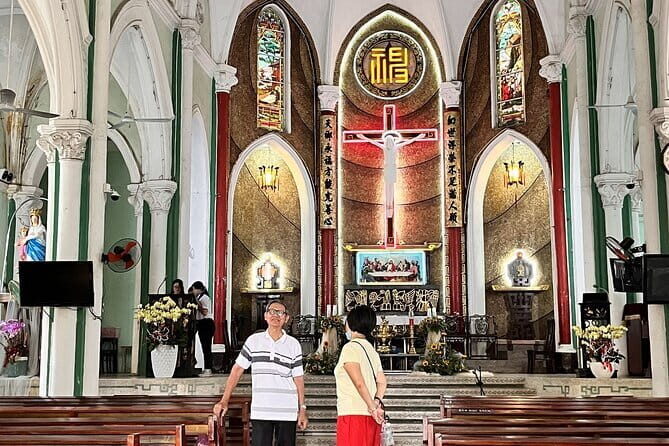
Next is St Francis Xavier Church, one of the oldest churches in the Chinatown area. This is where you’ll see a different kind of cultural mixing: Franco-Chinese architecture with Vietnamese influence.
I like including this stop because it breaks the assumption that Cho Lon is only about Chinese religion. Vietnam’s history includes French colonial presence and Christian communities, and that blend shows up in architecture. You’ll likely notice how the building style doesn’t look like a generic European church. The shape, details, and atmosphere feel shaped by local design habits too.
Time-wise, it’s about 30 minutes, with admission listed as free. It’s also a helpful pause to reset your brain before walking into the biggest trading stop of the day.
Binh Tay Market (Chợ Lớn’s Grand Market) in Sino-French style
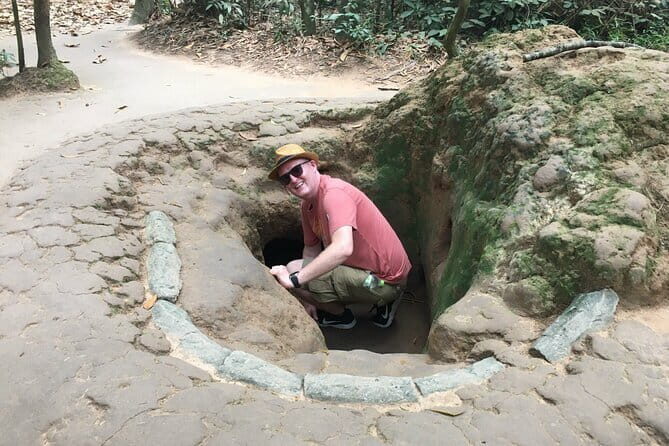
The final stop is Bình Tây Market, also known as Chợ Lớn (the Grand Market). This is one of the best places to understand Cho Lon as commerce.
The tour highlights its unusual structure for an Asian market—especially the big inner courtyard—along with Sino-French architecture. Built in 1928, it’s the kind of building you can stand in and feel the trade history in the air. Courtyards like this tend to act like airflow hubs and gathering points. In a market, that matters.
You’ll spend about 30 minutes here. That’s not long enough to shop every aisle, but it’s plenty to orient yourself and see the space. Also, because the tour ends at the market, you can turn the last minutes into practical shopping or just lingering.
Price and logistics: why $32 can feel fair
The price is $32 for a private walking tour lasting about 3 to 4 hours (plus added street walking time). You’re not paying for a bus ride or a big show. You’re paying for guided time, interpretation at multiple community sites, and time built for food.
A few value points:
- The route includes multiple landmarks and a market finish, not just one temple and a snack.
- Admission is listed as free for the major stops in the itinerary, so you’re not constantly hit with add-ons.
- You also get a mobile ticket, which makes the day feel smooth.
Private matters too. If you have questions—about names on the signs, how the temple calendar works, or what to notice while walking—you’re more likely to get direct answers instead of hearing only a general script.
The main “cost” is physical. You’ll walk between locations, and the tour notes that additional walking time adds up around 1 hour. So budget energy, not money.
What to expect in real life while walking Cho Lon
This tour starts at 8:00 am and runs in the style of a guided neighborhood walk. It’s designed for you to learn the area as you move, not for you to race from one photo spot to another.
One of the most useful takeaways from guides in this area is how to handle street crossing. Cho Lon traffic can feel chaotic if you’re used to calmer city grids. The idea isn’t just safety—it’s learning how locals time crossings. If you’re new to Vietnam traffic, you’ll appreciate that kind of guidance.
Also, don’t assume the tour is mostly sitting. You’ll be on streets with ongoing local activity. Wear comfortable shoes. Keep water handy. And if you get heat fatigue, don’t fight it—your guide can help you pace the walk so you still enjoy each stop.
The tour is also described as near public transportation and suitable for most travelers. Still, it’s a walking-based experience, so if mobility is an issue, you may want to think carefully about stamina.
Who this tour is best for
This is a great fit if you want:
- A Cho Lon Chinatown experience that connects religion, trade, and food
- A walking format that teaches how the neighborhood operates
- A private day with room to ask questions
It’s also ideal if you’re already a bit history-curious but prefer your context delivered through real places and real food, not a lecture.
Should you book Tales of Cho Lon Cultural Walking Private Tour?
If you like neighborhood tours where the guide helps you read what you’re seeing, I’d book it. The best part is the balance: assembly halls and pagodas for community context, a church for the broader cultural mix, and Bình Tây Market to end with a sense of how the whole place keeps functioning.
Skip it only if you know you can’t handle a longer walking day or you’re traveling during weather that’s likely to be poor. The experience is marked as requiring good weather, and if conditions force a change, you’ll be offered a different date or a full refund.
FAQ
How long is the Tales of Cho Lon Cultural Walking Private Tour?
It runs for about 3 to 4 hours. Since it’s a walking tour, extra walking time between stops adds up to around 1 hour.
What time does the tour start, and where does it end?
The tour starts at 8:00 am. You meet at Hội Quán Nghĩa An (678 Đ. Nguyễn Trãi, Phường 11, Quận 5) and the tour concludes at Bình Tây Market (57A Tháp Mười, Phường 2, Quận 6).
Is it a private tour?
Yes. It’s listed as a private tour/activity, so only your group participates.
Are there admission fees at the stops?
The listed stops show Admission Ticket Free (including Nghĩa An Assembly Hall, Thien Hau Pagoda, On Lang Pagoda, St Francis Xavier Church, and Bình Tây Market).
What kinds of food and drink are included during the tour?
At Khu ăn uống chợ Thủ Đô, you’ll enjoy street food plus coffee from one of the oldest coffee stands still in business in the city, along with a traditional Cantonese snack.
What happens if the weather is bad or I need to cancel?
You can cancel for a full refund if you cancel at least 24 hours before the experience’s start time. The tour requires good weather; if it’s canceled due to poor weather, you’ll be offered a different date or a full refund.