REVIEW · HO CHI MINH CITY
Vietnam Flavour: Market-to-Table & The Art of Egg Coffee
Book on Viator →Operated by Vietnam Flavour Cooking Class · Bookable on Viator
Egg coffee meets real Vietnamese cooking.
This Ho Chi Minh City market-to-table class is built around fresh local ingredients, hands-on technique, and a relaxed outdoor kitchen vibe that feels like a break from the street noise. You start with a market visit, then cook what you picked, and finish by eating together in a calm garden setting.
I really like that the class is 100% hands-on and you have your own private station, so you are doing the chopping, sautéing, and sauce work—not just watching. I also like the included egg coffee session, plus the coffee/tea guidance so you understand what you are drinking, not just tasting it.
One thing to consider: the cooking happens outdoors, so bring mosquito protection and plan for heat and sun. And if you eat strictly vegan, ask ahead how they handle condensed milk and any coffee items, since egg coffee may not be adaptable the way you’d hope.
In This Review
- Key things to know before you go
- First stop: the Bến Thành area market scene
- Market-to-table: why the ingredient hunt actually helps
- The garden kitchen: where cooking becomes relaxing and focused
- Cooking 3 main courses with a chef guide (and how to get the most out of it)
- Coffee time and egg coffee: a small lesson in Vietnamese taste
- Eating together: the meal is part of the lesson
- Souvenirs and recipe take-home: what you can use after the class
- Who this class fits best (and who should think twice)
- Price and value: is $45 worth it?
- Practical tips so your class goes smoothly
- Should you book Vietnam Flavour for market-to-table cooking and egg coffee?
- FAQ
- How long is the Vietnam Flavour cooking class?
- Where is the meeting point?
- What is included in the class price?
- Do I get to visit a market?
- Is egg coffee included?
- Are vegetarian or halal options available?
- Are vegan options available?
- What if I have allergies?
- Is this class suitable for children?
- What ticketing method is used?
- Can I cancel for a full refund?
Key things to know before you go
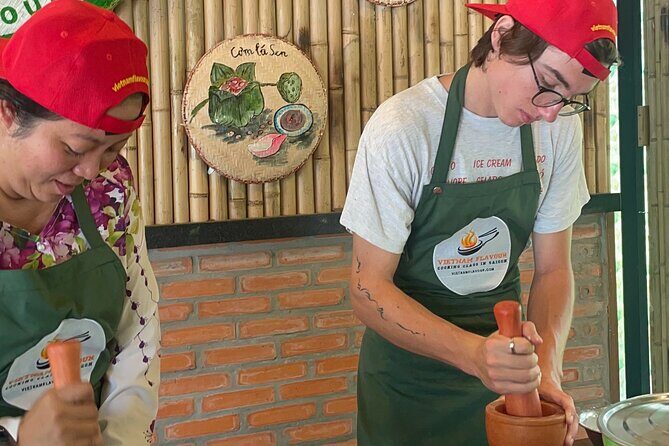
- Small groups (max 8) mean more help from your chef guide when you get stuck.
- Market tour is part of the experience so your dishes start with real ingredient choices, not a supermarket shopping list.
- Your own cooking station keeps this active and practical.
- Egg coffee is included, not an optional add-on.
- Dietary needs are handled on request (vegetarian and halal are specifically noted; allergies are addressed too).
- Outdoor garden setting feels peaceful, but you should plan for bugs and weather.
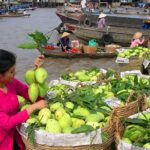
First stop: the Bến Thành area market scene
You’ll begin near Cửa Tây Chợ Bến Thành, with the meeting point listed at 21 and 23 Phan Chu Trinh in District 1. If you like getting your bearings fast, this is a smart start: you’re in the center of Ho Chi Minh City food culture, and your chef guide sets the tone before the cooking starts.
The market visit is included for both morning and afternoon classes. That matters because it shapes what you learn. You are not just shown ingredients—you learn what herbs, powders, and produce are used for, and how Vietnamese flavors get balanced through everyday cooking choices.
Based on past classes, your guide may be someone like Thao, Alice, Kelly, or Nhat. You’ll know you’re in good hands when the tour is practical—what to pick, what it’s used for, and what to look for in quality. One very common theme from participants is that the chef explains plants and spices in plain language, so you can actually repeat the logic at home.
If you’re the kind of person who loves food markets, you’ll probably enjoy this more than the cooking itself. Market time is where the class turns from a demo into a skill.
You can also read our reviews of more shopping tours in Ho Chi Minh City


Market-to-table: why the ingredient hunt actually helps
A market-to-table class can sound like a marketing phrase. Here, it works because you cook with what you select. Once you’re back at the kitchen, the chef guide can connect each dish step to the ingredients you saw earlier.
You’ll also pick up small, useful habits:
- how to identify herbs and greens you’d otherwise skip at home
- how Vietnamese sauces depend on the right balance, not just one ingredient
- how spices and aromatics show up across different dishes
And because the menu changes daily, this isn’t a one-size-fits-all script. The point is to learn techniques and flavor thinking that transfer to whatever produce you can find back home.
Vegetarian, halal, and vegan options are described as available, and allergies are addressed as well. That’s valuable in real life, because Vietnamese cooking can lean on fish sauce, shrimp paste, and dairy unless your menu is planned carefully. You’ll want to be clear about your needs when you book, so the chef can build your day around substitutions that still taste Vietnamese.
The garden kitchen: where cooking becomes relaxing and focused
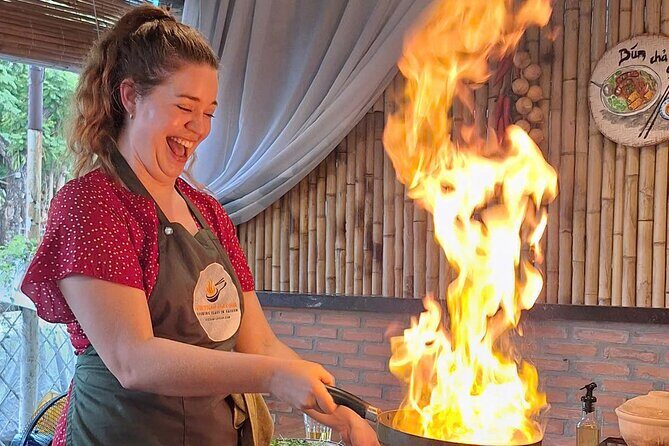
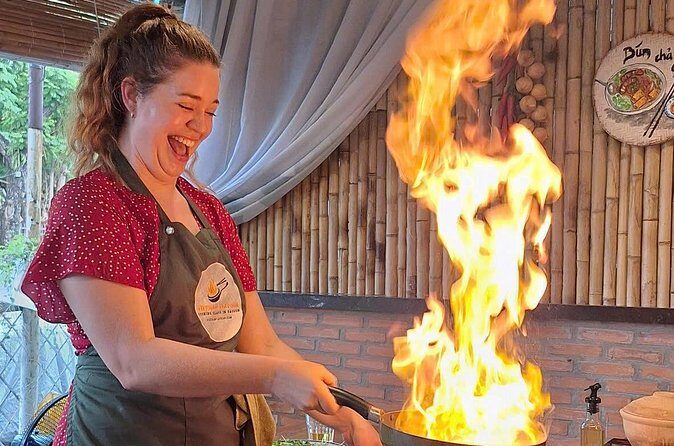
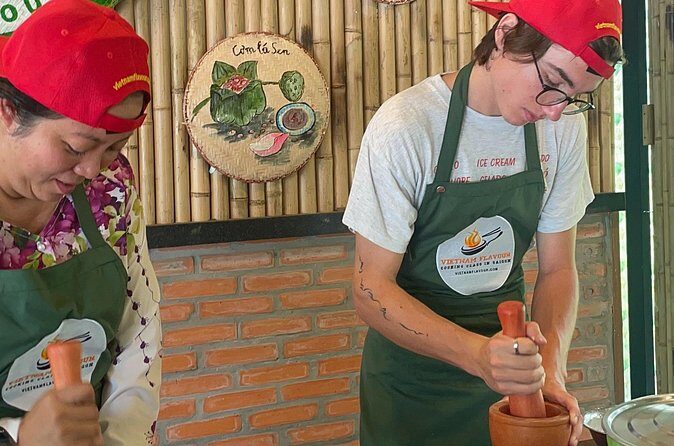
After the market, you move to the cooking venue described as an outdoor garden setting. Past participants talk about bamboo huts, open-air cooking, and trees around the kitchen—basically a green pocket in the middle of the city.
That setting isn’t just for vibes. It helps you pay attention. In a quiet, comfortable space, you can hear the chef explain timing, technique, and how to adjust flavors while you cook.
A big practical plus: the class is small (max 8), and you have your own private station. So even if you are a beginner, you can actually practice. One of the strongest themes from the reviews is how hands-on it feels from start to finish—chopping, sautéing, mixing, and assembling. You’ll likely come away more confident than you expected, not just full.
You may also experience a short transfer between areas. Some participants mention motorbike rides with their chef guide or a quick hop from the market area toward the kitchen. If you’re sensitive to motorbike travel, it’s worth asking when you confirm your session details.
Cooking 3 main courses with a chef guide (and how to get the most out of it)
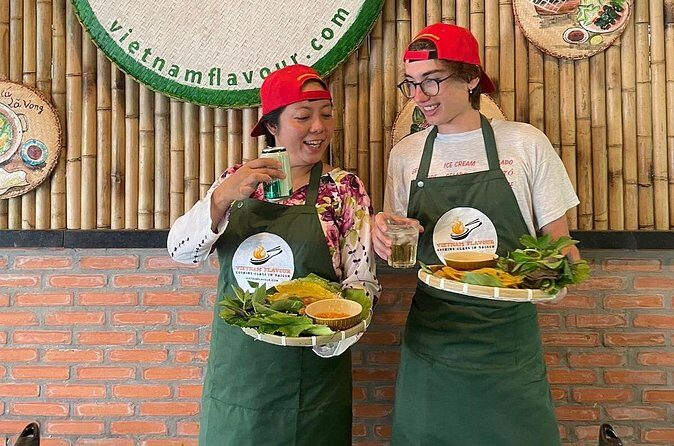
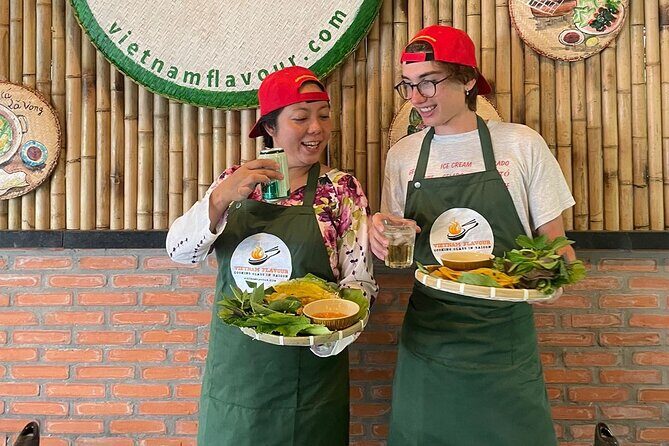
The included portion calls out a chef guide for three main courses. In practice, that typically means you cook a set of classic Vietnamese dishes with guided instruction, then sit down and enjoy what you made.
Here’s what makes this part valuable for you:
- You learn technique, not just recipes. The chef focuses on chopping, sautéing, and balancing flavors.
- You get timing cues. Vietnamese cooking often hinges on quick steps—so the difference between good and great can be minutes.
- You get sauce know-how. Many classes focus heavily on the final dish, but Vietnamese meals often live or die by condiments and sauces.
Even if you don’t consider yourself a good cook, the class structure is designed to teach you how to adjust. Several participants highlight learning differences between herbs, powders, and plants, plus how sauces change the final taste.
What you should do to maximize the experience:
- come hungry (you’ll get more out of tasting and comparing)
- watch how the chef explains balance (sweet-salty-sour is a recurring theme in Vietnamese food)
- ask questions when you’re at your station, not later at the table
Coffee time and egg coffee: a small lesson in Vietnamese taste
Egg coffee is explicitly included, and you’ll get coffee and/or tea, plus guidance on Vietnamese coffee making. This is more than a dessert moment. It’s a flavor lesson.
Think of it as two parts:
1) You learn how Vietnamese-style coffee is made and served.
2) You taste it as part of the meal you cooked, so you understand how it fits into the bigger picture of Vietnamese dining.
If you drink coffee differently at home, this is a chance to compare. If you don’t drink coffee, you might still get another drink option like sugar cane juice or tea depending on the chef’s approach, since some participants describe getting alternatives.
One careful note for strict diets: because egg coffee commonly relies on dairy and eggs, you should confirm beforehand how they handle vegan requests. A participant specifically mentioned needing condensed milk replacement options for vegan needs, so don’t assume substitutions will automatically match your diet rules. Ask, and ask early.
You can also read our reviews of more tours and experiences in Ho Chi Minh City
Eating together: the meal is part of the lesson
Once the dishes are ready, you sit down in a relaxed setting to savor what you cooked. This “eat what you made” step is where your learning clicks. You can connect what the chef explained to actual taste: texture, balance, aroma, and how herbs work across dishes.
You’ll also likely eat more than you expect for a four-hour activity. Past experiences describe a satisfying amount of food, including dessert in at least some sessions, even though the core included guidance highlights three main courses.
And because the class is designed for small groups, conversation tends to be easy. It’s not a stiff, formal meal. The vibe is friendly, with the chef usually keeping things lively.
Souvenirs and recipe take-home: what you can use after the class
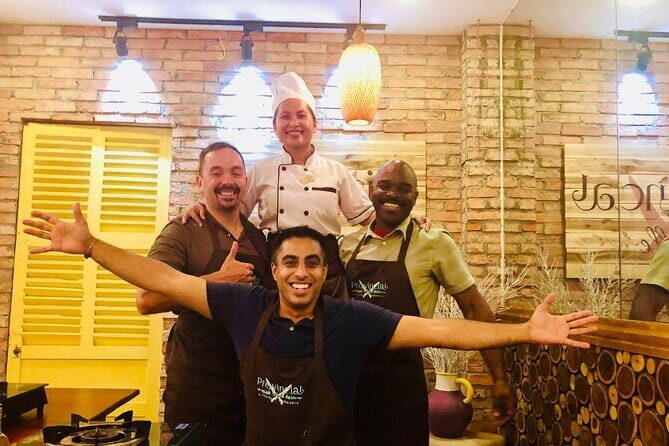
You leave with more than a full stomach. The experience includes souvenirs, and the class promises that you’ll get detailed recipes and the confidence to cook Vietnamese food again.
That matters because Vietnamese cooking can feel intimidating until you have:
- written steps you can follow
- an understanding of how flavors are balanced
- a list of herbs and ingredients you can look for in local stores
So when you get home, you’re not starting from scratch. You’re repeating a process the chef taught—market selection, prep skills, and sauce timing.
This is also why the menu changing daily is a plus, not a drawback. It means you’re learning how to think about Vietnamese ingredients and technique, not just copying a single menu forever.
Who this class fits best (and who should think twice)
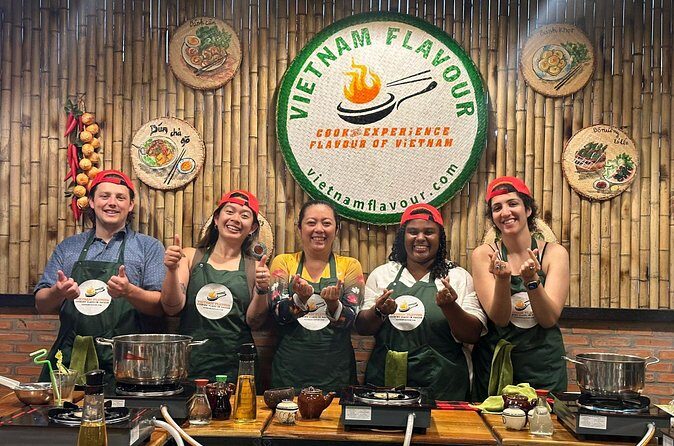
This is a great match if you:
- want an active Ho Chi Minh City food experience that’s more than just tasting
- enjoy market time and learning ingredient logic
- want a small-group class with lots of hands-on practice
- care about dietary options and need menu adjustments
It may be a less ideal fit if you:
- have very young kids (it’s not recommended for kids under 6)
- are sensitive to outdoor conditions like heat and mosquitoes
- have strict vegan needs and need egg coffee or dairy-like items swapped in a specific way (confirm before booking)
Price and value: is $45 worth it?
At $45 per person for about four hours, this class looks like a strong value when you break down what you receive: market tour, chef guidance, hands-on cooking at your own station, coffee and/or tea guidance, an egg coffee session, and small souvenirs.
The best part of the value is that you’re not only eating a meal—you’re learning methods you can repeat. Many food experiences in Vietnam give you flavors. This one aims to give you skills: chopping, sautéing, sauce balancing, and how to use herbs and spices in real dishes.
Also, the maximum group size of 8 helps justify the price. You get more attention than you would in a large tour, and the class format stays interactive.
If you’re on a tight schedule, four hours is also a manageable chunk. You can fit it into a day in District 1 without losing your evening.
Practical tips so your class goes smoothly
A few things to do before you arrive:
- Wear light clothes that cover your legs if mosquitoes are an issue (this comes up often in outdoor garden kitchens).
- Plan to be hungry. You’ll cook, then eat what you made.
- Bring sunscreen and a hat if you’re going during a hot part of the day.
- If you have allergies or a specific diet, mention it clearly at booking so the chef can build your menu.
Also, expect a friendly introduction and an overview of what you’ll make, then a step-by-step cooking flow. It’s structured enough for beginners and relaxed enough that you can enjoy it.
Should you book Vietnam Flavour for market-to-table cooking and egg coffee?
I’d book it if you want a hands-on Vietnamese cooking class in Ho Chi Minh City that starts in a real market and ends with a meal you made in a garden kitchen. The small group size, the private cooking station, and the focus on technique (not just recipes) make it a good use of your time.
I would pause and ask a few extra questions if you’re vegan with strict rules around egg coffee, condensed milk, or dairy substitutes. Confirm your menu fit before you go.
If you’re deciding between a quick food tour and a cooking class, this leans toward skills and full meals. For many people, that becomes the highlight of their Saigon week—because you leave knowing what to do, not just what to taste.
FAQ
How long is the Vietnam Flavour cooking class?
The class lasts about 4 hours.
Where is the meeting point?
You meet at Cửa Tây Chợ Bến Thành 21, 23 Phan Chu Trinh, Phường Bến Thành, Quận 1, Thành phố Hồ Chí Minh, Vietnam.
What is included in the class price?
The price includes coffee and/or tea, Vietnamese coffee making guidance, all fees and taxes, souvenirs, a market tour, a chef guide for three main courses, a small intimate class size with a private station, and an egg coffee session.
Do I get to visit a market?
Yes. A market tour is included for both morning and afternoon classes.
Is egg coffee included?
Yes. There is an egg coffee session included.
Are vegetarian or halal options available?
Yes. Vegetarian and halal options are available upon request.
Are vegan options available?
The experience overview states there are options even if you are vegan, but you should confirm your needs when booking, especially for egg coffee items.
What if I have allergies?
The experience information says allergies are covered, so be sure to share your allergy details at booking.
Is this class suitable for children?
It is not recommended for travelers with kids under 6.
What ticketing method is used?
You receive a mobile ticket.
Can I cancel for a full refund?
Free cancellation is available. You can cancel up to 24 hours in advance for a full refund.