REVIEW · HO CHI MINH CITY
10-day Small-Group Vietnam Highlight Tour
Book on Viator →Operated by Ginkgo Voyage · Bookable on Viator
Big Vietnam, neatly packaged.
This 10-day highlights loop is built for first-timers who want less paperwork and more time on the ground. I like that the tour handles the heavy lifting—private air-conditioned transfers plus domestic flights—so you’re not stuck juggling hotel bookings and transport at the busiest moments. I also like the small-group feel (max 15) with an English-speaking guide, which makes museum time and history stops much easier to digest. The one drawback to consider is the pace: you’ll have early starts and travel days stacked back-to-back, so it’s not a slow “stroll and linger” style trip.
What you’re really buying is momentum with support. From Cu Chi’s underground maze to Hanoi’s museum circuit and a full Halong Bay boat day, the itinerary is structured so you hit the biggest “yes, that’s Vietnam” moments without wasting half your vacation figuring out logistics. You’ll also get practical comforts like hotel stays with breakfast, included entrance fees where listed, and bottled water each day. If you’re sensitive to intense history (Cu Chi and Hoa Lo), plan your energy accordingly.
In This Review
- Key Things That Make This Tour Worth a Look
- A 10-Day Vietnam Highlights Tour That Actually Saves Time
- Ho Chi Minh City First: From Airport Transfer to Saigon’s Major Sights
- Cu Chi Tunnels: Up Close History, Without the Tourist Fog
- Reunification Palace, War Remnants Museum, and Saigon’s Colonial Core
- Mekong Delta Day: Working Villages, Boat Ride, and Canal Calm
- Danang Flight and Hoi An Transfer: Let Someone Else Manage the Jump
- Hue Imperial Citadel and Tu Duc: Royal Power in a Quiet Place
- Thien Mu Pagoda and the Perfume River: Hue by Boat
- Hanoi Getting-Your-Bearings Day: Markets, Bridges, and Big Institutions
- Halong Bay Cruise: Breakfast at Sea and Luon Cave by Sampan
- Price and What You’re Really Getting for $1,374.36
- Comfort, Group Size, and the Human Side of Organization
- Should You Book This Small-Group Vietnam Highlights Tour?
- FAQ
- What’s included in the tour price?
- What’s not included?
- How many people are in the group?
- Where does the tour start and end?
- Is the tour refundable?
- Do I need to buy a ticket separately for domestic flights and boat rides?
Key Things That Make This Tour Worth a Look
- Small group (up to 15) with an English-speaking guide, so Q&A doesn’t get swallowed.
- Domestic flights included (Ho Chi Minh–Danang and Hue–Hanoi), which saves you hours of overland travel.
- Mekong Delta boat day with both canals and working villages—brick-making, coconut processing, and mat-weaving.
- Two major city-history blocks in Saigon and Hanoi, with museums and war-era sites built in.
- Halong Bay cruising including Luon Cave via sampan.
- Daily water and hotel breakfast included, so you’re not constantly hunting for basics.
A 10-Day Vietnam Highlights Tour That Actually Saves Time
Vietnam can be overwhelming when it’s your first trip. Big cities, long distances, and a travel calendar that’s always moving. This tour is designed to take the stress out of planning by pre-arranging hotels, transfers, and key sightseeing windows.
You also avoid one of the most common first-timer problems: spending your limited time in transit. Instead of bouncing between neighborhoods and ticket lines, you spend more time where the story and the scenery happen—Saigon’s war-era sites, the Mekong’s working countryside, Hue’s imperial landmarks, Hanoi’s cultural institutions, and Halong Bay’s limestone seascape.
And since you’re traveling with a small group, the schedule works like a rhythm. You’ll start early some days, but you’re not waiting around for strangers. That matters when you’re moving through busy places like museums, mausoleums, and city centers.
You can also read our reviews of more tours and experiences in Ho Chi Minh City.



Ho Chi Minh City First: From Airport Transfer to Saigon’s Major Sights
Day one is straightforward: you meet at Tan Son Nhat International Airport (depending on your arrival flight) and transfer to your hotel in Ho Chi Minh City. That sounds basic, but it’s a big win after a long flight. You land, get organized, and don’t burn the first afternoon figuring out where you are.
Then the tour shifts into “Saigon essentials” mode. You’re not only seeing icons—you’re also getting the timeline of how the country remembers war and rebuilds afterward. The pacing on this first city stretch is smart: you cover several major sites within a day, each with enough time to understand what you’re looking at.
Practical note: this is a very walk-and-transit mix day. You’ll be moving through central areas that have traffic, crosswalks, and crowds. Build in patience and comfy shoes. The good news is the tour handles transport between stops.
Cu Chi Tunnels: Up Close History, Without the Tourist Fog
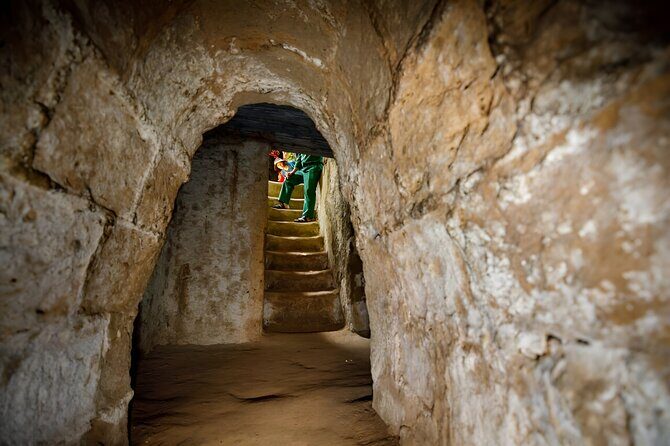
Cu Chi Tunnels is one of those stops that can’t really be reduced to a brochure. You start with an early drive into the area, then watch a documentary video before heading into the forest-side tunnels.
What I like about this approach is that it gives context first, then reality second. You see secret hideouts, fighting bunkers, dangerous booby traps, and tanks. After that, you get to experience the tunnel conditions through narrow passageways. It’s physical history—tight spaces, basic living realities, and a sense of how war reshaped everyday movement.
There’s also a food-and-routine moment built in: typical boiled tapioca and tea. It’s a small detail, but it helps break up the heaviness. Just expect Cu Chi to feel intense. Even if you know the story, being inside the tunnel environment changes how it lands.
Reunification Palace, War Remnants Museum, and Saigon’s Colonial Core
From Cu Chi, the itinerary returns you to Saigon for major memory sites and classic architecture.
- Reunification Palace is tied to April 30, 1975, when the war formally ended and a tank crash-through marked the shift of power. Visiting it in daylight helps you see how space can be political—rooms, entrances, and the layout of leadership all matter.
- War Remnants Museum (formerly known as a museum focused on American war crimes) gives you a dense collection: war machinery, weapons, artifacts, and documentation, plus a photo exhibition that honors journalists who were lost during the conflict.
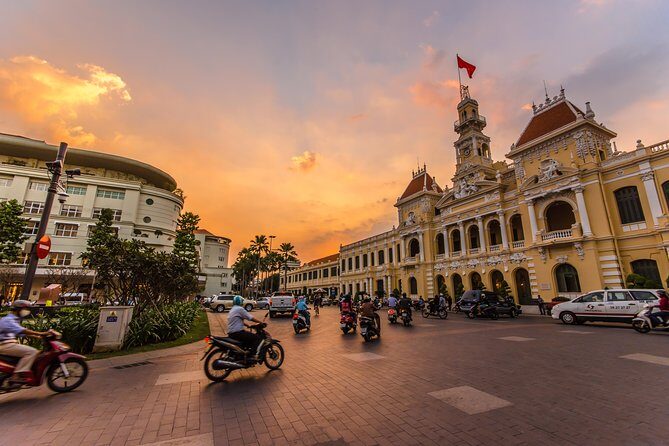
- The day also includes Saigon’s central architecture stop, with the old central post office and nearby Notre Dame Cathedral. You’re mixing history with a sense of how the city looked under French-era design rules.
This block works because it isn’t one-note. You get the “what happened” history in the museums and palace, and you also see the city’s built environment—where the past still shapes the present.
Mekong Delta Day: Working Villages, Boat Ride, and Canal Calm
If your Vietnam trip has one “I didn’t expect it to feel like this” day, it’s usually the Mekong Delta. This itinerary starts with an early departure from Ho Chi Minh City to Ben Tre, then moves into a small boat experience.
You visit typical workplaces, including:
- small brick factories
- a coconut processing workshop
- a local mat-weaving house
After that, you cycle through surrounding fields. This isn’t just scenic riding. It’s a chance to see how the landscape is used—what people grow, where they work, and how the countryside spreads out beyond city thinking.
Then comes the part most people picture: a sampan trip along the canals. You get a calmer feel as you float through the waterways. The tone shifts from “how people make a living” to “how the river moves life,” and that contrast is the magic.
Practical tip: this is a long day. You’ll be on the move, on boats, and outdoors. Wear sun protection and plan for a good dinner appetite afterward.


Danang Flight and Hoi An Transfer: Let Someone Else Manage the Jump
On the next big transition day, you leave Ho Chi Minh City area for a flight to Danang, then continue to Hoi An by transfer. This kind of move is exactly where tours can save you. Flights plus ground transport are planned, which means you’re not building a complicated itinerary yourself mid-trip.
Hoi An is known for its long-staying charm, and the tour sets you up to experience it as a major trading port from the 17th and 18th centuries, with architecture and lifestyle that still feel anchored to the past. You’re not touring Hoi An as a checklist of tiny shops. You’re in the city with enough time to absorb how it feels compared to Saigon’s intensity.
Hue Imperial Citadel and Tu Duc: Royal Power in a Quiet Place
Hue is where Vietnam slows down just enough to feel historic without feeling frozen in time.
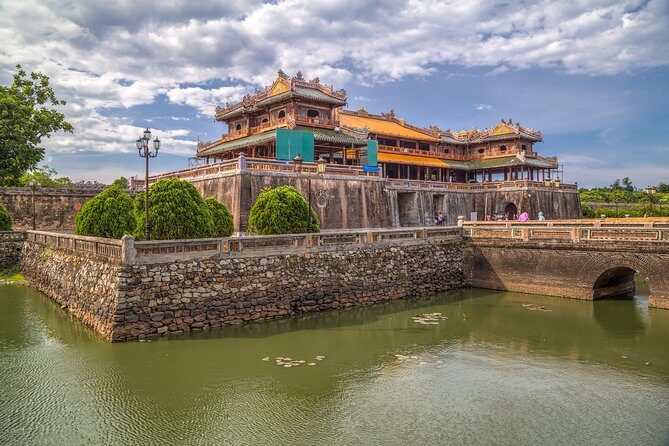
The tour takes you from Hoi An to Hue and into the Imperial Citadel (The Citadel), where the Nguyen Dynasty ruled between 1802 and 1945. The value here isn’t only the grandeur—it’s understanding how rule, design, and daily life were organized within imperial space.
Then you go to Tu Duc’s Mausoleum. It’s described as one of the famous tombs, with traditional architectural styles and a peaceful atmosphere. This stop gives your brain a different kind of history: less battle, more legacy, with a slower walk pace and more room to think.
Thien Mu Pagoda and the Perfume River: Hue by Boat
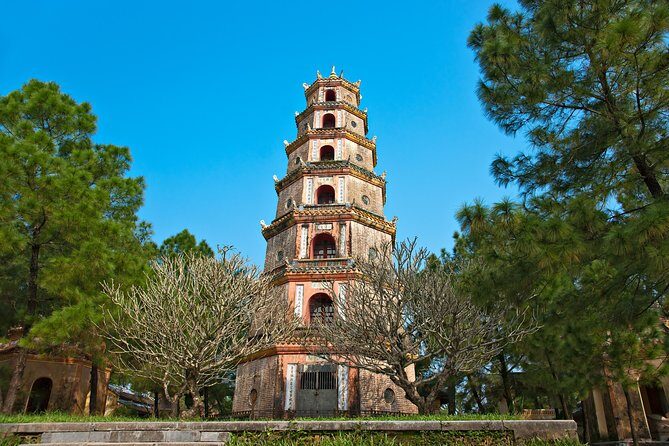
On another Hue day, you take a boat trip on the Perfume River to Thien Mu Pagoda. The tour also highlights that it’s Hue’s best-known religious site and the oldest pagoda in the area, plus you learn about Buddhism during the visit.
What I like here is the route: traveling by water changes the feel of the day. You’re not only staring at monuments; you’re seeing the river’s role in daily life and spiritual geography.
After that, you visit Mausoleum of Emperor Minh Mang. Like Tu Duc, it’s presented as an architectural and atmosphere-focused visit, with time to admire the design and surroundings. This pairing—Thien Mu, then Minh Mang—creates a strong “Hue duality”: spiritual heritage plus royal symbolism.
Hanoi Getting-Your-Bearings Day: Markets, Bridges, and Big Institutions
Hanoi is a different planet from Ho Chi Minh City. This tour approaches it with a smart mix: a morning market-and-icon sweep, then a structured set of cultural and historical stops.
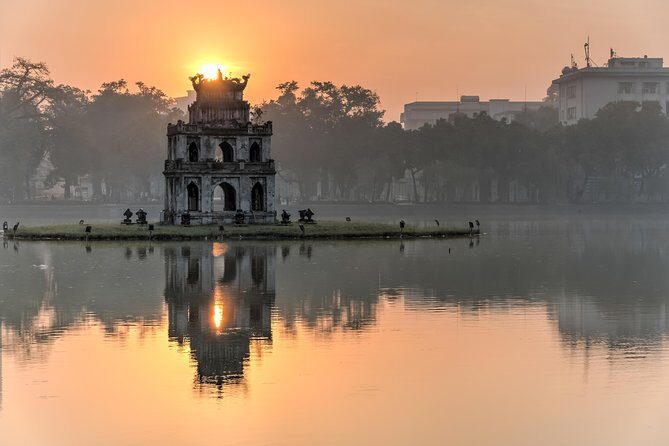
You start with Long Bien Bridge (formerly known as the Paul Doumer Bridge). The tour connects it to French colonial engineering and to later wartime symbolism, including its role as a resistance icon during US bombing. You’ll also explore a local market area and watch daily life—one of the fastest ways to understand how Hanoi moves at street level.
Next, you go to Ho Chi Minh Mausoleum and the stilt house garden, his final resting place and the area connected to his living years. Then you visit the Temple of Literature & National University, which the tour frames as Vietnam’s first university and a site tied to worship of Confucius and the spread of social morals through feudal dynasties.
After that, you hit one of the tour’s standout cultural stops: the Vietnam Museum of Ethnology. The tour notes a major collection of artifacts gathered from throughout Vietnam—15,000 artifacts—which is a big number and a strong reason to book. Even if you don’t become a museum person overnight, this museum gives you a wide-angle view of cultural diversity.
Then you round out the day with two heavier but important stops:
- Hoa Lo Prison, described as one of the scariest sites in Southeast Asia. You learn about French torture of political prisoners, Vietnamese political prisoners’ efforts, and references to American pilots held there (the tour even notes the nickname Hanoi Hilton Hotel and mentions Senator McCain).
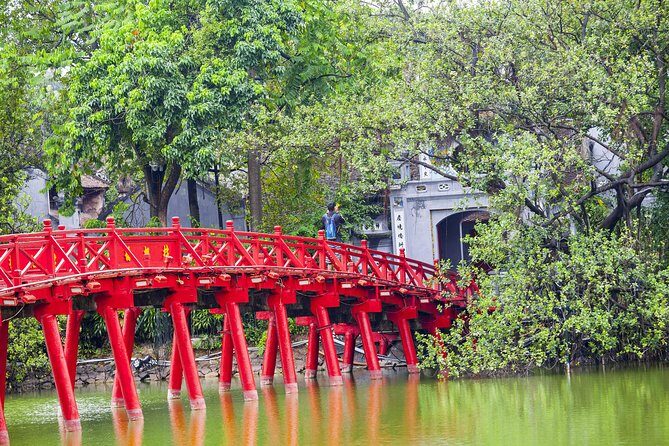
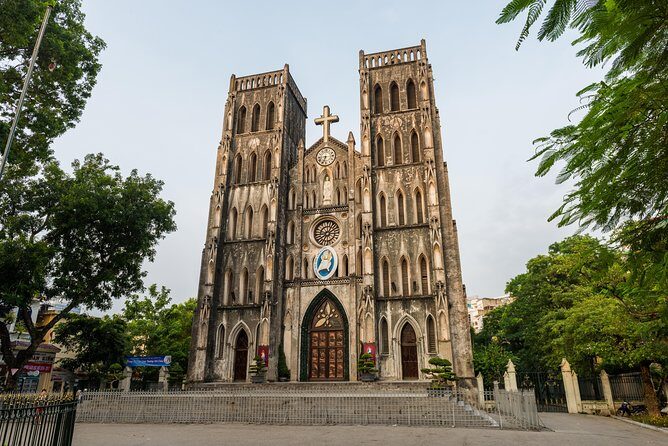
- Old Quarter, where you explore by cyclo and pass major landmarks like Hoan Kiem Lake, Dong Xuan Market, St. Joseph’s Cathedral, and Hanoi Opera House.
That’s a packed itinerary, but it’s also a coherent one. You’re building a mental map of the city—colonial-era architecture, revolutionary history, cultural education, and street-market life—without needing to plan each day from scratch.
Halong Bay Cruise: Breakfast at Sea and Luon Cave by Sampan
Halong Bay is where the tour gives you a full day on the water. You depart early from Hanoi toward Halong Bay through scenic countryside, then board a boat for exploration.
The tour schedule includes time for the “classic” cruise experience and a key cave visit. You cruise further, have breakfast served onboard, then take a sampan to Luon Cave. After exploring, you return to the boat and transfer back to Hanoi for an overnight stay.
The value of this setup is timing. You’re not spending your trip guessing which part of Halong is best in which light or on what hour. It’s already built into the day, with structured movement so you don’t end up waiting around on your own.
One thing to remember: boat days are tiring in a different way than walking days. Bring a layer and treat the day like a serious outdoor outing, not a casual nap-and-sun fantasy.
Price and What You’re Really Getting for $1,374.36
This tour costs $1,374.36 per person, and it’s booked an average of 114 days in advance. The price looks steep at first glance, but here’s how I’d judge value based on what’s included.
You’re not only paying for accommodation. You’re also paying for:
- hotel stays with daily breakfast
- private air-conditioned transport for transfers and sightseeing
- domestic flights (Ho Chi Minh City to Danang, and Hue to Hanoi)
- key boat experiences (Mekong Delta boat and Halong Bay cruising with sampan to Luon Cave)
- an English-speaking guide
- entrance fees included as indicated
- water: one bottle (500ml) per person per day
When a tour includes flights and domestic logistics, it reduces your biggest hidden costs: time, stress, and the risk of messing up connections. If you were to plan this route on your own, you’d spend money on transport and you’d spend even more time coordinating hotels, tickets, and guides across four distinct regions.
So the value is strongest if:
- you want to see a lot without planning
- you don’t want to negotiate transport every day
- you like a guide’s framing for museums and war-related sites
If you prefer total freedom and want to choose your own pacing, this kind of structured tour can feel too tight. But if you want a clean, guided highlights route, it’s priced in a way that makes sense.
Comfort, Group Size, and the Human Side of Organization
This is a small-group tour with a maximum of 15 travelers. That’s big enough for comfort and small enough for the guide to keep an eye on the flow. It also tends to feel more social in a good way—without turning into a nonstop committee meeting.
The tour uses a mobile ticket, and it includes bottled water. Those tiny operational pieces matter more than people think, especially on days with early departures.
And there’s evidence of a practical strength: the provider helped reorganize when a flight into Vietnam was delayed, keeping the trip on schedule. That’s the kind of problem-solving you hope for, because Vietnam travel can shift with weather and aviation timing.
Should You Book This Small-Group Vietnam Highlights Tour?
I’d recommend booking this tour if you’re a first-time visitor who wants Vietnam’s biggest “must-see” moments with less planning friction. The combination of Saigon + Mekong Delta + Hue + Hanoi + Halong Bay is a strong overview, and the inclusions do real work: guides, entrances, domestic flights, and boat days.
Book it if:
- you want an organized route with minimal decision fatigue
- you’re comfortable with a history-heavy itinerary
- you’d rather pay for logistics than hunt for them daily
I’d hesitate if:
- you strongly prefer slow travel and flexible days
- you dislike early starts and packed schedules
- you’re looking for a purely leisure trip with no war-era museums or prisons
If you match the first group, this tour is a solid way to get oriented fast and see a lot in 10 days—without turning your vacation into a spreadsheet project.
FAQ
What’s included in the tour price?
The tour includes hotel accommodation in twin-share rooms with daily breakfast, meals as specified in the program, private air-conditioned transfers for all stated sightseeing, domestic flights (Ho Chi Minh City to Danang and Hue to Hanoi), the Mekong Delta boat, an English-speaking guide, and bottled water (one 500ml bottle per person per day).
What’s not included?
Not included are visa fees (if required), international flights to and from Vietnam and airport taxes, meals and drinks beyond what’s listed in the itinerary, other personal expenses, and tips.
How many people are in the group?
The tour has a maximum of 15 travelers, and it’s operated as a small-group experience.
Where does the tour start and end?
It starts in Ho Chi Minh City (meeting at Tan Son Nhat International Airport) and ends with a transfer to Noi Bai Airport in Hanoi, depending on your departure flight.
Is the tour refundable?
No. This experience is non-refundable and cannot be changed for any reason. If you cancel or request an amendment, the amount paid is not refunded.
Do I need to buy a ticket separately for domestic flights and boat rides?
No. Domestic flights and the boat rides listed in the program are included, along with entrance fees as indicated and the English-speaking guide. The tour also uses a mobile ticket.