REVIEW · CAN THO
Can Tho: Explore Lung Ngoc Hoang Nature Reserve from Can Tho
Book on GetYourGuide →Operated by REC · Bookable on GetYourGuide
Can Tho’s birds have a strange gravity. This tour pairs a canal boat ride through flowering water plants with a walk up to a bird observatory for wide sky views. I especially like how you get close to the real river-ecology here, not just a quick photo stop, and I like that the pace stays calm enough to actually watch (and listen). One drawback: it’s a nature-focused outing, so if you want nonstop action or a guaranteed wildlife “show” at every moment, you’ll want to keep expectations flexible.
You’ll start from Vincom Plaza Xuân Khánh, ride out of Can Tho for about an hour, and spend roughly five hours total before heading back. Guides like Hannah, Trinh, Mariah, and David are praised for very clear English and for taking questions seriously, even helping with photos and small moments like fresh fruit. If you get motion-sick easily, take it slow on the boat and consider sitting where you feel most stable.
In This Review
- Key highlights to look forward to
- Birdwatching by boat and bamboo craft in one smooth 5 hours
- Getting to Lung Ngoc Hoang Nature Reserve from central Can Tho
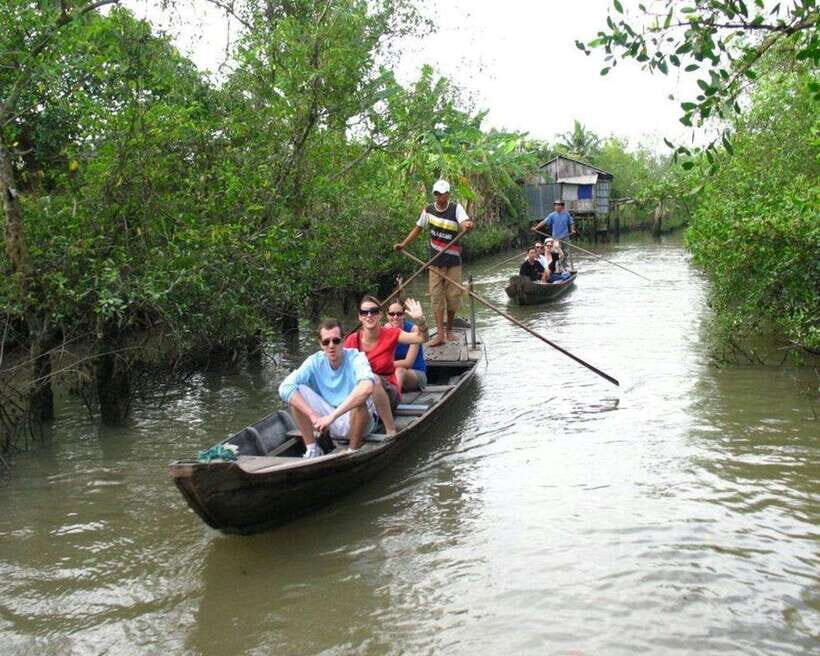
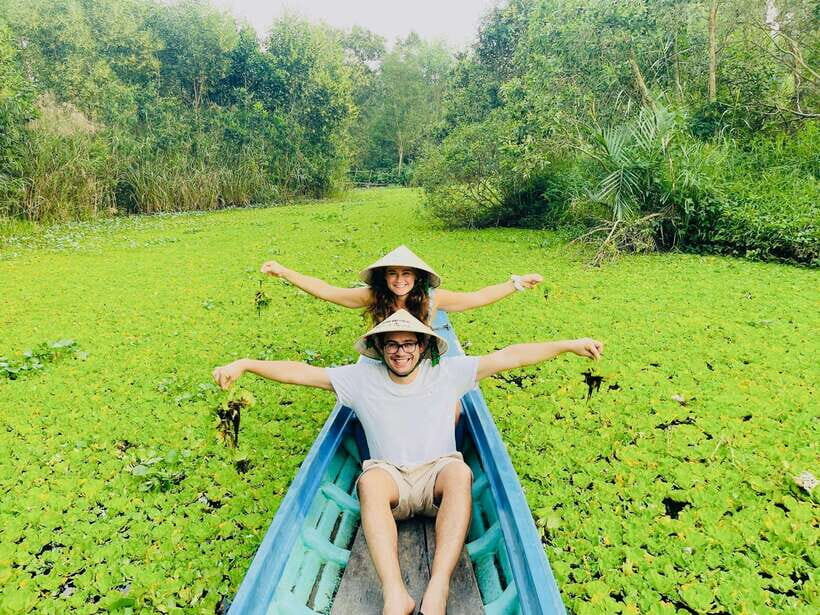
- The canal cruise: water hyacinth waterways and quiet bird-watching
- Spotting wild weeds, herbs, and water plants along the route
- Climbing up to the observatory for a sky full of birds
- The Bamboo basket-making village: craft work from a community since 1950
- Guide quality and comfort that make the day feel easy
- Price and value: about $38 for five hours of nature plus craft
- Who should book this tour (and who might prefer something else)
- Should you book the Lung Ngoc Hoang Can Tho bird and bamboo tour?
- FAQ
- Where is the meeting point for this tour?
- Do you pick up from hotels in Can Tho?
- How long is the experience?
- What is included in the price?
- Is the tour guided in English?
- What does the experience include besides the boat ride?
- How much does it cost?
Key highlights to look forward to
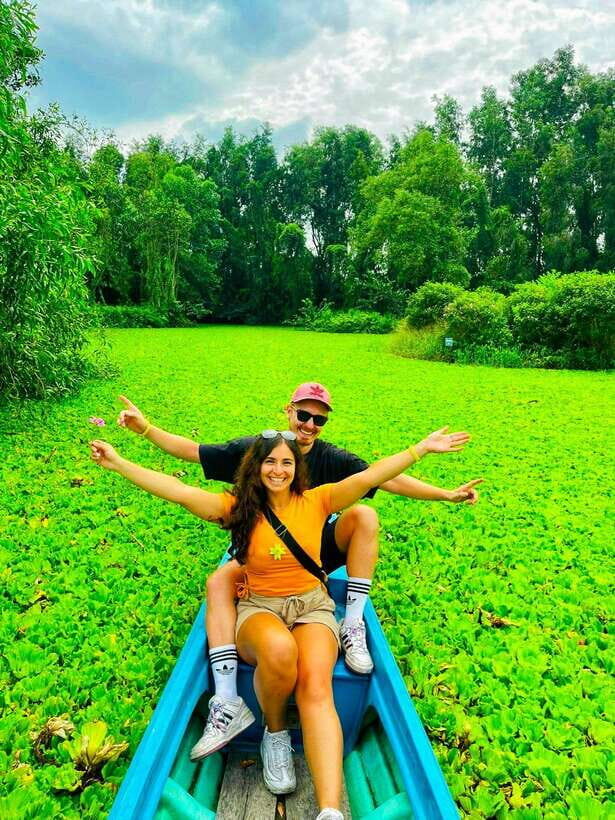
- Canal cruising in a thick mat of water hyacinth and water lettuce with plenty of bird-watching angles
- Climb to an observatory where you can take in the sky as birds fill the area
- Spot wild weeds, herbs, and water plants like water lily and water hyacinth along the way
- Learn bamboo basket making in a craft village established in 1950
- See how artisans work across many families, with the village known for bamboo and rattan products
- English-guided touring with a no-rush feel, plus comfort from transport in an AC car
Birdwatching by boat and bamboo craft in one smooth 5 hours
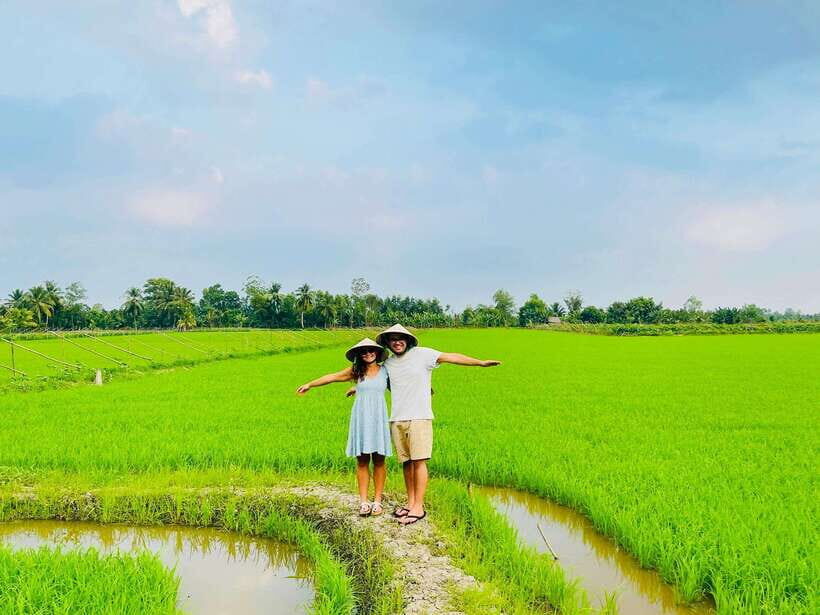
This is the kind of Can Tho outing that feels practical and low-stress. You’re not chasing a long checklist of “must sees.” Instead, you’re spending time where people actually live and work—river water plants, birds, and then bamboo craftsmanship.
What makes it work is the rhythm. First you’re on the water, then you’re looking up, then you’re learning a hand skill. Each part connects: the canals create the bird habitat, and the village explains how local materials become everyday tools and products.
If you enjoy nature watching more than shopping, you’ll likely feel satisfied. And if you like conversation, the guides’ strong English is a real advantage here—you can ask what you’re seeing instead of guessing.
You can also read our reviews of more tours and experiences in Can Tho.
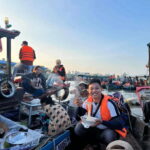
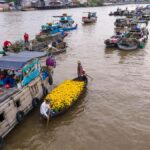
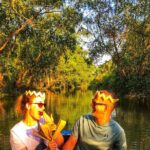
Getting to Lung Ngoc Hoang Nature Reserve from central Can Tho
Your tour starts at Vincom Plaza Xuân Khánh (Vincom Plaza Xuan Khanh-209, 30 Thang 4 street, Ninh Kieu district). In many cases, you can also be picked up from your hotel if it’s in Ninh Kieu. Either way, the morning or afternoon start point is easy: you meet at the mall, then you’re off.
Expect about an hour of driving before you reach Lung Ngoc Hoang Nature Reserve. That transfer time matters more than it sounds. It lets the experience feel like a real change of scenery, not just a quick detour.
Practical note: bring a light layer. Even when it’s warm, you’re moving between an AC vehicle and outdoor areas. Comfortable shoes help too, because you’ll be switching between boat areas and an observatory climb.
The canal cruise: water hyacinth waterways and quiet bird-watching
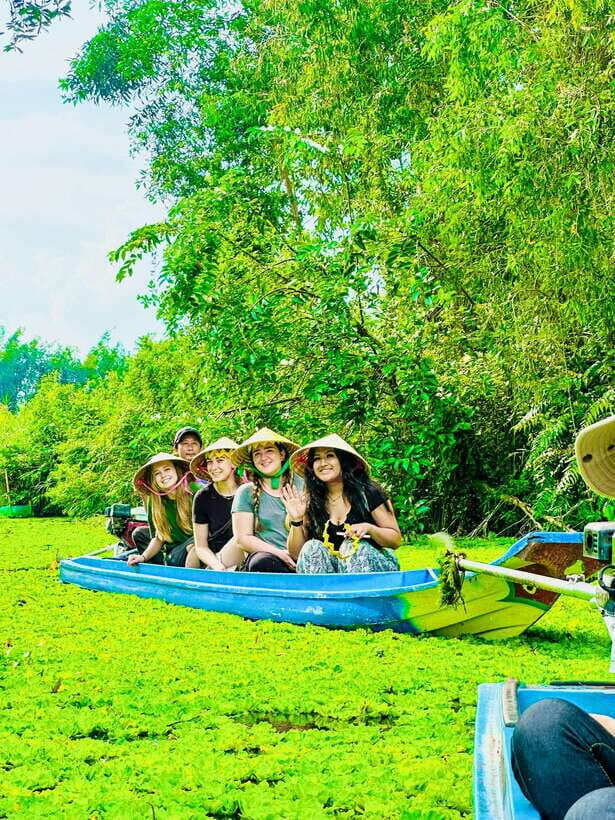
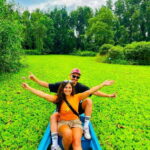
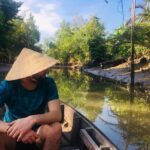
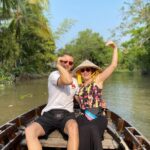
The main action begins when you cruise into the meandering canals inside Lung Ngoc Hoang. The water surface is often covered with water hyacinth and water lettuce. From the boat, that means two things: you get a strong sense of the habitat, and you also get bird-viewing spots that feel surprisingly “built in” by nature.
This is where you’ll likely notice the small details that make the reserve feel alive. You’re not just seeing birds as distant dots. You’re watching how the plants shape movement, perching, and the overall rhythm of the waterways.
If you like photos, this is a good setting. You’ll be close enough to observe color and behavior, and the guide can help point out what to look for—especially when birds settle or lift off from the vegetation.
One thing to manage: the canals aren’t an indoor studio. Light changes on the water, and the plants can block your line of sight. So aim to watch with your eyes first. Let the camera be your second priority.
Spotting wild weeds, herbs, and water plants along the route
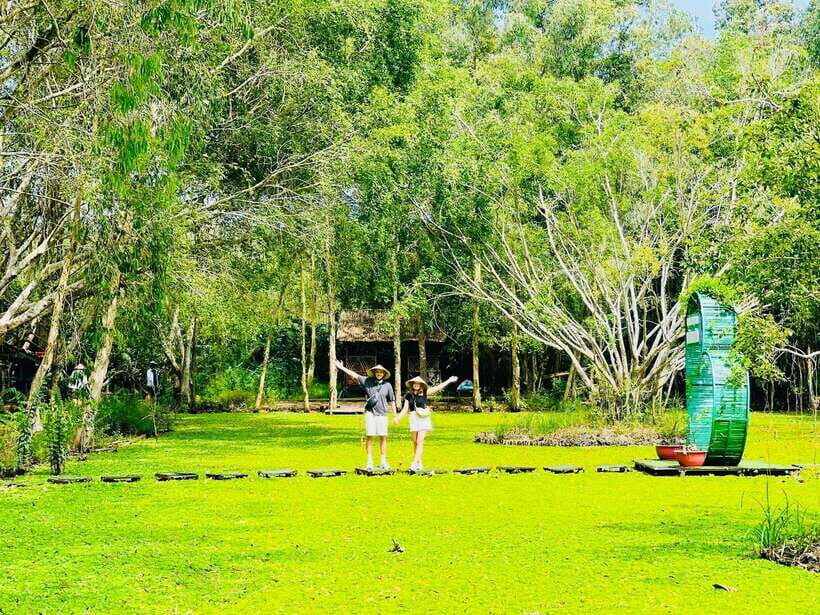
Beyond birds, Lung Ngoc Hoang is described as a place where wild weeds and herbs are part of the scene. The experience also highlights water lily and water hyacinth in Can Tho, so you’re not only focused on animals—you’re also paying attention to the plants that form the “stage.”
Why that matters: if you learn a bit about the plants, the nature watching becomes more meaningful. You start to understand why birds gather where they do. Even if you don’t become a botanist in five hours, you’ll leave with clearer mental pictures.
The guides’ explanations can help you connect plant names and functions to what you’re seeing around the canals. That’s one reason this tour feels more educational than random sightseeing.
If you’re the type who enjoys noticing small ecological clues—what grows, what covers the surface, what thrives near water—this portion is likely to be a highlight rather than filler.
Climbing up to the observatory for a sky full of birds
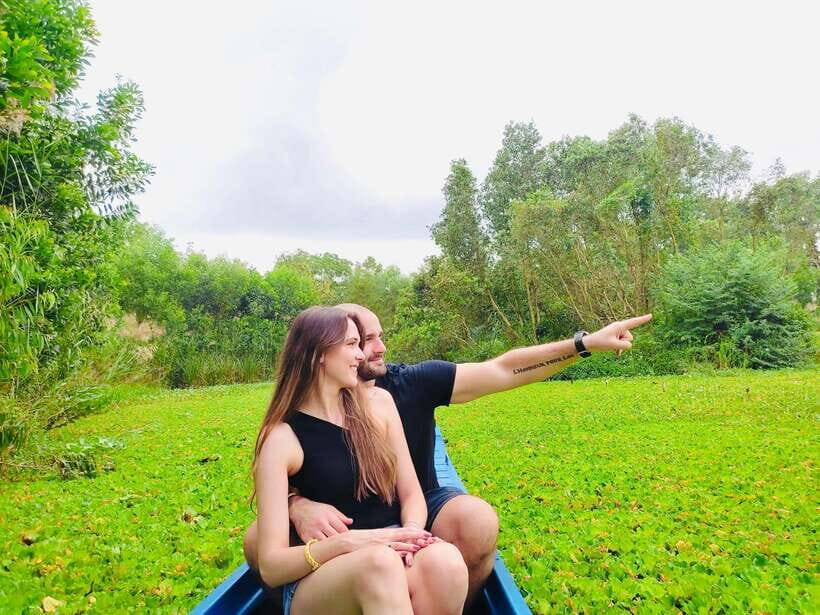
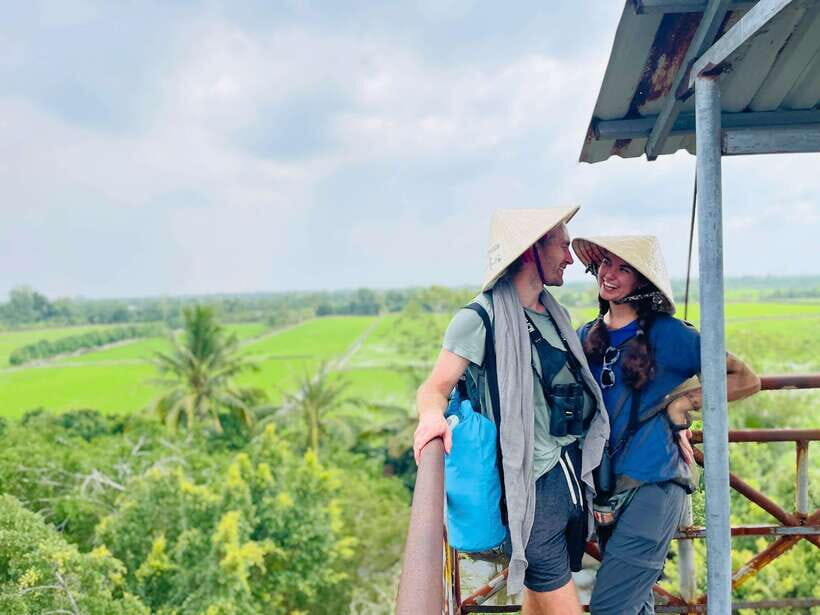
After the boat portion, you’ll climb to an observatory. This is the moment for the classic bird-view payoff: you can contemplate how thousands of diverse birds fill the sky and listen to their songs.
The observatory angle changes everything. On the water, your view is low and lateral. From higher ground, birds feel like part of the weather system. When there are birds overhead, it’s less about one species and more about the overall sound and movement.
This is also where a strong guide earns their keep. If your English is good, you might still miss context. If your English is not, you’ll really appreciate it. The tour is run with English live guidance, and several guides are specifically mentioned for very strong language skills and patience with questions.
Timing can shape your experience. Birds aren’t on schedule like a bus. So the observatory climb works best when you’re willing to be present—look, listen, and let the reserve do its thing.
The Bamboo basket-making village: craft work from a community since 1950
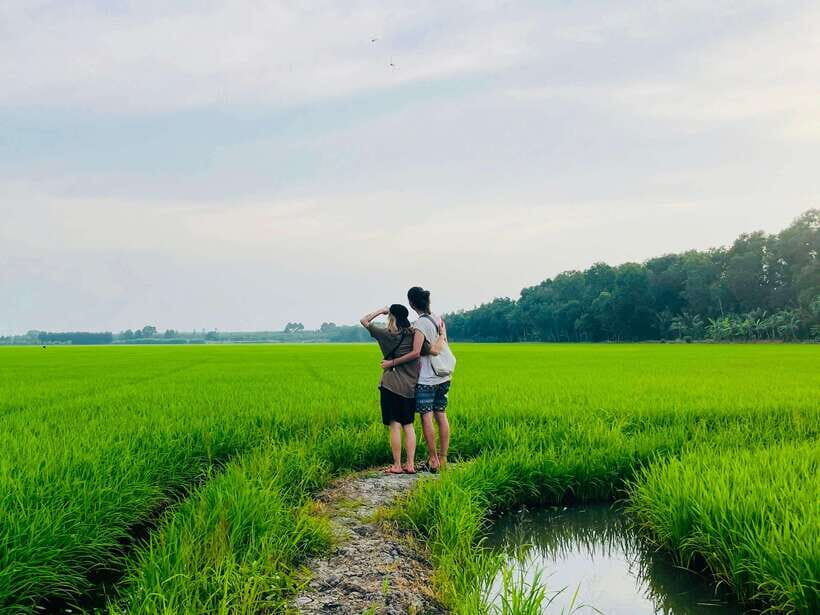
You’ll end at the heart of a bamboo basket-making village. This isn’t a single workshop for tourists. It’s an artisan community known for crafting bamboo and rattan products, with origins traced to 1950 and growth into a community of more than a hundred families.
What you’ll see is the careful process behind what looks simple. Bamboo baskets were once essential tools for storing fruits, tubers, and vegetables for local farmers. So the craft isn’t only decorative—it’s tied to daily life and food.
Even if you’ve never thought about basket weaving before, watching the steps changes how you see the objects. You start to notice the choices: how materials are handled, how forms are built, and how time and skill matter in everyday production.
This part of the tour is also a nice contrast to the earlier nature focus. You shift from bird songs to human work. And you get a sense of how local material skills keep regional routines going.
Guide quality and comfort that make the day feel easy
This tour’s best advantage is how smoothly it runs with an English-speaking guide. Multiple guides are highlighted for excellent English, strong knowledge about the area, and a friendly approach. Names like Hannah, Trinh, Mariah, and David come up specifically for that reason.
You’ll want that guidance for two reasons. First, birds and plants can look similar in a quick glance. Second, you’ll likely have questions—why certain birds are present, what plants do, and how craft materials get transformed. A guide who answers patiently turns the experience from pretty to personal.
Comfort is another plus. You’re driven in an AC-ed car, which matters after an hour of travel. It helps you arrive with energy instead of arriving worn out and rushing through everything.
And the best reviews share a theme: you don’t feel pushed along. Even with a fixed end time, the tour is designed so you can watch and ask without feeling like you’re being chased.
Price and value: about $38 for five hours of nature plus craft
At around $38 per person, this tour is priced like a solid half-day experience: transport out of the city, a guided nature component, a boat ride, and then a craft village visit. You’re not just paying for “a ticket.” You’re paying for time, access, and explanation.
The value is strongest if you meet three conditions:
- you want a nature-focused outing (birds and water plants)
- you like guided interpretation (English support helps a lot)
- you want both water scenery and a human craft stop in one trip
If your goal is only a quick photo run, you might feel tempted to DIY it. But that’s where guides earn their keep. Birds, canals, and observatory viewing are hard to interpret on your own, especially when you don’t know where to look.
So treat this as a structured experience that saves you guesswork. You’re buying clarity and calm time—not just getting from A to B.
Who should book this tour (and who might prefer something else)
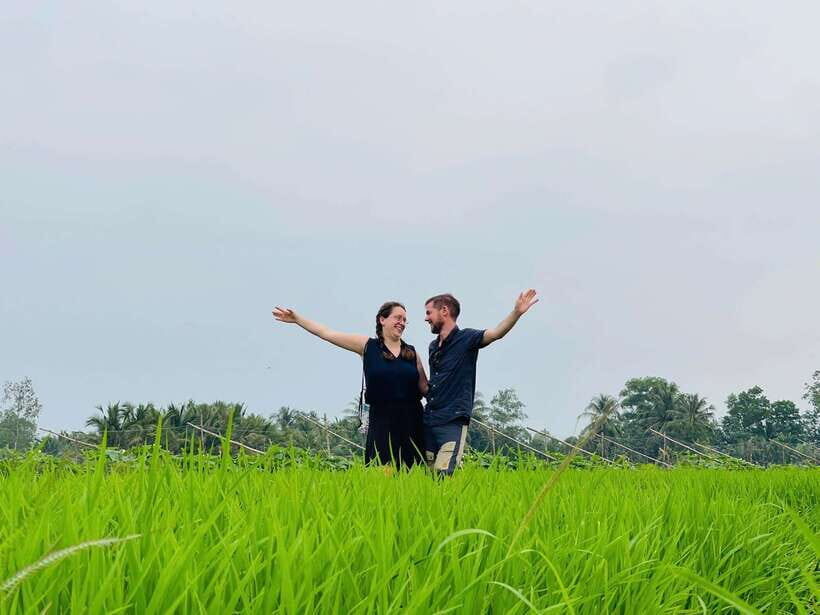
You’ll likely love this tour if you’re the type who enjoys quiet observation. Boat time plus an observatory climb fits well if you like watching behavior, not just checking boxes.
It’s also a good fit if you want an authentic feel that isn’t only built around crowds. The craft village is positioned around real bamboo and rattan making and the community behind it. That gives the day depth, not just scenic stops.
On the other hand, if you’re expecting a fully guaranteed wildlife highlight at every moment, nature watching always carries some variability. If you hate boats, the canal cruise might be a deal-breaker. And if your travel style is ultra-fast sightseeing, the pacing may feel too relaxed.
Should you book the Lung Ngoc Hoang Can Tho bird and bamboo tour?
Book it if you want a balanced half-day: canal birds + plant life + a bamboo craft lesson in one clean package. At about $38 and roughly five hours, it’s a good value if you care about understanding what you’re seeing.
Skip or reconsider if you only want guaranteed, nonstop action or if boats make you uncomfortable. Also consider choosing this when you can slow down—this tour is at its best when you’re willing to watch and listen.
If you’re building a Can Tho plan and you want one experience that feels both natural and human, this is one of the more satisfying choices.
FAQ
Where is the meeting point for this tour?
The meeting point is in front of the main entrance of Vincom Plaza Xuan Khanh-209, 30 Thang 4 street, Ninh Kieu district, Can Tho city. The tour also ends back at this meeting point.
Do you pick up from hotels in Can Tho?
Yes, pickup is available from hotels in Ninh Kieu district.
How long is the experience?
The tour lasts about 5 hours.
What is included in the price?
The tour includes a guide, transportation, and a boat ride.
Is the tour guided in English?
Yes, the live tour guide speaks English.
What does the experience include besides the boat ride?
You’ll cruise the canals in Lung Ngoc Hoang Nature Reserve, climb to an observatory for bird views, and visit a bamboo basket-making village.
How much does it cost?
The price is listed as $38 per person.