REVIEW · HO CHI MINH CITY
Chinatown Cyclo Journey Half-day Tour
Book on Viator →Operated by Hoi An Express Travel · Bookable on Viator
Cyclo time in Chinatown is pure fun. You’ll cruise through District 5’s Chợ Lớn on a traditional pedicab, then visit the Lady Thien Hau Temple, Cha Tam Church, and Binh Tay Market while learning about Chinese medicine practices. I like that it includes hotel pickup and an English-speaking guide, so you spend less time figuring things out and more time watching daily life. One thing to consider: if you’re split across multiple cyclo, the guide may not be close enough to talk much during longer ride stretches.
This is built for small groups too, with a cap of 15 travelers and time together in a smaller group. One recent guide named Anh was praised for on-time hotel pickup and keeping the experience fun, which matters because the tour runs on a tight half-day rhythm. You can choose a morning or afternoon departure, then you’ll be back at your hotel after a ride, a few key sights, and time to shop.
In This Review
- Key highlights to look for
- Why the Chinatown cyclo route works so well in Ho Chi Minh City
- Price and what’s actually included in the $48 value
- Timing and group size: what to expect on the ground
- Entering Chợ Lớn at the Lady Thien Hau Temple (Ba Thien Hau)
- Phố Tau Sai Gon (Chợ Lớn Quận 5): medicinal herbs, shops, and street-level Chinatown
- Cha Tam Church: a Chinese community church with real local context
- Binh Tay Market (or lacquer ware): where the tour turns into shopping time
- The Chinese medicine segment: how to turn curiosity into real learning
- How to enjoy the cyclo ride without missing key moments
- Comfort, pace, and who this tour fits best
- Should you book Chinatown Cyclo Journey? My practical take
- FAQ
- How long is the Chinatown cyclo journey tour?
- Is hotel pickup and drop-off included?
- What sights are included during the tour?
- Do I need to pay entrance fees?
- Will I have an English-speaking guide?
- How many people will be in the group?
- What about children’s pricing?
- Is tipping included?
Key highlights to look for
- Traditional cyclo (pedicab) ride with about 1 hour on the pedicab as part of the tour
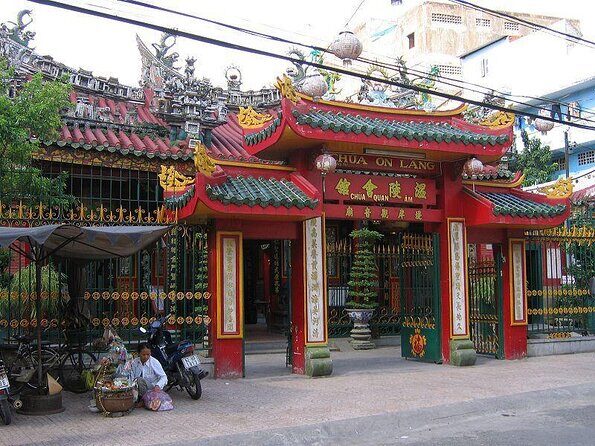
- Lady Thien Hau Temple (short visit, admission included) to kick off Chinatown in a big, meaningful way
- Chinese medicine stop(s) with local practitioners and a chance to see how herbs and remedies show up in daily life
- Cha Tam Church linked to the Chinese Catholic community in Ho Chi Minh City
- Binh Tay Market (or a lacquer ware stop) for browsing and bargaining with plenty of stalls to wander
Why the Chinatown cyclo route works so well in Ho Chi Minh City
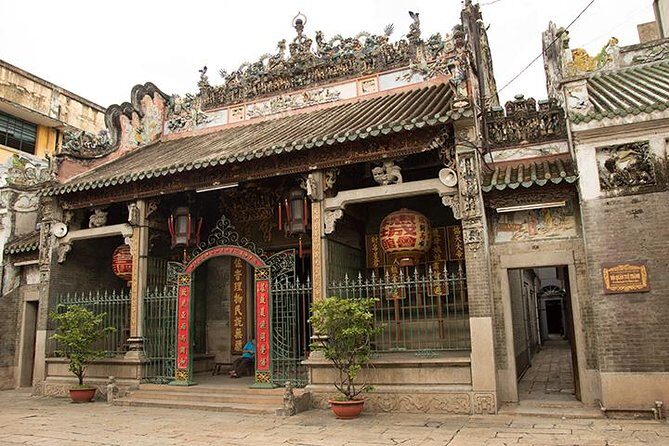
If you’ve only stayed around District 1, Ho Chi Minh City can feel like one city. This tour gives you a different angle: Chinatown in District 5 (Chợ Lớn), where you’ll see more shop fronts, temples, and street-level commerce than you’re used to. The big win is that the pedicab moves you through the lanes at a speed that lets you notice details—without you needing to read a map.
You’ll also get a clean mix of “see it” and “understand it.” Yes, you’ll visit major landmarks. But you’ll also spend real time around everyday Chinese goods—things like medicinal herbs, clothing, and market browsing—so Chinatown doesn’t feel like a movie set.
The half-day length is the other practical advantage. With about 3 hours 30 minutes total, this fits easily between other plans, and the tour includes hotel pickup and drop-off in Ho Chi Minh City center. That saves time and stress, especially if you’re not staying in walking distance to District 5.
You can also read our reviews of more tours and experiences in Ho Chi Minh City


Price and what’s actually included in the $48 value
At $48 per person, this isn’t just paying for a ride. It’s paying for a guided route plus a few things that add up fast in Vietnam: admission fees, transport, and a guide who can keep you on track.
Here’s what matters for value:
- Hotel pickup and drop-off in the city center (you don’t have to figure out transit to District 5)
- Entrance fees included for the sights you visit
- Air-conditioned transportation as part of the day
- Bottled water
- English-speaking guide (other languages may be available with a surcharge, but English is standard)
- Travel insurance included
- The cyclo (pedicab) time is part of the plan, not an optional add-on
What you’ll pay extra for is the stuff that’s personal: souvenirs, drinks, and anything you choose to buy or snack on during shop stops. Tipping local guides is also not included, so if you’re used to adding a small tip in Vietnam, plan for it.
Net-net: this is good value if you want a structured Chinatown walk-through without the headache of finding the sights and negotiating local transportation on your own.
Timing and group size: what to expect on the ground
You can choose either a morning or afternoon departure, and the tour runs about 3 hours 30 minutes. The group limit is 15 travelers, and when you meet your guide you’ll be in a smaller group (up to 10 people).
That small-group setup is the reason the experience feels manageable instead of chaotic. Still, one review note is worth taking seriously: if your cyclo group is split across separate pedicabs for longer ride stretches, you may not hear the guide as much. It doesn’t mean the tour is bad—it just means you should use those ride moments to look around, not expect constant commentary.
Tip that helps: be ready to ask questions during the stops, not only while you’re moving. Once you’re at the temple, church, and market, you’ll get more natural chances to talk.
Entering Chợ Lớn at the Lady Thien Hau Temple (Ba Thien Hau)
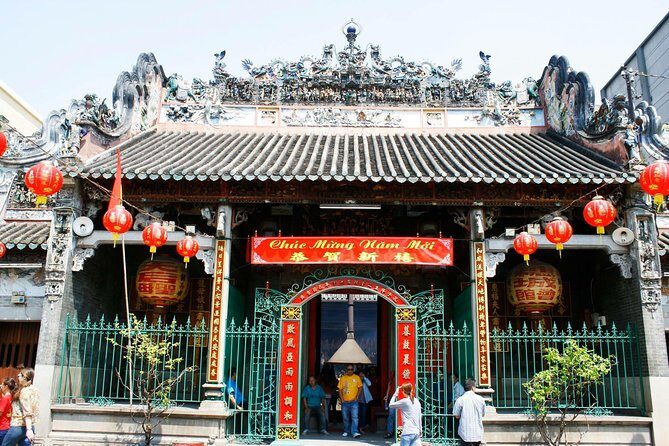
Your first real taste of Chinatown is the Lady Thien Hau Temple, dedicated to the goddess of the sea. The visit is short—about 15 minutes—and admission is included, so you’re not wasting time dealing with logistics before you get moving again.
Why this stop works:
- It sets the tone fast. You’ll see how faith shows up right in the middle of commerce and neighborhood streets.
- The timing is efficient. You get the key sight early, then you move into the more chaotic market and shop areas while your energy is still high.
What to watch for: since this is a temple, dress and behavior should match what you’d do at other religious sites in Vietnam. If you’re unsure, conservative clothing is always a safe bet.
Also, because you’re on a schedule, don’t plan to linger here for a long photo session. If photos are your priority, take quick photos early and keep walking.
Phố Tau Sai Gon (Chợ Lớn Quận 5): medicinal herbs, shops, and street-level Chinatown
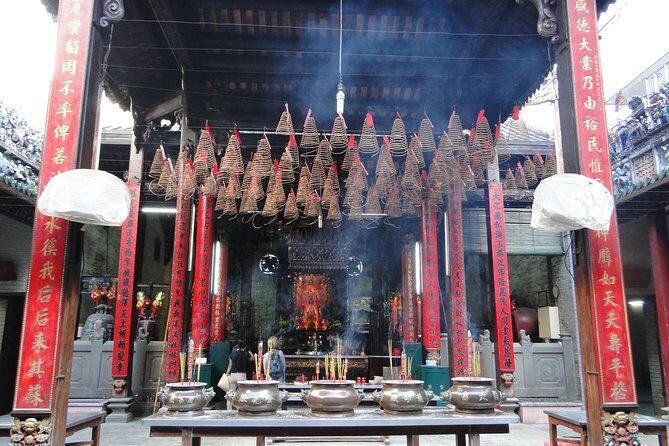
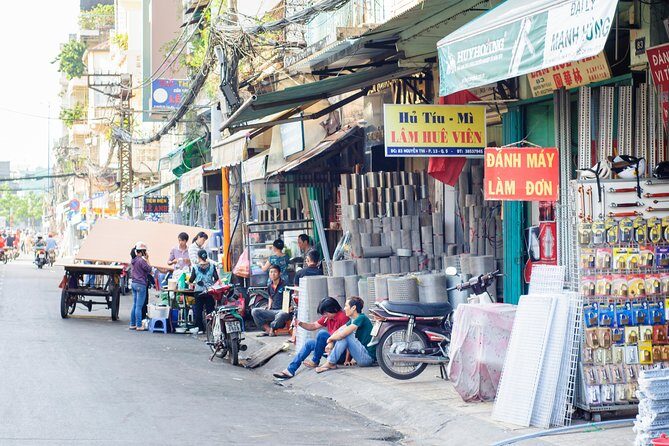
Next comes a longer stretch in the Chinatown shop area around Phố Tau Sai Gon (Chợ Lớn Quận 5). Expect about 45 minutes, with time to explore storefronts and see Chinese products up close.
This is one of the most practical parts of the tour because it connects the abstract idea of Chinatown to actual goods you can recognize:
- Medicinal herbs and related items
- Clothing and everyday products
- Signs, shop styles, and small-lane activity that make Chinatown feel like a living neighborhood
If you like markets, this is also where you’ll start building your “what should I look for?” instinct. Don’t worry if you don’t know much about Chinese medicine. The guide is there to explain what you’re seeing, and the tour includes time with practitioners later too.
One small caution: shopping time can tempt you to spend quickly. Keep an eye on your budget and your bag space—Binh Tay Market gives you a lot more chance to compare prices.



Cha Tam Church: a Chinese community church with real local context
Then you head to Cha Tam Church (Saint Francis Xavier Parish Church), linked with the Chinese Catholic community in Ho Chi Minh City. The visit is about 20 minutes, admission included.
This stop is valuable because it adds a different layer to Chinatown. You’re not only seeing Chinese beliefs in temple form. You’re seeing a Chinatown community shaped by different faith traditions too. It’s a good reminder that “Chinatown” isn’t one single religion or one single style of architecture—it’s a district shaped by many currents.
How to make the most of this part: listen for the small points the guide makes about how the church fits into the local Chinese neighborhood. You don’t need a long lecture—just enough to connect what you’re seeing to the community around it.
Binh Tay Market (or lacquer ware): where the tour turns into shopping time
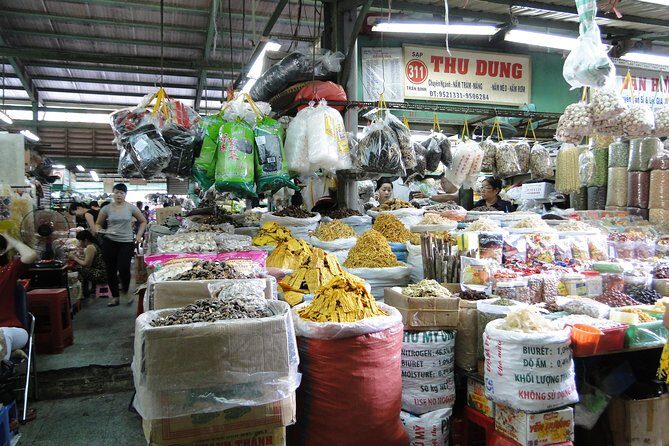
Your final stop is either Binh Tay Market or the Lacquer Ware Factory, depending on the route that day. If you go to Binh Tay Market, plan on about 1 hour of browsing.
Binh Tay Market is described as being in the heart of Chinatown and built by the French in the 1880s. That means you’re not just shopping in any warehouse market—you’re shopping in a market with a long, layered past.
What you can do here:
- Browse stalls for clothes, handicrafts, and souvenirs
- Haggle (this is part of the fun, and you’ll have time to do it)
- Compare items you saw earlier in Chinatown shops so you don’t overpay
If you end up with the lacquer ware stop instead, the value is a bit different. You’ll shift from high-traffic market browsing into a more focused shopping experience tied to traditional handicrafts. Either way, you get a chance to bring something home that actually fits the Chinatown story.
Practical shopping tip: set a budget before you reach the final hour. The last stop is where impulse buys happen—because the variety is strong and you’re already in “I want a souvenir now” mode.
The Chinese medicine segment: how to turn curiosity into real learning

A big promise of this tour is discovering secrets of Chinese medicine as you visit local practitioners. You’ll see how herbs and remedies show up in shop life, and you’ll get explanations from your guide while you’re around people who practice locally.
Even if you’re not buying anything, this part is worth it because it changes how you interpret the earlier Chinatown shopfronts. Without this stop, medicinal herbs can feel like random tourist shopping items. With the practitioners in the picture, you understand what’s behind the products.
How to get the most out of it:
- Ask simple questions about what you’re looking at. You don’t need medical knowledge—just curiosity.
- If you’re interested in buying herbs or products, ask about how locals use them and what forms are common.
- Keep in mind personal expenses aren’t included, so any purchases are on you.
And yes, the tour also includes time for street food opportunities along the way. If you choose to snack, factor it into your spending. Bottled water is included, but anything extra is personal.
How to enjoy the cyclo ride without missing key moments
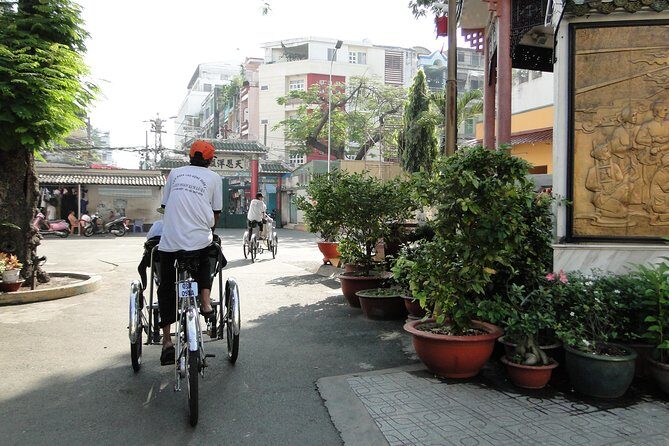
The pedicab portion is a signature part of this experience, and 1 hour of cyclo riding is included. That time matters because cyclo speed is slow enough to notice streets and faces, but not so slow that you feel stuck.
Still, there’s a realistic tradeoff: when the group is split, communication can drop during longer rides. Use that time to:
- Watch lane life and shop activity
- Take quick photos when you pass something interesting
- Save your questions for stops where you’ll all be gathered together
Also, keep your expectations right. You’re not doing a long sightseeing bus tour with constant commentary. This is more like a guided neighborhood walk with cyclo transport—and the best part is how you see the district from inside the lanes.
Comfort, pace, and who this tour fits best
This is a half-day tour designed so most travelers can participate, with a moderate schedule of rides and short visits. You’ll do temple and church walking, shop exploration, and a market hour. If you have mobility concerns, it’s smart to think about how you handle uneven sidewalks and busy lanes—because Chinatown streets are not made for quiet, wide-straight walking paths.
This tour is a strong fit if you:
- Want to get out of District 1 and see a different side of Ho Chi Minh City
- Like guided shopping with context, not just random browsing
- Enjoy temples and neighborhoods, not only big monuments
- Want a plan that reduces the chance of getting pulled into messy transportation situations
One review point that’s genuinely useful: if you want to ride a cyclo but also avoid the hassle of dealing with chaotic street offers, using a guided tour is a cleaner way to do it. You’re getting a structured route, a guide, and included transport.
Should you book Chinatown Cyclo Journey? My practical take
Book it if you want a compact, guided Chinatown experience with a traditional cyclo ride, temple and church visits, and a real learning component around Chinese medicine. The biggest reason to choose it is value: hotel pickup, entrance fees, English guide support, and a planned pedicab route are wrapped into one price.
Skip it (or think twice) if you dislike any shopping time at all, because the final market hour—or lacquer ware option—leans into browsing and buying. Also, if you strongly prefer nonstop guide narration during the ride, remember you may get less talk time when your cyclo group is split.
If you want the best results, treat this like a half-day neighborhood assignment: wear comfy shoes, bring some cash for bargaining, and be ready to ask questions at the stops.
FAQ
How long is the Chinatown cyclo journey tour?
The tour runs about 3 hours 30 minutes.
Is hotel pickup and drop-off included?
Yes. The tour includes hotel pickup and drop-off in Ho Chi Minh City center.
What sights are included during the tour?
You’ll visit Lady Thien Hau Temple, Cha Tam Church, and Binh Tay Market. The final stop may also be a Lacquer Ware Factory instead of Binh Tay Market, depending on the route that day.
Do I need to pay entrance fees?
Entrance fees are included.
Will I have an English-speaking guide?
Yes, English-speaking guides are included (other languages may be available upon request with a surcharge).
How many people will be in the group?
The tour has a maximum of 15 travelers, and you’ll meet your guide in a smaller group of no more than 10 people.
What about children’s pricing?
Children 0–5 years old are free. Children 6–10 years old pay 50% off. There’s also a policy that covers a maximum of 1 child accompanied by 1 adult, with the second child paying the adult price.
Is tipping included?
No. Tipping for local guides is not included.