REVIEW · HO CHI MINH CITY
Ho Chi Minh Most Historical Spots & War Museum Tour (Private & All-Inclusive)
Book on Viator →Operated by ForeverVacation · Bookable on Viator
History hits hard in Saigon.
What I like most about this private, all-inclusive-style Ho Chi Minh history tour is how smoothly it’s organized around your day (hotel pickup, air-conditioned ride, and a guide who keeps you moving), plus the way the War Remnants Museum visit is handled in a structured, informative way. You’ll get the big-picture context fast, then you’ll have time to absorb what you’re seeing.
Another strong point is your guide. In the best reviews, the operator’s guide Ocean gets praised for being polite and genuinely good at explaining what you’re looking at, which matters in a place this emotionally intense. One consideration: plan on images and themes that are confronting, especially at the war museum—this is not the kind of stop you rush through.
After the museum, the itinerary shifts gears into calmer, cultural stops and then back to major Saigon landmarks, so you end up with a day that mixes wartime reality, spiritual memory, and everyday city life.
In This Review
- Key takeaways before you go
- Private hotel pickup and a day that actually flows
- War Remnants Museum: where the facts feel personal
- The quiet pivot: Thich Quang Duc Monument
- Wat Chantaransay: Khmer pagoda life in the middle of the city
- FITO Museum: turning medicine into a story you can walk through
- Lunch time slot and pacing: don’t underestimate midday
- The rest of the route: Saigon’s landmarks and the layers of occupation
- Turtle Lake roundabout and the city’s street naming
- Nguyen Dinh Chieu Street little house: a small space with a big story
- Tan Dinh Church: colonial-era architecture with survived details
- Dong Khoi Street and the old glamour of Rue Catinat
- Saigon Opera House and the colonial core
- Ben Thanh Market: history meets shopping reality
- Reunification Palace: the 1975 turning point, plus 1963 context
- Saigon Central Post Office: built 1886–1891, with style debates
- Ho Chi Minh Square and the city’s iconic statue
- Museums and cultural stops: from “women” to “medicine”
- Views and performance stops: looking up and looking sideways
- Bitexco Financial Tower & Sky Deck
- Landmark 81
- Water puppetry and À Ố bamboo circus
- Practical tips so your day stays enjoyable
- Price: is $133 per person good value?
- Who should book this tour?
- Should you book the Ho Chi Minh Most Historical Spots & War Museum Tour?
- FAQ
- What time does the tour start?
- How long is the tour?
- Is hotel pickup included?
- Is the tour private?
- Will I get a mobile ticket?
- What museums or attractions have admission included?
- Are any stops free?
- Does the itinerary include lunch time?
- What kind of guide will I have?
- Is the War Remnants Museum intense?
- Is there free cancellation?
- How many reviews does the tour have and what rating?
Key takeaways before you go

- War Remnants Museum first, when you still have energy for the heavy stuff
- Museum audio support using numbered headset prompts, which helps you match exhibits to facts
- Thich Quang Duc Monument gives you a quiet pause tied to the 1963 self-immolation story
- Wat Chantaransay connects you to Khmer community life and Theravada Buddhism
- FITO Museum turns “medicine” into a walk through Vietnam’s traditions and modern presentation
- Private pickup means less hassle and more time for your actual stops
Private hotel pickup and a day that actually flows
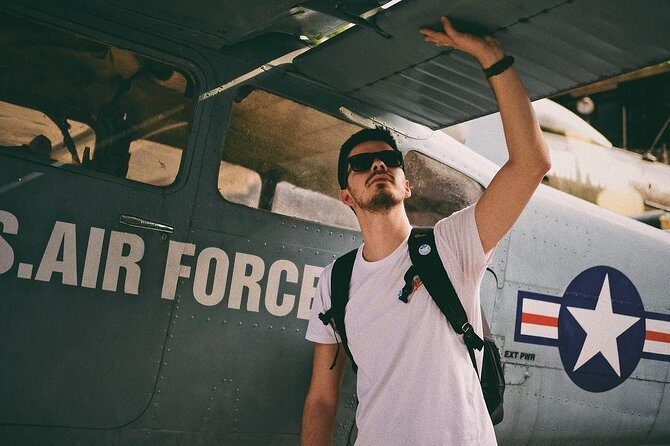
This tour runs about 6 to 7 hours, starting around 9:00 AM with pickup directly from your hotel. Your exact pickup time can shift a bit based on where you’re staying, but the goal stays the same: you don’t waste half a day figuring out transport or lining up tickets.
Once you’re on the road, you ride in a comfortable, spacious air-conditioned vehicle, with an English-speaking guide who keeps the timing tight. That’s a big deal in Ho Chi Minh City, where traffic can turn a “quick stop” into an accidental endurance test.
You’ll move through the day in a clear rhythm: a morning focused on war and its aftermath, early afternoon cultural/spiritual stops, then a run of city landmarks and museums. It’s the kind of route that helps you avoid the trap of only seeing buildings and never understanding why they matter.
You can also read our reviews of more private tours in Ho Chi Minh City


War Remnants Museum: where the facts feel personal

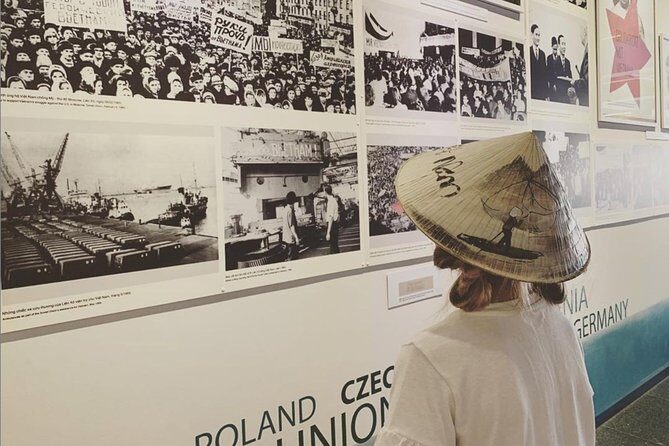
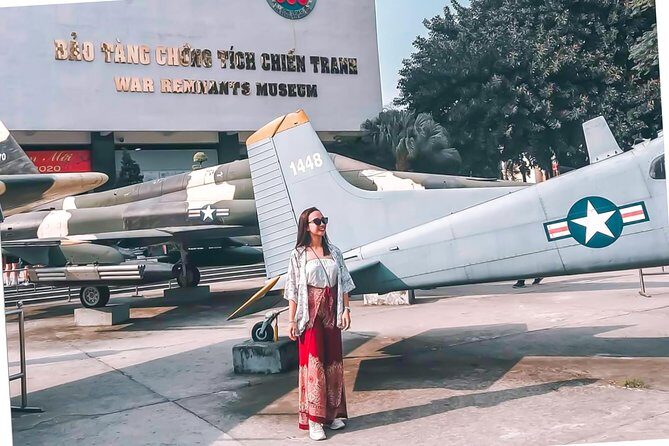
You start with the War Remnants Museum around 9:20 AM. It first opened in 1975 and was once known as the Museum of American War Crimes. That name alone tells you the museum’s tone. Expect graphic photos and hard evidence meant to confront what happened.
This is one of those places where a guide’s pacing helps. A good explanation can turn overwhelming material into something you can actually process. In the tour experience, there’s also support for self-guided learning: you can use earphones and press the matching number on the headset to get information about what you’re looking at. That’s especially useful when exhibits have lots of details, captions, and visual evidence.
A balancing tip: don’t try to “speedrun” the worst rooms. Some sections are described as punch-in-the-gut—there are rooms covering things like war crimes and Agent Orange. If you’re sensitive, it helps to plan a mental strategy: pause, look, absorb, then move on when you’re ready. You’ll remember more that way, and you won’t feel like you got steamrolled.
Practical comfort matters here. The museum can be photo-heavy and intense, so wear something you can stand in for a while and be ready for emotional downtime after you leave.
The quiet pivot: Thich Quang Duc Monument
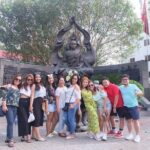
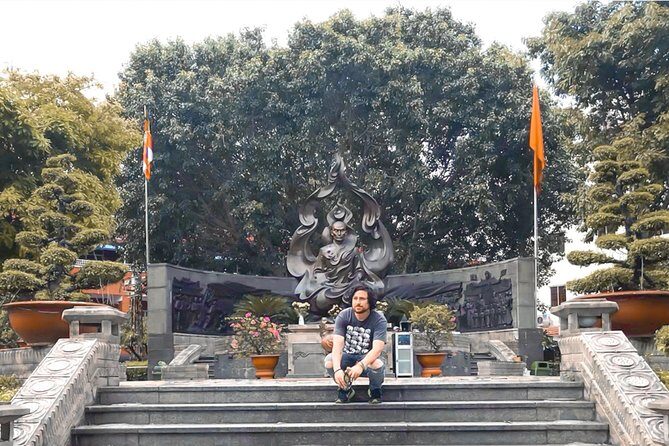
Around 1:00 PM, you visit the The Venerable Thich Quang Duc Monument. This is a memorial park dedicated to the Buddhist monk Thich Quang Duc, who self-immolated in protest in 1963 at an intersection near what is now the Reunification Palace.
What I like about including this stop after the war museum is the tonal shift. The day reminds you that history isn’t only treaties and tanks. It’s also faith, public protest, and how people choose to be remembered.
The monument itself is described as peaceful. That doesn’t mean it’s soft. It’s more like a reset button: you get a moment to breathe, reflect, and re-center before you keep moving into other cultural stops.
Wat Chantaransay: Khmer pagoda life in the middle of the city
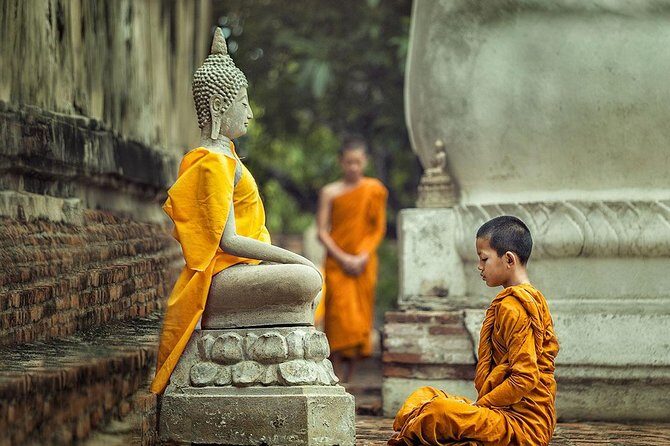
Next, you go to Chùa Chantaransay, also known as a Khmer pagoda. The site is tied to the Khmer community in southern Vietnam and it also houses monks from the Theravada sect, described as one of the most ancient branches of Buddhism.
Expect this to feel more like a living religious space than a scripted museum stop. That’s not “better” or “worse” than the war museum. It’s just different. You’ll get a view of Vietnam’s spiritual side that isn’t dependent on conflict.
The time on site is about 45 minutes. Use that time to slow down: observe how the space is used, how visitors behave, and how the community identity shows up in the setting. If you like culture that feels grounded, this is the kind of stop that delivers.
FITO Museum: turning medicine into a story you can walk through
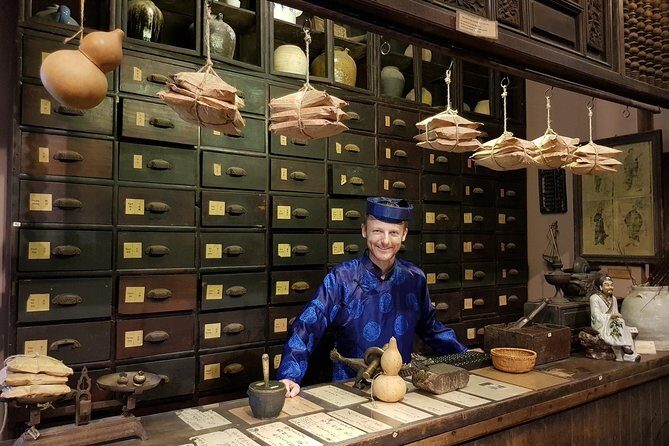
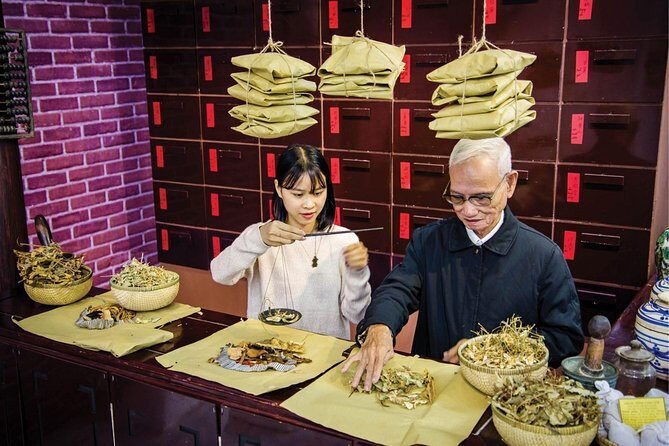
You’ll hit the FITO Museum around 2:30 PM for about 1 hour. This museum is known for blending traditional and modern architecture and for having one ground floor and five upper floors with 18 exhibition rooms.
If you’ve ever wondered how “traditional medicine” became part of modern Vietnam’s identity, this is a smart stop. The exhibits include delicately carved wooden images and a museum layout that keeps you moving across different themes rather than just seeing objects in one room.
One practical note: with many rooms, you’ll want to keep an eye on how much time you’re spending per floor. A guide helps here too, especially if you want to prioritize what you see instead of trying to read everything at once. You’ll get more value if you treat it like a guided route rather than a reading marathon.
You can also read our reviews of more historical tours in Ho Chi Minh City




Lunch time slot and pacing: don’t underestimate midday
Your day includes lunch time around 11:30 AM (built into the flow). The exact lunch details aren’t spelled out here, so you’ll want to confirm what’s included and what isn’t. Still, the schedule clearly leaves room for a meal before the afternoon cultural stops.
I like having lunch inside the plan because it prevents that common Vietnam travel problem: you end up hungry, impatient, and distracted right when you need to absorb serious content. Build in energy and you’ll enjoy the rest of the day more.
The rest of the route: Saigon’s landmarks and the layers of occupation
After the core museum-and-spiritual sequence, the route can include a string of iconic Saigon sights—some are photo-friendly, some are architectural, and some are museums with specific themes. You’ll likely pass through or stop for time around several districts and major streets.
Here are some of the stops that often show up as part of this larger “historical spots” loop, and what each one can add:
Turtle Lake roundabout and the city’s street naming
The Turtle Lake roundabout sits at key crossroads, and the surrounding streets have a commemorative naming theme. Even if you just view it from the road or spend a short moment, it’s a useful way to connect geography to memory.
Nguyen Dinh Chieu Street little house: a small space with a big story
You may visit the Nguyen Dinh Chieu Street little house, described as a hiding place for nearly two tons of Saigon Commandos weapons during the spring offensive and 1968 uprising, later declared a National Monument of Culture. These smaller, specific sites can feel more personal than grand monuments because the scale is human.
Tan Dinh Church: colonial-era architecture with survived details
Tan Dinh Church Saigon is described as Romanian-style, built in 1876, with Gothic and Renaissance elements. If you enjoy architecture, this kind of stop helps balance the emotional weight of the war museum with something you can see and appreciate on a craft level.
Dong Khoi Street and the old glamour of Rue Catinat
Dong Khoi Street (once called Rue Catinat during French occupation) is where the city’s colonial past meets modern traffic. It’s a classic “layers of time” street: you can walk short segments and notice how the area’s character shifted.
Saigon Opera House and the colonial core
The Saigon Opera House is an elegant colonial building at the intersection of Le Loi and Dong Khoi, very close to Notre Dame Cathedral and the Central Post Office. This is great for framing: you can view multiple architectural landmarks within a compact area, which saves time and helps you compare styles.
Ben Thanh Market: history meets shopping reality
Ben Thanh Market is a practical stop if you want something besides monuments. You’ll find handicrafts, branded goods, Vietnamese art, and food stalls inside. For me, markets work best on an itinerary like this when you treat them as a reset after heavy museums—low-pressure browsing beats forcing yourself to “see everything.”
Reunification Palace: the 1975 turning point, plus 1963 context
The Reunification Palace is a key historical site in the center of the story. It served as the base of Ngo Dinh Diem until his death in 1963, then it became internationally famous in 1975. There’s also a famous detail of a tank crash through the main gate (described as belonging to the North Vietnamese Army).
This is the kind of stop where a guided explanation helps. The building and rooms matter, but understanding the timeline—what changed, when, and why—keeps the visit from feeling like just another “old government building.”
Saigon Central Post Office: built 1886–1891, with style debates
The Saigon Central Post Office was constructed from 1886 to 1891 with Gothic, Renaissance, and French colonial design. There’s also a note that some people mistakenly credit Gustave Eiffel, and you’ll likely hear the corrected story from your guide.
If you like buildings that feel like they were designed to impress, this stop is satisfying even if you’re not a hardcore architecture person.
Ho Chi Minh Square and the city’s iconic statue
At Ho Chi Minh Square, you’ll find French colonial-style buildings around it and a statue of Uncle Ho placed there. Even a short visit gives you a sense of how the city’s center presents itself—formal, symmetrical, and designed for public symbolism.
Museums and cultural stops: from “women” to “medicine”
Depending on timing, the route can include places like a museum honoring Vietnamese women, and other thematic museums such as a traditional medicine & pharmacy museum or a museum on the Botanic Gardens’ grounds tracing the evolution of first human civilization in southeast Asia to the present (the name isn’t provided in the details you shared, so I’d treat it as a thematic history stop rather than a must-memorize landmark).
These are good additions if you want history to include culture and daily life, not only military events.
Views and performance stops: looking up and looking sideways
This tour concept also includes some very different kinds of “Saigon history” by way of viewpoint and tradition.
Bitexco Financial Tower & Sky Deck
The Bitexco Financial Tower and its Sky Deck (described as 262 metres high) offers city views. This is a nice counterweight after intense sites. You’re basically telling your brain: okay, now we’re getting perspective.
Landmark 81
You may also see Landmark 81, listed as a super-tall skyscraper. It’s more of a landmark pass than a lesson by itself, but it gives you a sense of how new development reshapes the city’s skyline.
Water puppetry and À Ố bamboo circus
The route can include water puppetry, described as dating back to the 11th century in the Red River Delta, and À Ố Show, which is a Vietnamese bamboo circus performance. These aren’t “war sites,” but they’re part of Vietnam’s cultural memory. If you like feeling the living side of history, these can be standout moments.
Practical tips so your day stays enjoyable
This tour is scheduled tightly, with multiple kinds of stops. A little prep makes a big difference:
- Bring water and wear shoes you trust for walking. Some stops are more upright and outdoor-adjacent than others.
- For the war museum, accept that you’ll feel something. Don’t try to force objectivity; just give yourself time to process.
- If you’re sensitive to graphic content, focus on the structure: watch your pace, step out briefly if needed, and use the guide’s explanations to stay grounded.
- Keep your camera ready, but don’t treat every room as a photo opportunity. In places like the War Remnants Museum, the most respectful approach is often slower looking.
Price: is $133 per person good value?
At $133 per person for a private tour with hotel pickup and an air-conditioned vehicle, the value comes from the combination, not from one single attraction. You’re paying for time, logistics, and the guide’s ability to connect dots between places that otherwise might feel like disconnected stops.
Also, two admission items are explicitly included: the War Remnants Museum and the FITO Museum. Other highlighted stops like the Thich Quang Duc Monument and Wat Chantaransay are listed as free. That doesn’t make the tour cheap, but it does help justify what you’re paying.
The best way to judge value for you is to ask one question: do you want a guide to help you understand the war-era material while still fitting in culture and landmarks? If yes, this price can feel fair. If you only want a casual city walk, you could do some of these stops on your own for less.
Who should book this tour?
I think this tour is a strong fit if you want:
- A private, structured way to handle serious Vietnam War history in Ho Chi Minh City
- Cultural stops that balance the day, not only museums about conflict
- An English-speaking guide who can keep the narrative clear while you move between sites
- A “see a lot, but still make sense” itinerary style
It may not be ideal if you hate confronting material or you’re looking for a purely light sightseeing day.
Should you book the Ho Chi Minh Most Historical Spots & War Museum Tour?
I’d book it if you want one guide-led day that connects war history to the city you’re walking through. The strongest reason to choose it is the way the day is paced around the War Remnants Museum, then softens the emotional landing with spiritual and cultural stops like the Thich Quang Duc Monument and Wat Chantaransay, plus a thought-provoking break at FITO Museum.
If you’re the kind of traveler who values explanations, structured timing, and not having to plan transport between distant stops, this private format makes sense. Just go in with emotional awareness. This isn’t a casual day of photos. It’s a day that teaches.
FAQ
What time does the tour start?
It starts at around 9:00 AM with pickup from your hotel. The exact pickup time can vary based on where you’re staying.
How long is the tour?
The tour runs about 6 to 7 hours.
Is hotel pickup included?
Yes. You’re picked up directly from your hotel by an English-speaking guide.
Is the tour private?
Yes. It’s a private tour/activity, so only your group participates.
Will I get a mobile ticket?
Yes. The tour includes a mobile ticket.
What museums or attractions have admission included?
Admission is included for the War Remnants Museum and the FITO Museum.
Are any stops free?
Yes. The Thich Quang Duc Monument and Wat Chantaransay are listed as free.
Does the itinerary include lunch time?
Lunch time is scheduled (around 11:30 AM), but the details of what’s included are not specified in the provided info.
What kind of guide will I have?
You’ll have an English-speaking guide.
Is the War Remnants Museum intense?
Yes. The museum is described as shocking and graphic, and some rooms focus on war crimes and Agent Orange.
Is there free cancellation?
Yes. You can cancel up to 24 hours in advance for a full refund.
How many reviews does the tour have and what rating?
It shows a 5.0 rating with 4 reviews.