REVIEW · CAN THO
Mekong Delta Tour 2-Day (SaDec – Can Tho – My Tho – Ben Tre)
Book on GetYourGuide →Operated by VIET FUN TRAVEL COMPANY LIMITED · Bookable on GetYourGuide
Two days in the Mekong moves fast.
This tour strings together three river hubs and mixes big-name sights with smaller working stops, like craft villages and food factories. You’ll travel by air-con coach, then switch to boats for the floating market and canal life in West Vietnam’s heartland. If you like your Vietnam trips practical and hands-on, this is a strong fit.
I especially like the combination of Cai Rang Floating Market in the morning and the calmer boat time that follows. I also really appreciate the Sa Dec cultural stops, especially the Huynh Thuy Le Ancient House, where the French-looking outside meets Chinese-style interior details after a 1917 rebuild.
One drawback to consider: the itinerary can feel tight, and schedule changes do happen at short notice. In at least one case, people reported that Sa Dec was skipped after a last-minute change, with everything feeling done in a hurry.
In This Review
- Key things to know before you go
- Mekong Delta in 48 hours: what you’re really signing up for
- Day 1: Sa Dec Flower Village, pagodas, and a house with a split personality
- The Sa Dec Flower Village connection to rivers
- Pagoda stops that explain community and myth
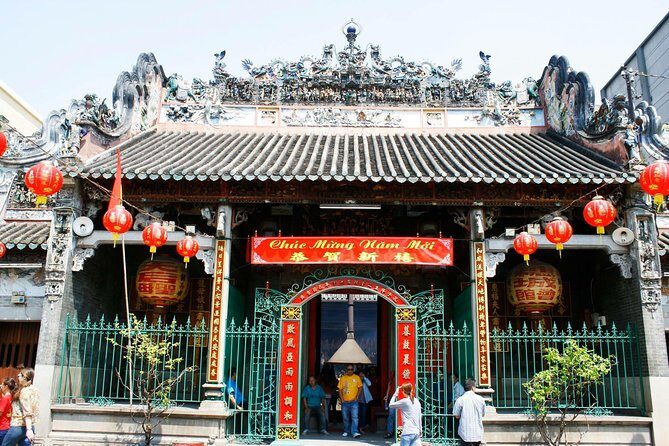
- Huynh Thuy Le Ancient House: French outside, Chinese inside
- Overnight in Can Tho: why this night is useful
- Day 2 sunrise at Cai Rang: the market that feels like a workplace
- Cai Rang Floating Market and a chance to ride a merchant boat
- Noodle and rice paper factory stop
- My Tho and Ben Tre by boat: islands, orchards, and honey tea
- Phoenix Island: coconut religion lessons
- Unicorn Island and stilt-house waters
- Bee farm honey tea tasting
- Small row boat canal ride and orchard scenery
- Coconut candy making village and handcrafted items
- Comfort, guide quality, and why small groups help
- Price and value: $92 isn’t just “cheap,” it includes a lot
- The two big watch-outs: timing changes and heat
- 1) Schedule changes can happen
- 2) It’s hot and you’re on the go
- Who this tour suits best
- Should you book this Mekong Delta 2-day tour?
- FAQ
- What is included in the tour price?
- How long is the Mekong Delta tour?
- What time does the tour start?
- What does Day 2 include?
- Is there an English guide?
- How big is the group?
Key things to know before you go
- Sa Dec Flower Village is tied to the rivers: the area sits between the Tien and Sa Dec rivers, making water and road access part of how the place functions.
- Huynh Thuy Le Ancient House is a built-in culture mix: French exterior cues, Chinese interior additions (not just a random old house stop).
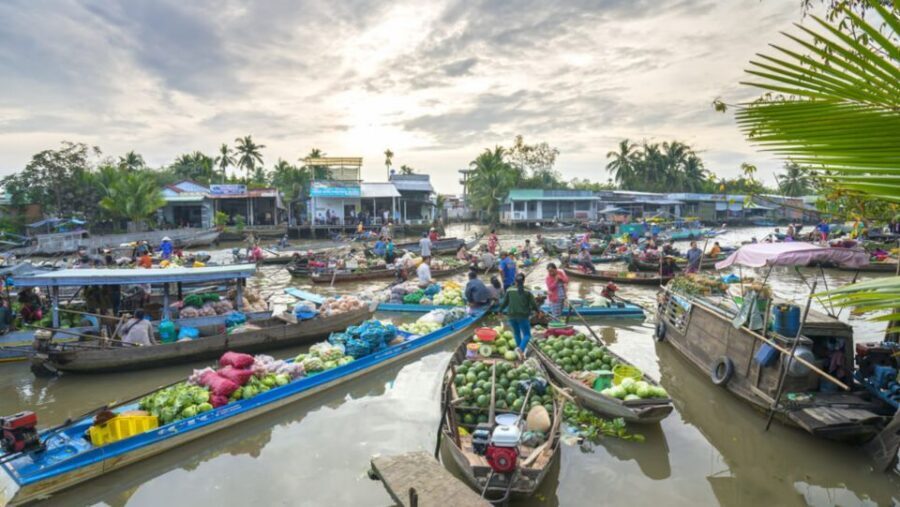
- Cai Rang Floating Market gets you on the water early: you’ll see the biggest market of the Mekong delta type and can ride a merchant boat that sells pineapples.
- Craft + food production stops are real, not just photos: Con Lan and Con Phung plus noodle and rice paper factory time.
- Ben Tre canal day includes tasting: honey tea at a bee farm and coconut-candy making villages along the route.
- Small group helps heat and timing: limited to 15 participants, but the day is still hot and boat-and-walk pacing matters.
Mekong Delta in 48 hours: what you’re really signing up for
This is a classic “2-day river circuit” built around the idea that you’ll see the Mekong Delta’s different moods in a short time. Day 1 concentrates on Sa Dec and then lands you in Can Tho for an evening break. Day 2 is sunrise-to-late-afternoon water and island time across My Tho and Ben Tre, before heading back to Ho Chi Minh City.
That structure matters. The delta isn’t all floating markets and postcards. It’s also daily life, workshops, markets that trade goods, and waterways that still move people and products. The tour’s value is that it tries to balance the big scenic moments (like Cai Rang) with small “how it works” stops (craft villages, noodle/rice paper production, coconut candy).
The pace is also the trade-off. You will move a lot, switch vehicle modes often, and do plenty of daylight walking. If you’re sensitive to heat, plan to treat this like an active day rather than a slow cruise. One review specifically flagged the heat as a real factor, which lines up with how this region behaves in the daytime.
You can also read our reviews of more tours and experiences in Can Tho

Day 1: Sa Dec Flower Village, pagodas, and a house with a split personality
Your first morning starts with a coach transfer from Ho Chi Minh City to Sa Dec around 7:30am (timing depends on room type). Once you arrive, the tour focuses on Sa Dec’s distinctive mix of religion, heritage homes, and flower-growing culture.
The Sa Dec Flower Village connection to rivers
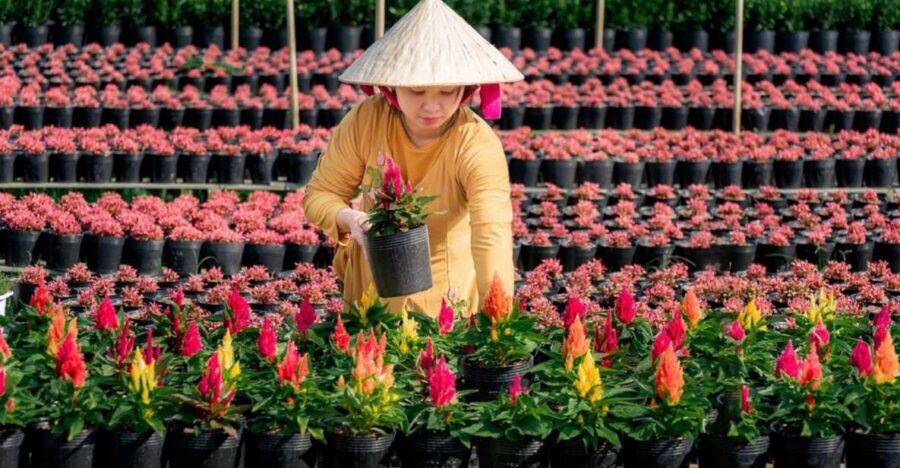
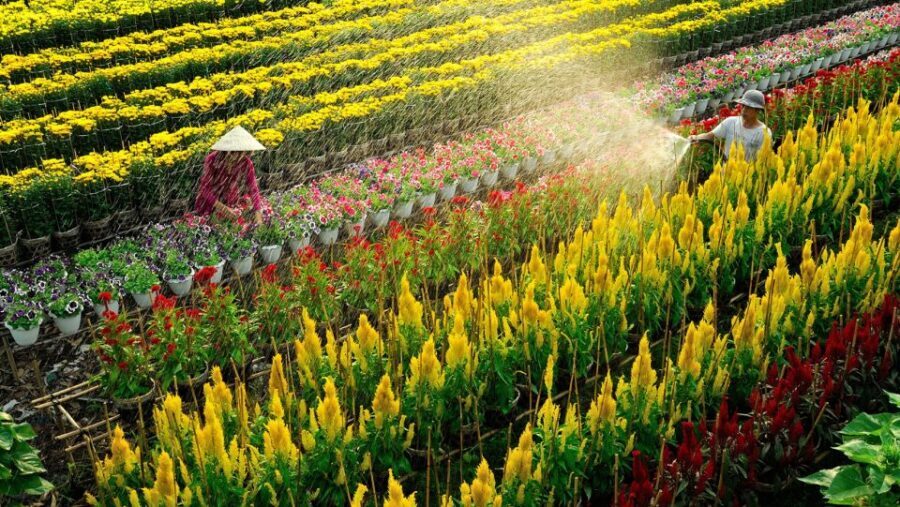
You’ll visit Sa Dec ornamental flower village about 3km from the city center. The site covers 313 hectares and is home to 1,968 households, with the big feature being its placement on both sides of the Tien and Sa Dec rivers. That’s not just geography trivia. It explains why water transport and road access make sense here, and it helps you understand why “flower village” feels like more than a theme park.
You can also see how tourism has been layered onto a rural base through a rustic resort concept inside the flower village area (Happy Land Hung Thy Sa Dec). The point isn’t to judge it as real or fake. It’s that the tour gives you a chance to notice how local agriculture and the visitor economy overlap.
Pagoda stops that explain community and myth
After lunch, you’ll step through a few pagodas, each with its own story.
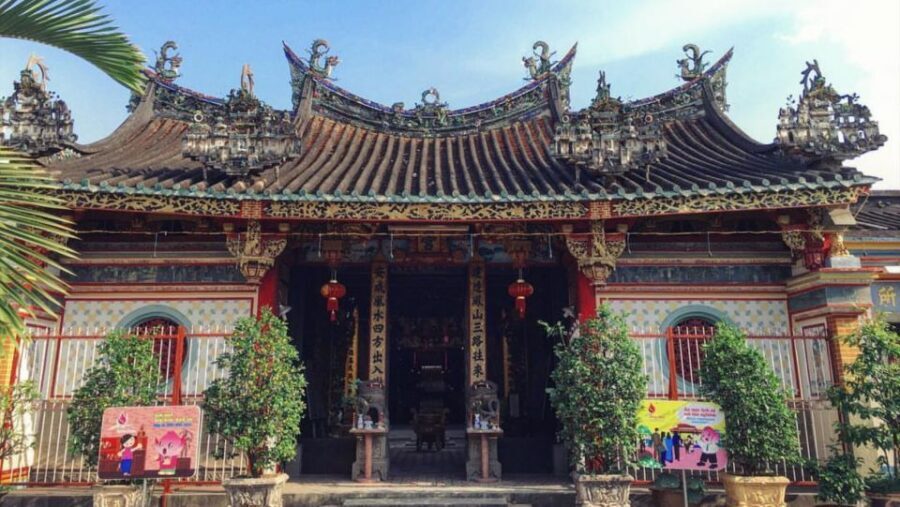
- Kien An Cung Pagoda (Ong Quach Pagoda): this one has a Chinese community thread. It was built by people from Fujian in China to workshop ancestors’ roles in community and trading ties. Construction references 1924 to 1927, so it carries that “older than your Instagram loop” feel.
- Phuoc Kien Pagoda: known for legends tied to a crane or turtle, plus a specific standout called the giant lotus nia.
- La Sen Pagoda: described as a place to admire something unique about the site (the visit is framed around that visual wow factor).
Even if you’re not a hardcore temple person, these stops help you connect Sa Dec’s history to the people living there now. You see architecture built from the influences of trade routes and migration, not just one single cultural style.
Huynh Thuy Le Ancient House: French outside, Chinese inside
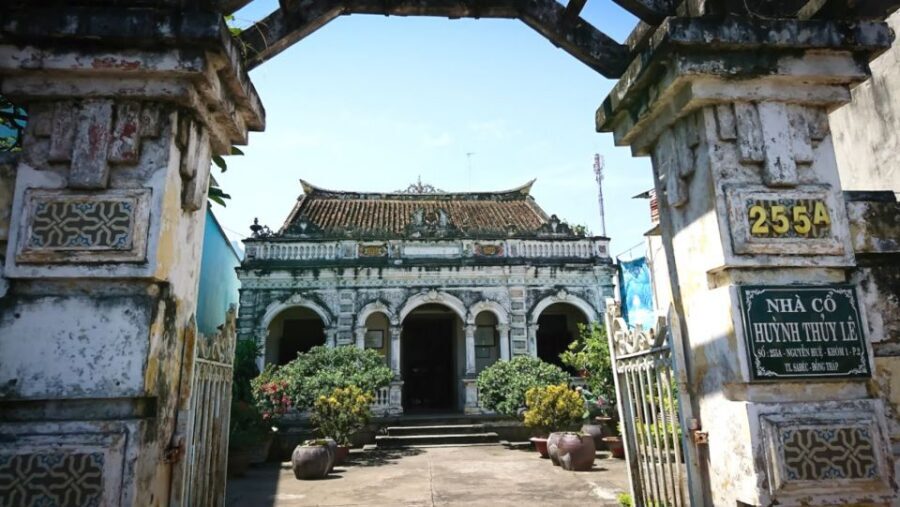
The tour’s most memorable heritage stop is Huynh Thuy Le Ancient House. You’ll learn it was built by Huynh Thuy Le’s father, Mr. Huynh Cam Thuan, who was a famous merchant in the Sa Dec port. The house is mostly wood in its original form, shaped like a traditional Southern house.
Then comes the twist: in 1917, the owner reconstructed parts by adding solid bricks in gaps of the wooden structure. That’s why the house can look French from outside, while the inside reflects Chinese influence. The tour frames this as connected to a cross-border love story, so it’s both architecture viewing and a narrative stop.
Overnight in Can Tho: why this night is useful
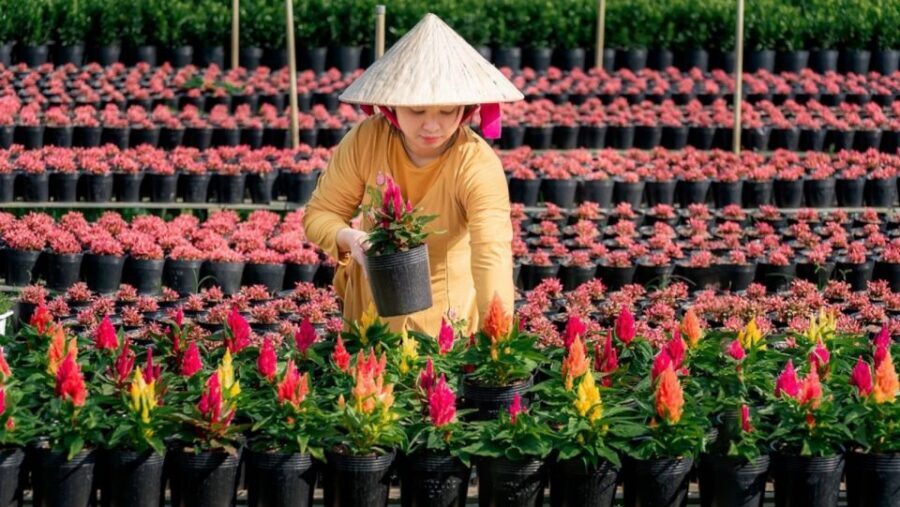
After Sa Dec, the tour drives to Can Tho and checks you into your hotel for one night. You’ll have dinner and a night of rest before the market day.
This matters more than you might think. Can Tho is often treated as a transit point, but staying overnight lets you wake up for Cai Rang floating market as a real morning plan, not an afterthought. It also gives you a buffer if your first day runs long.
If your hotel category matters, you get choices: standard (2), superior (3), or deluxe (4). The price changes with category, and the listed departure time also shifts slightly (7:30am standard, 7:35am superior, 7:40am deluxe). That’s a rare case where the room choice affects your schedule timing.
Day 2 sunrise at Cai Rang: the market that feels like a workplace
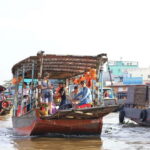
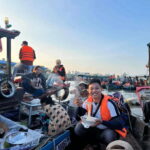
Day 2 starts with breakfast, and then you board a boat about 40 minutes to reach Cai Rang floating market. You go early enough to feel like you’re watching commerce at work, not just tourists drifting by.
Cai Rang Floating Market and a chance to ride a merchant boat
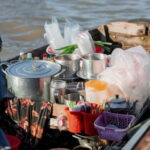
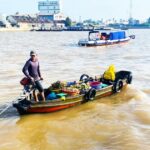
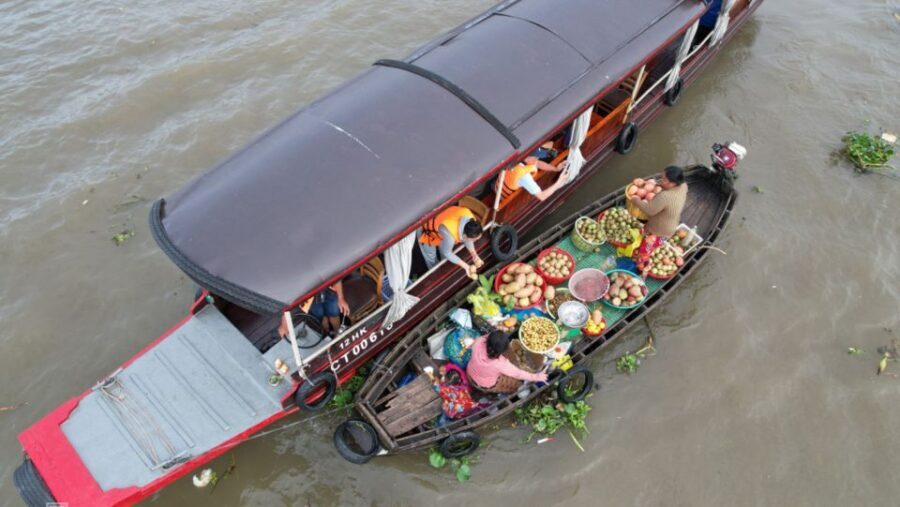
Cai Rang is described as the largest market of its type in the whole Mekong delta. The tour gives you a chance to board a merchant boat that sells pineapples coming from Can Tho City. That detail is important. It turns the market from a “look at boats” experience into a “how goods move here” experience.
You also see how boats interact with the flow of river life. Even if you don’t understand every transaction, the rhythm tells you what matters: fruit, noodles, and daily supply chains built around water access.
Noodle and rice paper factory stop
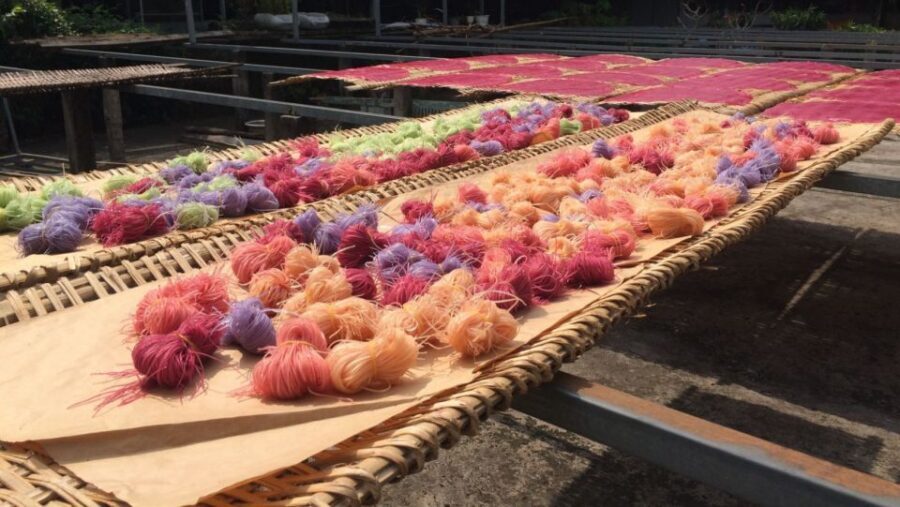
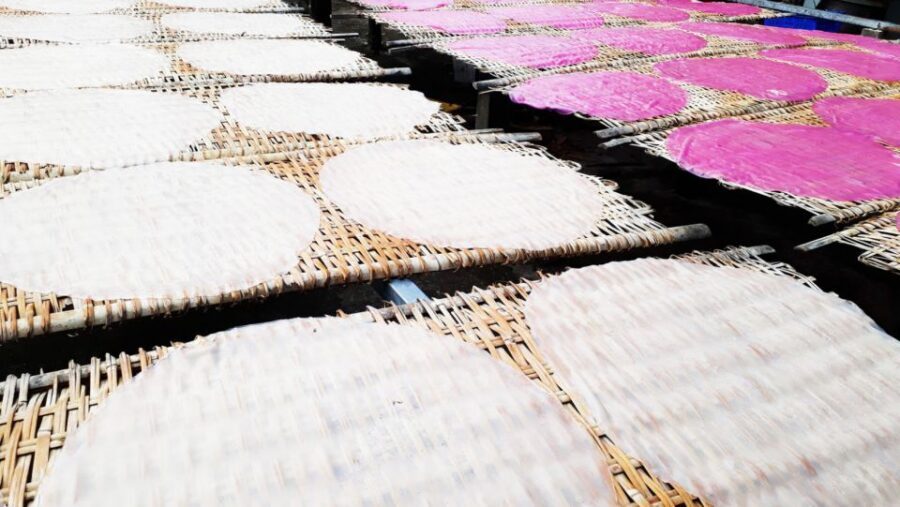
Next comes a noodle and a rice paper factory visit. This kind of stop can sound touristy on paper, but it’s actually useful here because it connects what you saw at the market to what ends up on plates later.
Rice paper and noodles are staples across Southern Vietnam. If you’re paying attention, you can connect your morning market views (ingredients and distribution) to the manufacturing side (how those staples get processed).
My Tho and Ben Tre by boat: islands, orchards, and honey tea
After Cai Rang and the factory stop, the tour heads to My Tho and continues the river rhythm.
Phoenix Island: coconut religion lessons
You move by boat to Phoenix Island for visiting and learning about coconut religion. You don’t need to be a scholar of religion to find this interesting because coconuts are practical here. The “religion” angle is a cultural way of explaining why the coconut is more than just food or drink in the local mindset.
Unicorn Island and stilt-house waters
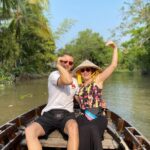
Then you board a wooden motor boat to Unicorn Island. Along the river’s bank, you’ll pass natural creeks, fisherman’s ports, and stilt houses. This is one of the tour’s best “glance and learn” segments because it’s not one single set-piece. You’re moving through the delta’s everyday shoreline.
Bee farm honey tea tasting
A key food-and-drink moment is the bee farm stop, where you can taste a cup of authentic honey tea. The tour also includes fruits and later coconut candy viewing, so you’ll end up with a full “sweet schedule” of tastings. If you don’t normally do food tours, honey tea is a gentler entry than something super spicy or fermented.
Small row boat canal ride and orchard scenery
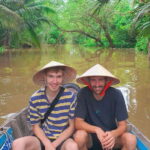
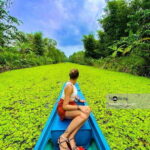
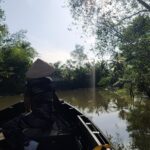
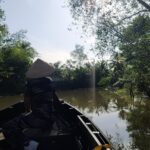
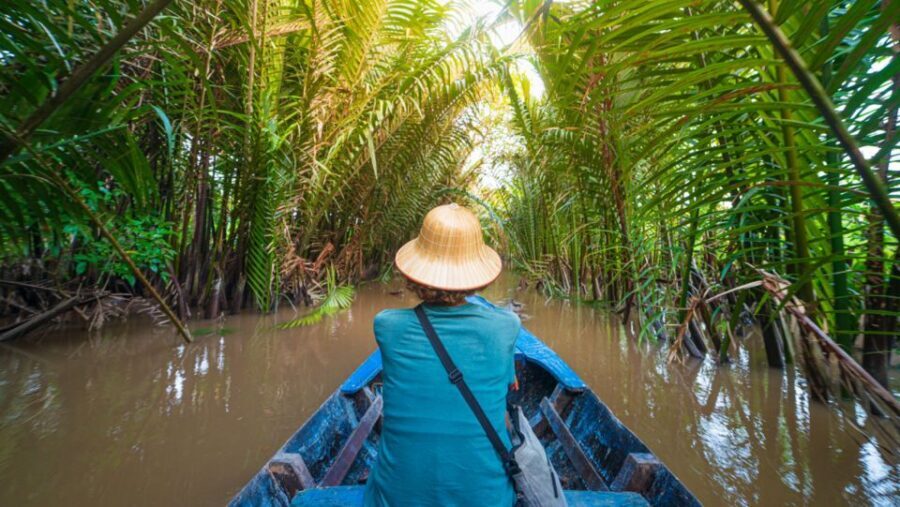
You also get a small row boat segment, focused on the air, the canal ride, and water coconut scenery. The route includes a canal with orchard-lined sides, plus a stop in a seasonal fruits garden where you can enjoy different tropical fruits and check out folk music typical to Southern Vietnam people.
This part works when you go with the right expectations. It’s not a silent wilderness cruise. You’re still in an activity corridor. But it’s a calm break from temples and market crowds.
Coconut candy making village and handcrafted items
One of the stops includes a village where you can smell coconut candy making in the air. You’ll visit small shops producing coconut candy and handcrafted items from coconut trees common to the Mekong delta.
This is one of those moments where you can buy a small souvenir with a story attached. Even if you keep it simple (one snack bag, one small item), you’re supporting a craft that’s tied to the local supply chain.
Comfort, guide quality, and why small groups help
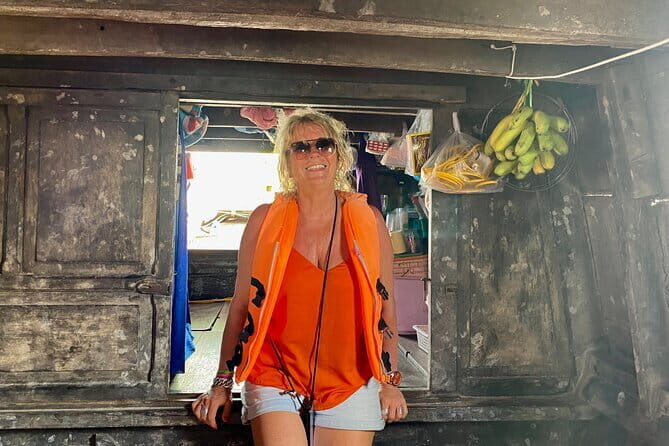
The tour runs with an English-speaking guide on tour (English and Vietnamese are supported). Boats include life jackets for everyone, and you’re on an air-con tourist coach between segments.
The “small group” part is meaningful. Limited to 15 participants, you’re less likely to feel like you’re herding with strangers. That’s especially helpful in heat, and during boat boarding where lines can get awkward fast.
Guide quality is a standout detail from reviews. One positive note highlighted an English-speaking guide named Kim as super good and empathetic, and also linked that quality to a more relaxed day when the routing changed. That doesn’t mean every day will run the same way, but it tells you that when things do go off-plan, the people can still make a difference.
Price and value: $92 isn’t just “cheap,” it includes a lot
At $92 per person for the 2 option (with the weekly schedule starting around 7:30am), you’re paying for more than transport. The tour includes:
- air-con coach transportation
- boat trips in the Mekong delta with life jackets
- an English-speaking guide
- 2 lunches, 1 dinner, and 1 breakfast
- entrance fees
- mineral water (2 bottles over 2 days)
- hotel for 1 night in Can Tho
Add those together and the cost starts to look more like a bundled day tour than a barebones ride. If you were to price a floating market boat day + multiple admissions + a full meals plan + hotel night separately, it would likely come out higher.
You also get a choice of hotel categories: standard (2) $92, superior (3) $104, deluxe (4) $118. The choice affects both comfort and how early your day begins, so pick what matters to you: bed quality, shower time, and morning start.
The two big watch-outs: timing changes and heat
I’d call out two practical considerations.
1) Schedule changes can happen
A negative review experience described last-minute changes where the group did not do Sa Dec even though it was paid for, with everything handled in a hurry. That’s rare, but it’s serious enough to factor in. If Sa Dec is a must, you might want to confirm the plan right before departure and keep some flexibility in your overall Vietnam itinerary.
2) It’s hot and you’re on the go
Even the best Mekong day plans feel intense in daytime heat. You’ll be outside for parts of Sa Dec sightseeing and on boats in the sun. Bring sunscreen, a hat, and something light for evenings. If you’re the type who needs frequent breaks, you’ll probably feel it more than you expect.
Who this tour suits best
This Mekong Delta 2-day works well for you if you want:
- the highlights fast: Sa Dec, Cai Rang, and My Tho/Ben Tre
- a mix of scenic and food/craft stops (not only markets)
- one hotel night so your market morning is realistic
- a small group size for smoother logistics
It’s less ideal if:
- you’re very schedule-sensitive and want zero reroutes
- you hate heat and long days
- you want a deep, slow travel pace rather than a packed circuit
Should you book this Mekong Delta 2-day tour?
If you’re picking one Mekong plan and you want the essentials plus some craft and food production, I’d say this is a solid value. The Cai Rang market morning plus the Ben Tre canals and tastings are the kind of experiences you remember for years, and the Sa Dec mix of flowers, pagodas, and Huynh Thuy Le’s architecture gives the trip depth beyond just boats.
Just go in with two smart habits: keep your itinerary flexible enough for minor adjustments, and treat the second day as an active heat day. Do that, and you’ll get a very workable slice of the delta in a short time.
FAQ
What is included in the tour price?
The price includes an air-con tourist coach, boat trips in the Mekong delta with life jackets, an English-speaking guide, entrance fees, 2 lunches, 1 dinner, and 1 breakfast, fruits and honey tea, hotel for 1 night in Can Tho, mineral water (2 bottles over 2 days), and transportation back to Ho Chi Minh City.
How long is the Mekong Delta tour?
It’s a 2-day tour with an overnight stay in Can Tho.
What time does the tour start?
The weekly schedule starts around 7:30am for the 2 option, 7:35am for the 3 option, and 7:40am for the 4 option. Pickup is included, and you’re asked to wait about 10 minutes before pickup time.
What does Day 2 include?
Day 2 includes a boat trip to Cai Rang floating market, a stop at a noodle and rice paper factory, travel to My Tho for Phoenix Island, a Unicorn Island boat ride, a bee farm honey tea tasting, small row boat canal time, a fruits garden stop with folk music, and a coconut candy and handicraft village visit before returning to Ho Chi Minh City around 18:00–19:00.
Is there an English guide?
Yes. The tour includes a live guide who speaks English (and Vietnamese).
How big is the group?
The tour is limited to 15 participants.