REVIEW · HO CHI MINH CITY
Private Cu Chi & Mekong Delta Tour: History Meets Nature
Book on GetYourGuide →Operated by MILLENIUM TRAVEL CO.,LTD · Bookable on GetYourGuide
Underworld history meets Mekong river life. This private tour strings together Cu Chi Tunnels and Southern river culture in one day, with real storytelling (war-era rooms, traps, and how people survived) plus hands-on moments like boat rides and tastings. I especially like how the visit explains underground life in practical detail, not just dramatic photos, and I like the way the Mekong stops turn food and music into the point, not an afterthought. One key drawback: it’s not a good fit if you have heart problems or need wheelchair access, and you also can’t bring pets or big bags.
You’ll start with hotel pick-up in central areas, then ride about 1.5 hours to Cu Chi. After the tunnels, you continue toward My Tho for lunch, a visit to Vinh Trang Pagoda, and a scenic cruise on the Tien River, ending back in Ho Chi Minh City between 7:00 PM and 7:30 PM.
In This Review
- Key highlights you’ll feel on the ground
- From Ho Chi Minh City to Cu Chi: a smooth start that matters
- Cu Chi Tunnels: seeing how a hidden system functioned
- Guerrilla food: cassava and tea that turn history into taste
- Optional shooting range: real weapons, real responsibility
- The ride to My Tho: lunch break as a reset
- Vinh Trang Pagoda: architecture and a quieter mood
- Tien River cruise: scenic time with real river scale
- Coconut candy and family businesses: seeing craft up close
- Wooden sampan canals: the calm side of the Mekong
- Honey tea, seasonal fruit, and folk music: the Mekong in flavor and sound
- Price and value: what $140 buys for up to two people
- Who should book this Cu Chi and Mekong private day
- Book it or skip it: my practical recommendation
- FAQ
- How long is the drive from Ho Chi Minh City to Cu Chi?
- What’s included in the tour price?
- Is there an optional shooting range?
- What are the Mekong Delta activities included?
- What should I bring with me?
- Are pets or large bags allowed?
Key highlights you’ll feel on the ground
- Private car or van with an English-speaking guide for a focused day
- Cu Chi underground living and work areas shown as one connected system
- Guerrilla food tastings like cassava and a special tea
- Optional shooting range experience with real weapons
- Tien River cruise + wooden sampan canals under coconut palms
- Honey tea, seasonal fruit, and local folk music included
From Ho Chi Minh City to Cu Chi: a smooth start that matters
The tour begins with pick-up from centrally located spots around Ben Thanh Ward, Saigon Ward, and Cau Ong Lanh Ward. That’s a big deal in Ho Chi Minh City, where getting out of town efficiently can make or break a short visit. Once you’re in the private van or car, you’ll head out for about 1.5 hours from downtown to Cu Chi.
You can think of this morning transfer as the “buffer” that protects your day. You’re not spending your limited time hunting down taxis, bargaining for rides, or figuring out routes. Instead, you’re already in tour-mode: settled, briefed, and ready to focus when Cu Chi starts.
Also, because it’s private, you can move at the right pace for your group. If you’re the kind of traveler who likes time to ask questions, this format tends to work well.
You can also read our reviews of more private tours in Ho Chi Minh City


Cu Chi Tunnels: seeing how a hidden system functioned
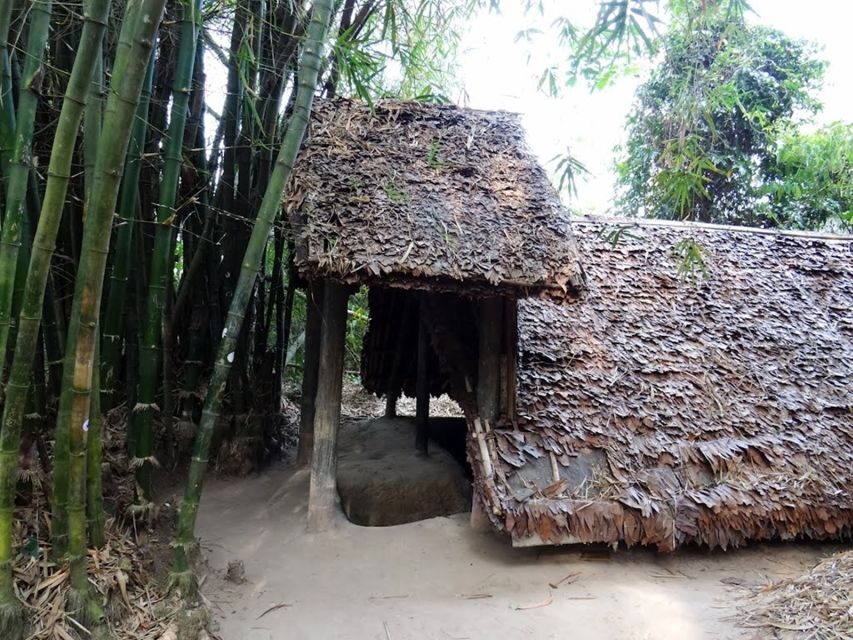
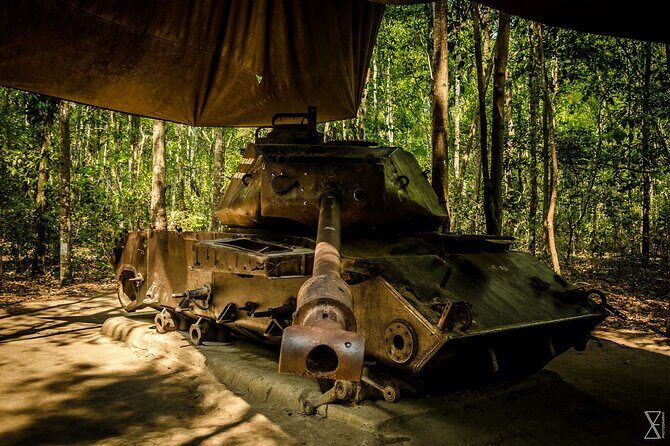
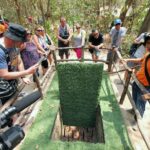
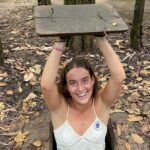
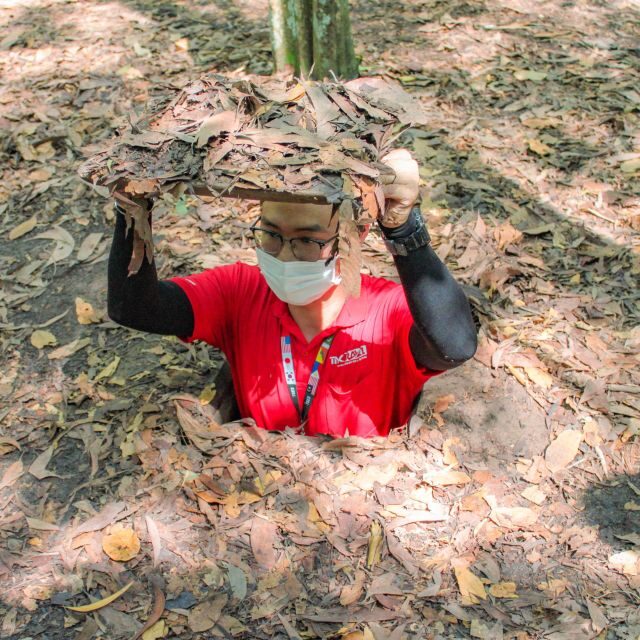
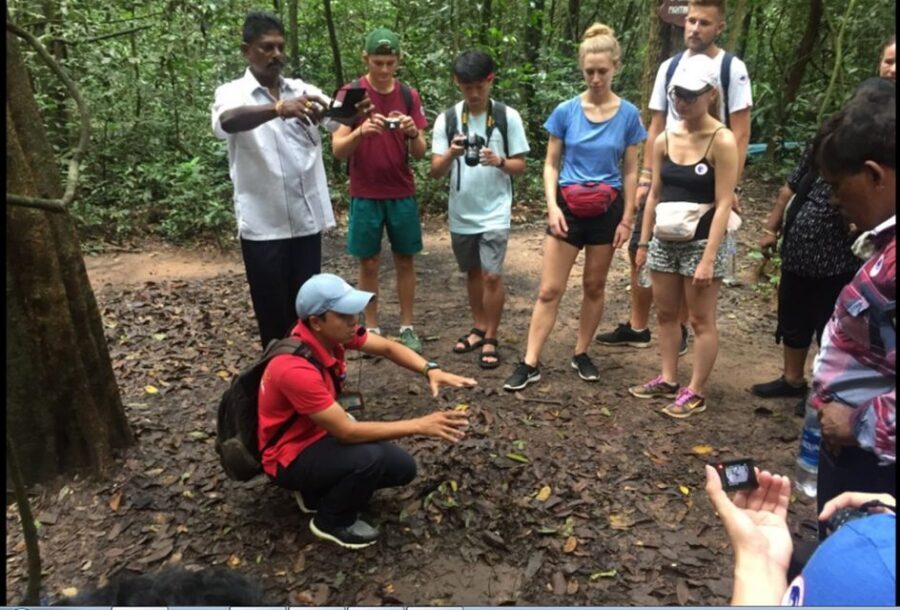
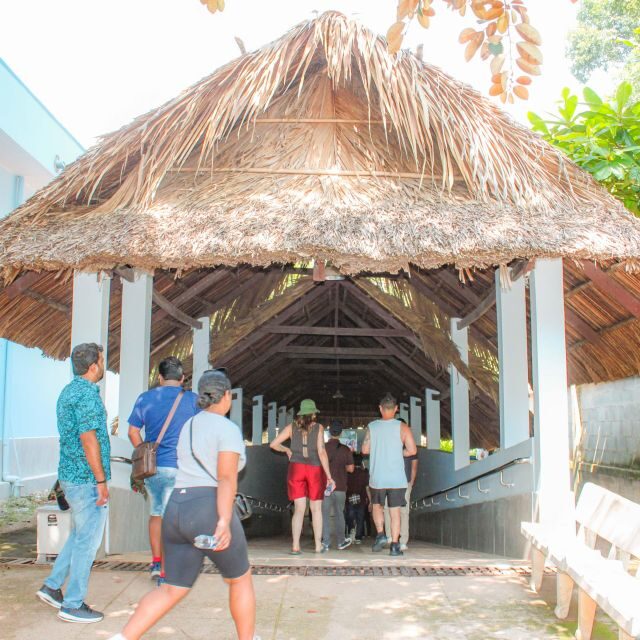
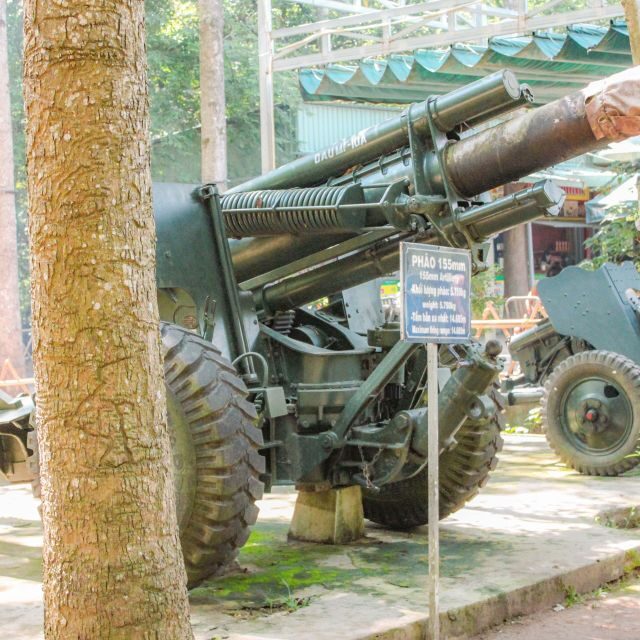
Cu Chi isn’t a museum in the usual sense. It’s a place built to operate under extreme pressure. When you arrive, your English-speaking guide walks you through the story of how the tunnels were created during the war—then you move into remaining areas and a section of the tunnel network that highlights day-to-day life.
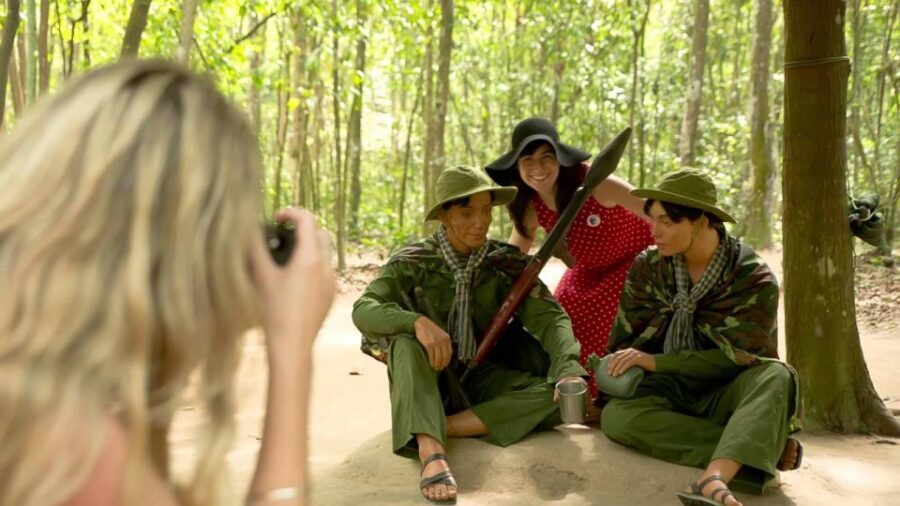
What I like about this part is the way it’s explained like a system, not a pile of holes. You’ll see areas connected to living and working: spaces that cover kitchens and bedrooms side by side, plus martial facilities such as weapon factories, storage, command centers, and field hospitals. That layout helps you understand how survival wasn’t separate from strategy. It was the same structure.
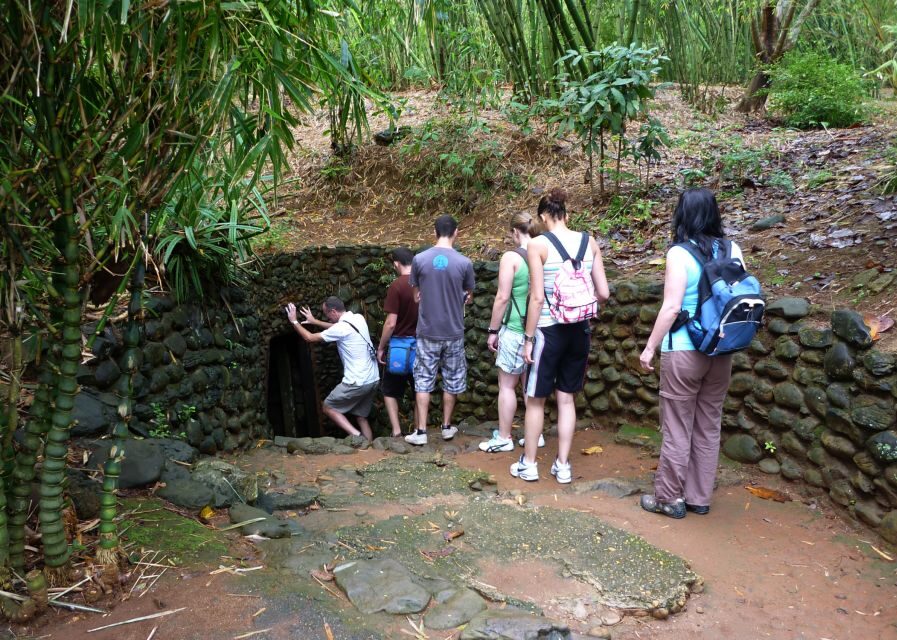
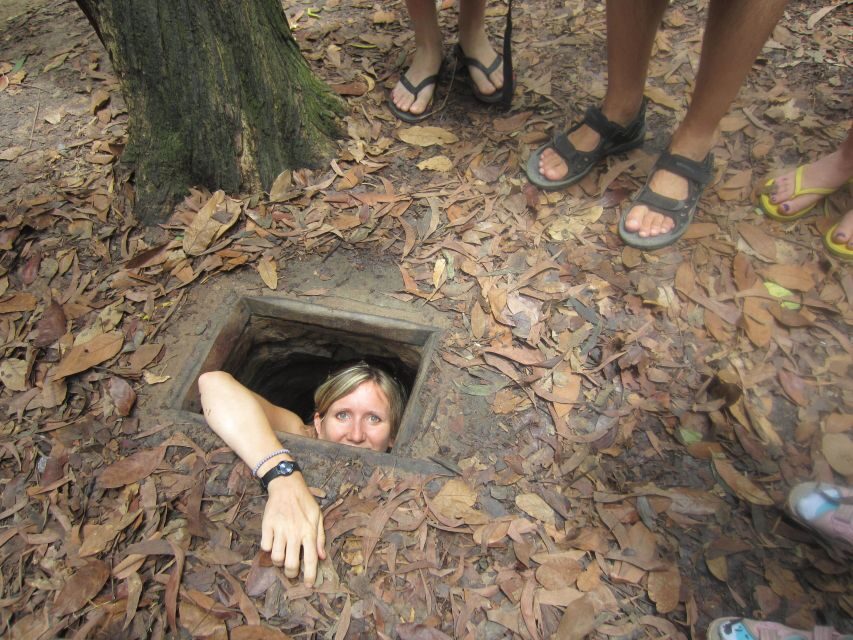
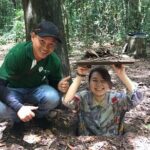
You’ll also hear about how the tunnels stayed protected: dangerous traps, hidden trap doors, and the security logic behind a maze-like network. Even without going deep into technical details, the effect is clear. These were not just hiding places. They were designed to keep people alive and keep operations running.
Practical note: wear comfortable shoes and plan for underground sections that can feel enclosed. The tour isn’t listed as wheelchair-friendly, and it’s also not suitable for people with heart problems—so if either of those affects you, choose something else.
Guerrilla food: cassava and tea that turn history into taste
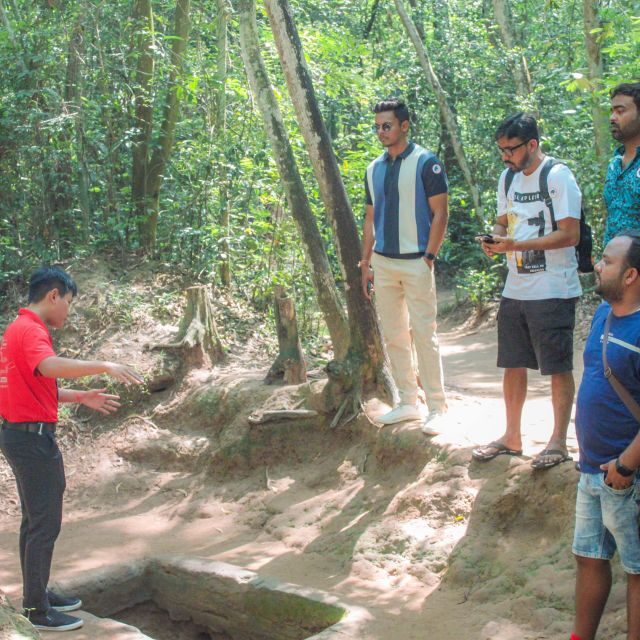
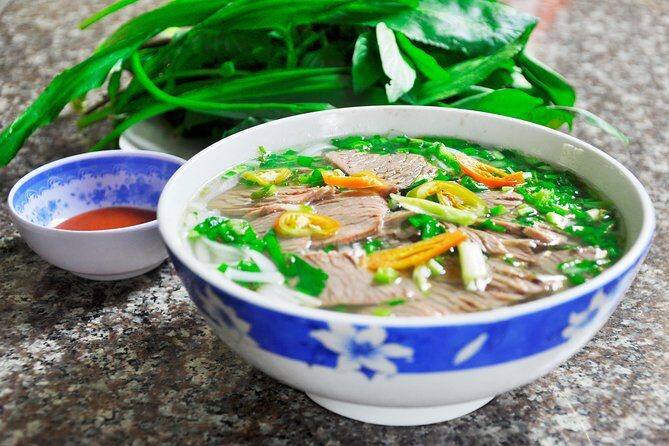
After the tunnel exploration, the tour shifts from architecture and strategy to everyday survival. You’ll get a tasting of cassava—described as everyday food for Vietnamese guerrillas—plus a special tea tied to that same period.
This is one of those stops that makes the day click. When you only see the tunnels, it stays abstract: “they hid.” When you taste something associated with daily life, it becomes concrete: “they ate, they kept going, they made routines work.” It’s a small moment, but it changes how the morning lands in your head.
If you’re curious about food culture in Southern Vietnam, this tasting also sets you up for what comes next in the Mekong Delta. You’ll start noticing how often the region’s traditions are built around what’s available—river plants, seasonal fruit, honey, and the routines of small family businesses.
Optional shooting range: real weapons, real responsibility
There’s an optional experience after the tunnels where you can try a shooting range with real weapons. The key takeaway for you is simple: it’s optional, but it’s not a “toy” activity. If you’re sensitive to firearms, or you just prefer not to include that kind of element in your day, you can skip it and still get plenty from Cu Chi and the Mekong.
If you do want to try it, come with realistic expectations. This part is about the act of shooting, not about turning it into a cinematic moment. You’ll likely spend time getting oriented and following safety instructions, then you’ll do the activity and move on.
Either way, the option gives the tour an interesting fork: history and nature for most people, and hands-on shooting for those who want it.
The ride to My Tho: lunch break as a reset
Once Cu Chi wraps up, you head toward the Mekong Delta. Along the way, there’s a lunch stop at a local restaurant. Lunch is included, and it matters because it keeps the day from turning into a snack scavenger hunt.
After lunch, you continue to My Tho Province for the next cultural stop—Vinh Trang Pagoda—and later the river activities. This sequence is smart. It prevents the day from being nonstop “hard history.” You get food, then a calmer space.
You can also read our reviews of more historical tours in Ho Chi Minh City

Vinh Trang Pagoda: architecture and a quieter mood
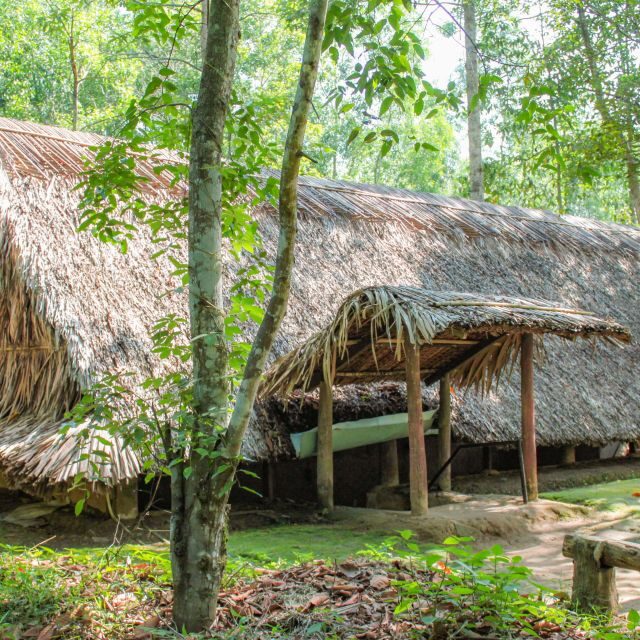
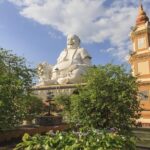
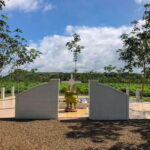
Vinh Trang Pagoda is the kind of place that slows your pace. You’ll visit it for its striking architecture and the solemn space of the pagoda grounds. Even if you’re not a hardcore architecture fan, pagodas work best when you treat them as an emotional contrast after a morning underground.
This stop also gives you a sense of Southern Vietnam’s spiritual landscape. The Mekong isn’t only boats and fruit stands. It’s also temples, ritual, and community identity—quiet places where people gather and anchor their lives.
Practical tip: bring your camera and sunglasses. You’ll spend time outdoors as you move around the complex, and the sun can be strong later in the day.
Tien River cruise: scenic time with real river scale
Next comes the cruise portion on the Tien River. This is where the day changes gears again—from wartime and temples to moving water and river life.
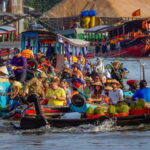
I like this segment because it adds space to breathe. After tunnels, you’re inside your head; after pagoda, you’re in a calmer frame of mind. On the river, you get something simple but powerful: the scale of the waterway, the sense of how transport and daily life connect through canals and river routes.
You’ll also get a different view of the environment around My Tho Province than what you see from land. That’s a big reason river cruising works so well for first-timers.
Coconut candy and family businesses: seeing craft up close
Before the canal ride, you’ll visit a coconut candy mill, described as a family business. This is one of those stops that can either feel rushed or feel meaningful, depending on how much time the group gets. In this tour, it’s placed right before the sampans, so it works as an introduction to the “coconut economy” you’ll keep seeing all day.
If you like small-scale food production and local work routines, take a moment here to watch how the craft connects to the region’s agriculture. Coconut candy may sound like a souvenir item, but the point is what it represents: how families turn local ingredients into something shareable and saleable.
Wooden sampan canals: the calm side of the Mekong
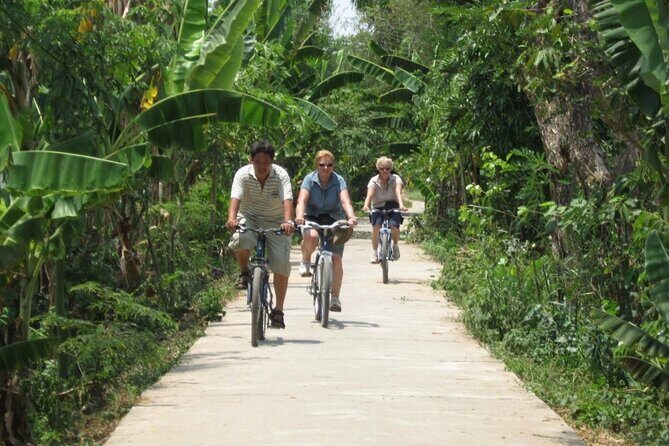
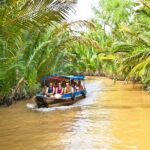
Then you’ll take wooden sampans down small canals under the shadow of coconut palm trees. This ride is designed for atmosphere. You’re not just passing by sights; you’re gliding through water pathways that feel more intimate than the main river.
For me, this is the “experience” part of the Mekong day, because it’s slower. You get time to look at the surroundings and the water’s edge life instead of rushing from one photo spot to the next.
Also, this is the kind of activity where being in a private group helps. You don’t have to fight for positioning in crowds. You can just settle in and take it in.
Honey tea, seasonal fruit, and folk music: the Mekong in flavor and sound
The final Mekong stops are the ones you’ll remember when you’re back in your hotel. You’ll savor seasonal fruits, sip honey tea, and get a sense of Southern Vietnamese folk music performed by locals. All of that is included.
Why this works: it’s not random. It follows the theme of “river living.” Honey tea ties to local ingredients. Seasonal fruit connects to what the land and water make available. Folk music connects the food and river rhythm to community culture.
This is also where the day feels generous. A lot of tours give you sights and then charge extra for the fun parts. Here, the tasting and music are built into the program. You’ll still have free time to enjoy it without feeling like you’re being pushed through a checklist.
Price and value: what $140 buys for up to two people
The price is listed as $140 per group up to 2. That’s not cheap-cheap, but for a private day that includes a lot of moving pieces, it starts making sense.
Here’s what you’re getting in the “value package” sense:
- Private car or van plus an English-speaking guide
- Entrance fees
- Lunch at a local restaurant
- Boat trips in the Mekong Delta (including the cruise and sampan ride)
- Fruit and honey tea, plus mineral water
- Hotel pick-up and drop-off in central areas
If you compare this to piecing together separate tickets, a full-day guide, and transportation, the pricing feels more reasonable. The private format also reduces friction. You can focus on the experience instead of coordinating logistics all day.
One more value point: timing. Returning to Ho Chi Minh City between 7:00 PM and 7:30 PM keeps the day from stretching into an exhausting overnight adventure. For short stays, that matters.
Who should book this Cu Chi and Mekong private day
This tour fits best if you:
- Have limited time in Ho Chi Minh City but want more than one side of Southern Vietnam in a single day
- Want history explained clearly, including how the tunnels supported living and operations
- Like cultural stops where food, tea, fruit, and music are part of the story
- Prefer a small, private experience with an English-speaking guide
It’s not the right fit if:
- You need wheelchair access or have mobility limitations noted by the operator as unsuitable
- You have heart problems or are pregnant (not suitable for pregnant women)
Book it or skip it: my practical recommendation
I’d book this private Cu Chi & Mekong Delta tour if you want a well-paced, high-impact day with included meals and tastings, plus a mix of underground history and real Southern river culture. It’s also a good choice if you’d rather have a guide manage the flow, so you spend your energy watching and listening instead of navigating.
Skip it if you don’t handle cramped underground spaces well, or if you know you’d rather avoid the optional shooting range element. Also, if your trip is so short that you’d rather stay flexible with multiple short activities, this is a “one big day” commitment.
FAQ
How long is the drive from Ho Chi Minh City to Cu Chi?
The journey takes about 1.5 hours from the heart of downtown.
What’s included in the tour price?
It includes a private car or van, an English-speaking guide, entrance fees, lunch at a local restaurant, boat trips in the Mekong Delta, fruit and honey tea, mineral water, and centrally located hotel pick-up and drop-off.
Is there an optional shooting range?
Yes. After the tunnels, there is an optional shooting range experience with real weapons.
What are the Mekong Delta activities included?
You’ll do a scenic cruise along the Tien River, visit Vinh Trang Pagoda, tour a coconut candy mill, and ride wooden sampans through small canals.
What should I bring with me?
Bring a passport or ID card, comfortable shoes, sunglasses, a sun hat, and a camera.
Are pets or large bags allowed?
No. Pets are not allowed, and luggage or large bags are not allowed.