REVIEW · HO CHI MINH CITY
Historical Walking Tour of Saigon
Book on Viator →Operated by Viup Travel · Bookable on Viator
A good walk can turn a city into a story. This historical walking tour strings together Saigon’s big landmarks and lets you make sense of Vietnamese history and French-era architecture with a guide, plus a coffee stop to slow down and watch street life near the Saigon River. You’re not just hopping between photos—you’re walking through the layers that shaped Ho Chi Minh City.
I especially like two things about it. First, it’s built to hit the major highlights in one go, so you don’t waste half a day figuring out routes. Second, the tour includes a coffee break—either egg coffee or filter coffee—so the experience has a built-in pause instead of feeling rushed.
One consideration: you’ll be walking for about 2 hours 30 minutes to 3 hours on a route with multiple stops, so it’s best if you’re comfortable with that pace and some outdoor time.
In This Review
- Key highlights you’ll actually notice
- A 2.5–3 Hour Walk Through Saigon’s Big Moments
- Independence Palace: Where Saigon’s modern story takes shape
- Central Post Office: French design you can read with your eyes
- Notre Dame Cathedral: A photo stop with historical weight
- Opera House and the Western-style entertainment story
- People’s Committee Building and Nguyen Hue: Symbols of rule and modern energy
- Ba Son Bridge: A modern finishing view with skyline payoff
- Coffee break: why egg coffee belongs on your itinerary
- Price and value: $36 for a history loop that saves time
- Timing choices: 7:00 AM, 2:30 PM, or 6:00 PM
- Who this tour suits best (and who might want to skip it)
- How I’d plan around it if it’s your first Saigon day
- Should you book this historical walking tour of Saigon?
- FAQ
- How long is the Historical Walking Tour of Saigon?
- How much does the tour cost, and what’s included?
- What coffee options are offered on the tour?
- How many people are in the group?
- What time options are available?
- Where does the tour start and end?
- What happens if the weather is bad or I need to cancel?
Key highlights you’ll actually notice
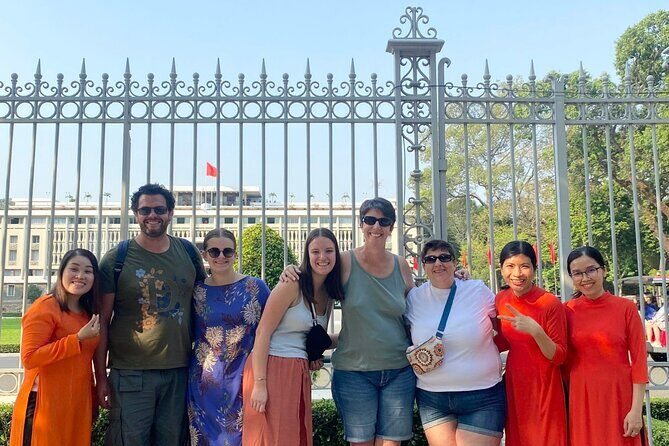
- Small group (max 10): easier questions, less crowd pressure at photo spots
- Three departure options: morning at 7:00 AM, afternoon at 2:30 PM, evening at 6:00 PM
- Big history in a compact loop: independence, French design, and modern city symbols in one walk
- Coffee included: Vietnamese specialty egg coffee or filter coffee
- Ends at a major landmark hotel area: wrap up in central District 1 near Le Méridien Saigon
A 2.5–3 Hour Walk Through Saigon’s Big Moments
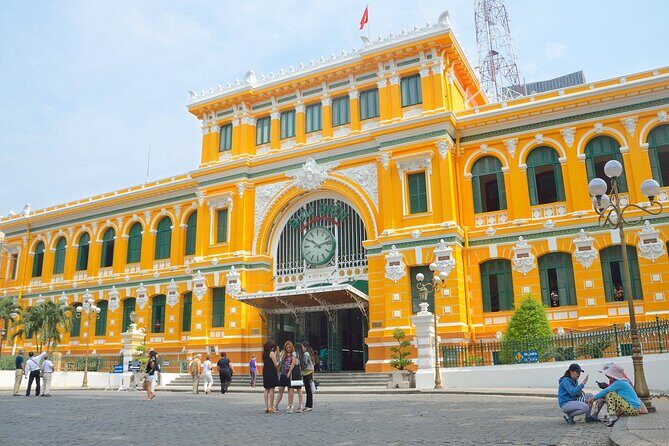
Saigon can feel like it’s moving faster than you can read it. This tour is designed to help you catch the plot by walking a tight route and hearing the meaning behind the buildings. It covers landmark stops tied to war-era turning points, French colonial influence, and today’s city identity—without the hassle of changing plans or hunting for scattered attractions.
The practical win is that you get a guided “see it, understand it” format while staying on foot. The tour runs about 2 hours 30 minutes to 3 hours, and the group stays small (up to 10 people), which makes it easier to keep up and ask questions. If you’re the type who likes a plan but also wants room to look around, this fits.
One more detail that matters: you get a mobile ticket, and the guide’s role is basically to keep you pointed in the right direction and connect what you’re seeing to the bigger story. In the best reviews, the guide experience really shines, including a standout mention of Thanh Thanh (Andy) as super friendly and professional.
You can also read our reviews of more walking tours in Ho Chi Minh City



Independence Palace: Where Saigon’s modern story takes shape
You start at a site tied to major national moments—the Independence Palace. Even if you only see it from outside at first, it’s the kind of location that makes the surrounding streets feel heavier with meaning. It’s associated with the ups and downs of Vietnamese history and the Vietnam War, and your guide explains the context so you’re not just standing in front of a landmark with no background.
What I like here is that the tour doesn’t treat it like a random stop. It’s positioned early enough that it gives you a historical anchor. Once you understand this point in the story, the rest of what you’ll see—especially the French-era architecture and the Western-style city core—makes more sense.
The only drawback is that exterior-only viewing can feel like less than a full visit if you expected to go deep into interior spaces. The good news: the tour is set up so you spend your time on multiple key sights rather than getting stuck at one place.
Central Post Office: French design you can read with your eyes
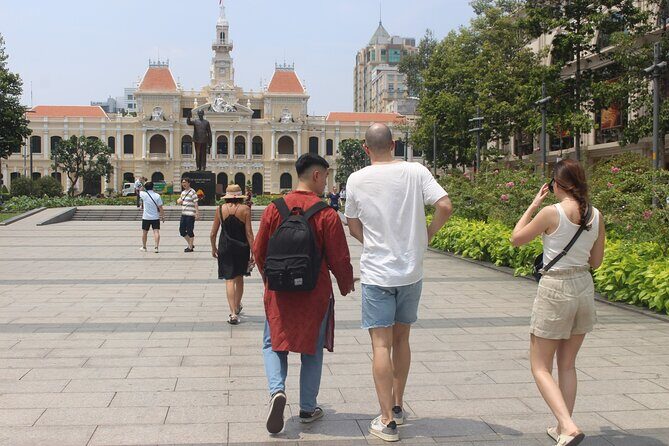
Next comes the Central Post Office, a standout for its French architectural influence. This is one of those buildings where the style is visible even before you learn the details—clean structure, formal design, and a character that feels different from many other streetscapes.
You’ll hear about how works built during French rule shaped the city. For me, this stop works best when you slow down and actually look at the building as an object of its era. If you do, you’ll start seeing how colonial design wasn’t only about buildings—it was also about how the city moved, communicated, and projected authority.
The time here is short, so don’t expect a long stop to absorb everything. You’ll get the basics and the framing, then you’ll move on.
Notre Dame Cathedral: A photo stop with historical weight
Saigon’s Notre Dame Cathedral is a classic picture location, but the tour nudges it beyond that. You can take photos in front, yet you’ll also learn about Vietnamese history through the older houses opposite it.
What makes this stop worth your time is the pairing: the cathedral is the headline, but the surrounding older houses help you understand the area’s human scale. This isn’t just about architecture as an object; it’s about what lived alongside it.
One practical note: it’s only about 15 minutes in the plan, so come ready to snap your shots quickly. If you like long photo sessions, plan to spend a few extra minutes on your own after the tour ends.
Opera House and the Western-style entertainment story

From the cathedral area, you head toward the Saigon Opera House (also called the Ho Chi Minh Municipal Theater). This is another French-built work, and the guide’s explanation focuses on how the city was entertained in the past.
I like that the tour doesn’t treat colonial influence as purely political or military. It also covers culture—what people did with their evenings, what kind of performances were imagined, and how entertainment tied into status and urban life.
The time here is brief (around 10 minutes), so the goal is to get the context and capture the exterior look. If you want a deeper dive into performances or interior architecture, you’d need a separate plan—but as part of a history-walk, it plays its role well.
You can also read our reviews of more historical tours in Ho Chi Minh City





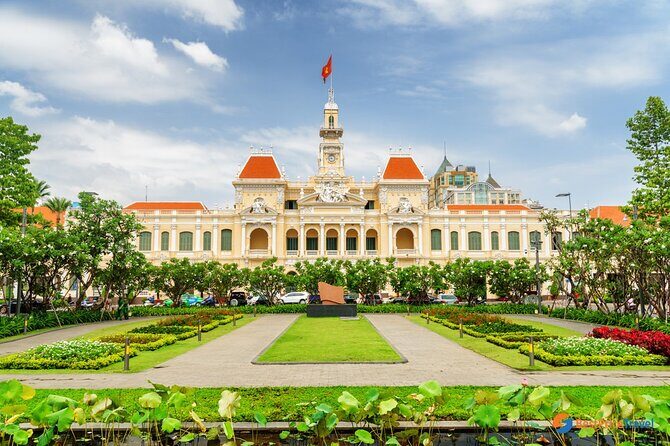
People’s Committee Building and Nguyen Hue: Symbols of rule and modern energy
Then you reach the People’s Committee Building, described as a symbol of Ho Chi Minh City and currently a government workplace. It’s known for Western architecture, and you’ll walk on Nguyen Hue walking street while also taking pictures with a statue along the way.
This is where the tour’s walking rhythm matters. The route shifts from landmark-heavy history into street-level city life. Nguyen Hue is a strong contrast: formal landmarks on one side, pedestrian energy on the other. That contrast is useful. It shows you how the city’s identity layers—from colonial design to modern public life—overlap in real space.
If you’re visiting at a time when the streets are active, you’ll get that feeling of Saigon’s present-day momentum. The plan keeps moving, though, so if you’re the type who likes to browse storefronts, you’ll probably want a little extra time later on your own.
Ba Son Bridge: A modern finishing view with skyline payoff
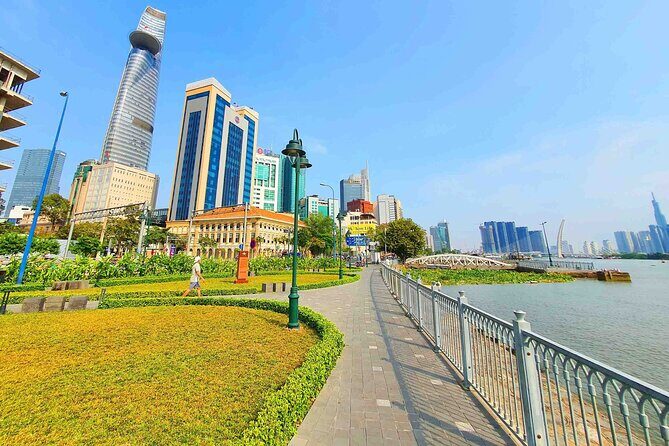
After covering the central walk, you reach Cau Ba Son (Ba Son Bridge). The tour frames it as one of the city’s newer symbols, and it’s timed for a view that can feel more open than the earlier stops.
From the bridge, you’ll see the two tallest buildings in the city, and you’ll get a view up above (for about 15 minutes). That matters because it breaks the pattern of “street-level landmark after landmark.” You shift perspective, and that makes the city feel bigger than the route you just walked.
One small consideration: bridges and viewpoints can be more exposed to sun and wind. Bring water and basic sun protection, especially in the morning or afternoon tours.
Coffee break: why egg coffee belongs on your itinerary
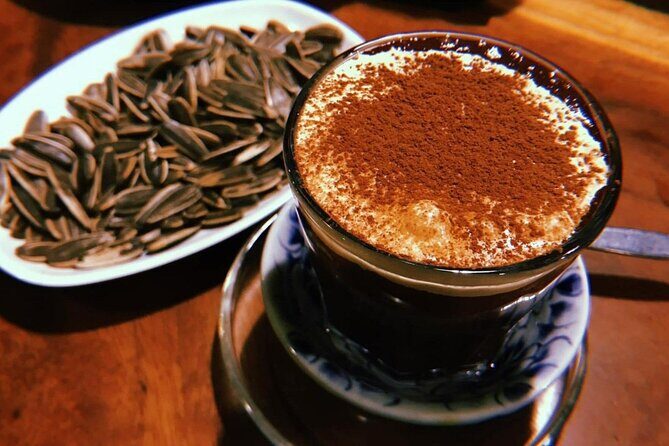
Midway, you stop for a coffee break at 3T Cà Phê Trứng. Egg coffee is a Vietnamese specialty, and the tour includes your coffee—either egg coffee or filter coffee.
This is more than a snack stop. It’s a smart way to slow down during a historical walk, and it gives you a taste-based memory that connects to Vietnam’s everyday culture. The tour also mentions watching the streets next to the Saigon River, and that’s exactly the kind of small sensory moment that helps history stick.
If you’re curious about flavors, egg coffee is the sort of thing you’ll remember even after the architecture starts blending together in your head. If you’re not into it, filter coffee is the backup option, and you still get a breather.
Price and value: $36 for a history loop that saves time
At $36 per person, this tour isn’t trying to be the cheapest option. But for a guided walk that strings together major attractions, it often feels like good value—especially if you’re short on time.
Here’s why the math works for many people:
- You’re paying for a guide to connect the dots across sites that are physically close but historically different.
- The tour duration (about 2.5–3 hours) means you’re getting a meaningful slice of the city without spending your whole day commuting or planning.
- The price includes coffee and/or tea, and that small inclusion can matter on travel days when you’d otherwise buy drinks anyway.
- The group size is capped at 10, which usually improves the quality of the experience compared with larger crowd-based tours.
You should book this if you want to get your bearings fast and prefer structured walking over winging it.
Timing choices: 7:00 AM, 2:30 PM, or 6:00 PM
One of the most useful parts of this tour is that you can pick your rhythm. There’s a morning tour at 7:00 AM, an afternoon tour at 2:30 PM, and an evening tour at 6:00 PM.
Morning can be a great fit if you want to beat the heat and enjoy a quieter streetscape. Afternoon is often best if you want maximum sightseeing time and don’t mind busier street energy. Evening can be appealing if you like watching the city change mood, especially near areas associated with the Saigon River and street life.
Pick based on your energy level and what you’re most eager to experience: landmarks first, or coffee-and-street atmosphere first.
Who this tour suits best (and who might want to skip it)
This is a strong match for people who like walking, want context, and enjoy connecting architecture to history. The “moderate physical fitness” note matters: you’ll be on your feet for a few hours and moving between stops, so it’s best if that’s comfortable for you.
It’s also a great option if you’re traveling with limited time in District 1 and you’d rather cover a lot efficiently. The tour ends near Le Méridien Saigon, which keeps you in a convenient central zone for whatever comes next.
If you’re looking for a super long museum-style day or you expect long, slow exploration at each site, you may feel the time pressure at the shorter stops. This tour is about the sequence and the explanations, not lingering for hours at one place.
How I’d plan around it if it’s your first Saigon day
If this is your first day in the city, I’d use the tour as your map. Start here to learn the story behind the sights, then follow up later with personal time at the places that grabbed you most.
Also, since it’s near public transportation, you can usually build your day around it without stress. After the tour ends in front of Le Méridien Saigon, you’re well positioned to continue wandering on your own through nearby streets.
Should you book this historical walking tour of Saigon?
Yes, if you want a small-group, guided history walk that covers Saigon’s key landmarks in one efficient circuit. The included coffee break helps break up the walking, and the structure makes it easier to understand what you’re seeing—especially if French-era architecture and war-era context both matter to you.
I’d say skip or consider alternatives if you can’t handle a 2.5–3 hour walking plan, or if you’re expecting long stays at each site. But if you’re up for a brisk, story-focused stroll through District 1, this one is a smart use of time.
FAQ
How long is the Historical Walking Tour of Saigon?
It lasts about 2 hours 30 minutes to 3 hours.
How much does the tour cost, and what’s included?
The tour costs $36.00 per person and includes coffee and/or tea.
What coffee options are offered on the tour?
The coffee stop includes Vietnamese egg coffee or filter coffee.
How many people are in the group?
The tour has a maximum of 10 travelers.
What time options are available?
There are three departure times: 7:00 AM (morning), 2:30 PM (afternoon), and 6:00 PM (evening).
Where does the tour start and end?
It starts at 179 Đ. Nam Kỳ Khởi Nghĩa, Phường Bến Thành, Quận 1, Hồ Chí Minh, Vietnam, and ends in front of Le Méridien Saigon at 3C Đ. Tôn Đức Thắng, Bến Nghé, Quận 1, Hồ Chí Minh, Vietnam.
What happens if the weather is bad or I need to cancel?
The experience requires good weather. If it’s canceled due to poor weather, you’ll be offered a different date or a full refund. You can cancel for a full refund up to 24 hours in advance of the experience start time.