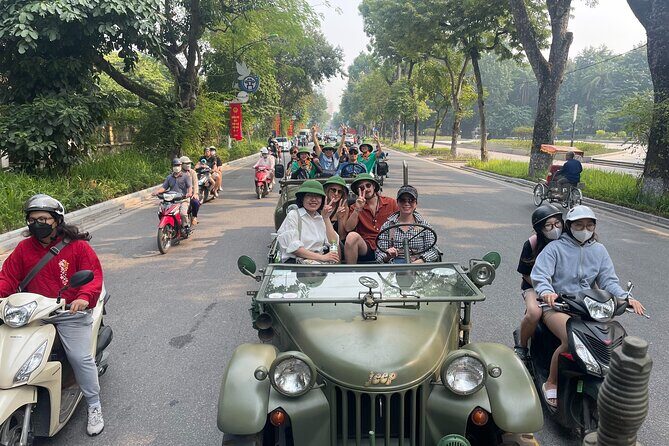
REVIEW · HO CHI MINH CITY
Saigon Historical City Tour On Motorbike – Explore French Quarter
Book on Viator →Operated by Vietnam Street Food Tour · Bookable on Viator
Saigon teaches you fast. This half-day motorbike tour strings together the big French Quarter sights and the heavier history stops, so you get a clear picture of Ho Chi Minh City without spending your whole day in transit.
I especially like two parts. First, you start with free hotel pick-up and drop-off in District 1, 3, or 5, so you’re not wasting time finding a meeting point. Second, you’re riding with a helmet and accident insurance included, plus the scooter, fuel, and even food and drinks.
The main thing to consider is comfort on the ride. This is for riders ages 10+, and there’s also a weight limit of 130 kg, so it won’t work for everyone.
In This Review
- Key highlights that make this tour worth your time
- How the 4-hour Route Works in Saigon Traffic
- Hotel Pickup, Helmets, and Accident Insurance: What Makes It Good Value
- Reunification Palace and Notre Dame: Starting With the Turning Point
- Central Post Office, Opera House, and City Hall Along Walking Street
- War Remnants Museum and the Thich Quang Duc Memorial Stop
- Jade Emperor Pagoda: Colorful Faith and the Barack Obama Connection
- Should You Book This French Quarter Motorbike Tour?
- FAQ
- How long is the Saigon Historical City Tour on Motorbike?
- What does it cost?
- What sights will I see?
- Is hotel pick-up and drop-off included?
- What safety gear and insurance are included?
- Are food and drinks included?
- What are the age rules for kids?
- What is the cancellation window?
Key highlights that make this tour worth your time
- A tight 4-hour circuit covering palace, colonial landmarks, war memorials, and a major temple
- Safety and logistics handled for you with a helmet, accident insurance, scooter, fuel, and rain ponchos when needed
- French colonial details that you’ll actually notice like the Notre Dame construction period (1880–1886) and the Post Office’s link to Gustave Eiffel
- Serious history, not just sightseeing with the War Remnants Museum plus the Thich Quang Duc memorial stop
- Temple time with serious color at the Jade Emperor Pagoda, including a famous Barack Obama visit connection
- Private group feel with only your group participating, making it easier to ask questions
How the 4-hour Route Works in Saigon Traffic

This tour is built for the reality of Ho Chi Minh City: lots to see, limited time, and streets that move fast. You get two possible start windows (morning or afternoon), and the total time is about 4 hours. That makes it a smart first-day plan if you’re trying to get your bearings early, or a good history-focused add-on if you already know your way around.
The rhythm is simple. You’ll bounce between landmarks by scooter, then slow down for walking stops where your guide can point out what matters. The pace works best if you’re okay with short stretches on foot, quick photo stops, and getting back on the motorbike to keep the schedule moving.
One practical plus: food and drinks are included, and there’s time for local-market browsing along the way. In a city where meals can turn into a big time sink, that inclusion matters. You’re not constantly hunting, bargaining, or guessing what’s open. You’re following the route and learning as you go.
You can also read our reviews of more city tours in Ho Chi Minh City



Hotel Pickup, Helmets, and Accident Insurance: What Makes It Good Value
At $26 per person, the value comes from what’s wrapped into the price. This isn’t just a walking tour with a guide. It includes the motorbike, fuel, a high-quality open-faced helmet, and accident insurance. It also covers food and drinks, plus a rain poncho if the weather turns.
For many visitors, the biggest hidden cost in a self-planned day is transport. Here, the tour solves that problem for you—starting with convenient pick-up and ending with drop-off back at your hotel (District 1, 3, or 5, with some exclusions). If you’re staying in those areas, you save energy and you lose less time to logistics.
Safety is not an afterthought. The helmet is provided, and the tour includes accident insurance. You’ll also want to pay attention to ride comfort. An open-faced helmet means you can hear your guide’s directions clearly. It also means you’ll feel the wind. Wear sunscreen and protect your eyes if you’re sensitive to speed and street dust.
One more detail worth knowing: the guide experience is a big reason people rate this highly. A name that comes up is Nathan, praised for careful, safe driving and dedication. Even if you don’t get the same guide, the fact that safety-minded guiding is highlighted gives you a good signal about what the operator values.
Reunification Palace and Notre Dame: Starting With the Turning Point
The tour kicks off at Reunification Palace. This place hits hard in a good way, because it’s not a vague monument. It was the headquarters of the old government before the 1970s. Today it’s preserved as a special heritage site, keeping monuments and remnants that help you understand what kind of power was housed inside.
If you like history that feels physical, this start is ideal. The palace sets the theme: Ho Chi Minh City didn’t just change buildings—it changed systems. As you move through the area, listen for what your guide points out. Even without getting lost in details, you’ll start noticing how architecture and space can reflect political control.
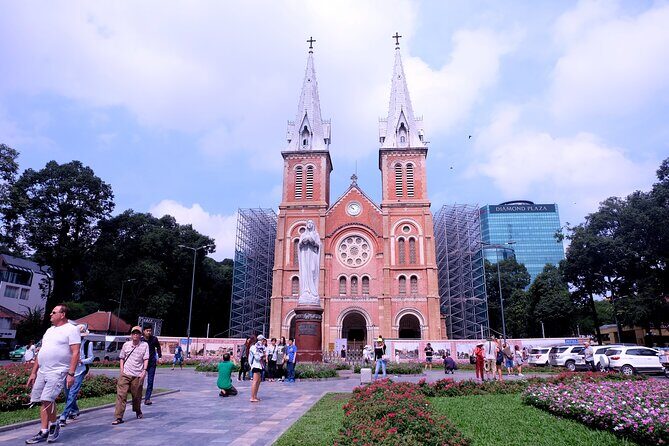
Next up is Notre Dame Cathedral, right nearby. This Gothic-style French colonial landmark was built around 1880 to 1886. One reason it’s a must-stop is that it’s one of the city’s symbols. Another reason: its importance goes beyond local fame—the cathedral was nominated as a basilica by the Vatican.
Here’s a practical tip: treat Notre Dame like a visual reference point. Once you’ve seen it, the other French colonial touches you’ll spot later (especially on the same route corridor) become easier to read. It’s the kind of payoff that helps even if you’re not a hardcore architecture nerd.
Central Post Office, Opera House, and City Hall Along Walking Street

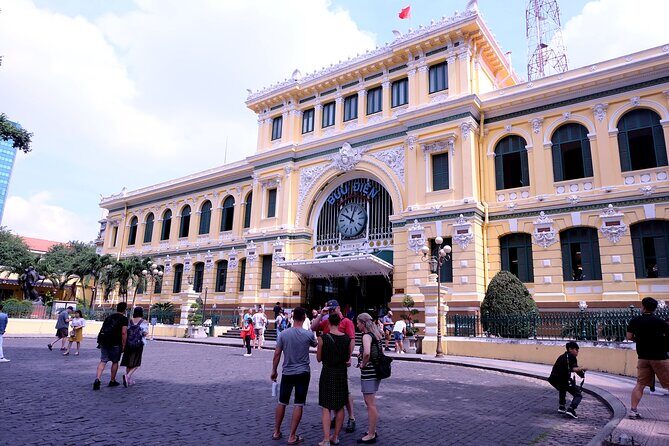
After Notre Dame and the palace area, you’ll reach Saigon Central Post Office. It’s close enough that it makes sense as a “next chapter” stop. This building is symbolic too, and it has a famous design connection: it was designed by architect Gustave Eiffel.
This is the part of the tour where you’ll enjoy learning how European engineering ideas landed in Vietnam. The Eiffel link isn’t just trivia. It gives you a lens for seeing the structure as something more than a photo backdrop. When you notice how the building is laid out and built, the city feels more connected across centuries and oceans.
Then comes a shift from government and religion to culture and ceremony: the Opera House. The tour frames it as an impressive structure, and that’s exactly how it reads when you’re seeing it as a moving photo-op and then again from the street. If you’re into façades and “what style is this?” moments, you’ll enjoy this stop.
Finally, you’ll reach City Hall, located at the end of the Walking Street—also described as a must-visit in Saigon today. City Hall is one of those places where the location matters. Seeing it as the end of a pedestrian-style stretch gives you a sense of how the area functions now, not just how it looked in the past.
One small caution: this segment mixes time on scooters with short walks, so plan your clothing for quick changes. You’ll likely want breathable layers, comfortable shoes, and a light rain plan. The tour includes rain ponchos, which helps, but you’ll still be glad you dressed for wet streets.
War Remnants Museum and the Thich Quang Duc Memorial Stop
The War Remnants Museum is the heavy stop on the route, and it’s not shy about it. The tour’s framing is straightforward: it highlights the sad time in Vietnam’s history. It also gives you perspective on where the country has come from and how it’s moving forward.
This is the stop where you should slow your brain down. Don’t try to speed-read everything. Let your guide’s context land first, then decide what you want to linger on. If you’re sensitive to graphic or emotionally intense material, it’s okay to pace yourself and take breaks. A tour like this can work well because the guide can help you understand what you’re looking at without you having to guess.
Before you get to the museum, there’s a poignant highlight mentioned by the tour: the Thich Quang Duc statue. It recalls a period of protest during the South Vietnam era, when Thich Quang Duc burned himself against draconian policy. It’s powerful history condensed into a single memorial moment, and it sets the tone for why the museum matters.
The best way to use this part of the day is to remember that you’re not just collecting sights. You’re collecting context. In a city that mixes old French-style buildings with modern street life, these two stops help you connect the political timeline to what you see outside the museum walls.
You can also read our reviews of more historical tours in Ho Chi Minh City





Jade Emperor Pagoda: Colorful Faith and the Barack Obama Connection
The final major stop is the Jade Emperor Pagoda—one of those places that looks like it belongs in another world, while still being very much part of daily life. The tour describes it as spectacularly colorful and filled with exquisite statues, dedicated to the King of Heaven.
If you’re the type of traveler who likes temples but hates feeling lost, this is a good match. With a guide on the scooter side and then on foot, you can follow the meaning behind what you’re seeing. That matters here, because the visuals are dense. Color, shape, and symbolism are doing a lot of work.
One extra hook: the pagoda is noted for a famous celebrity connection, specifically a visit by Barack Obama. You don’t need to treat that as the main reason to go, but it does help explain why the site is widely recognized.
As you wrap up, you’ll return toward your hotel with the tour ending in a ride-back and some gifts for visitors. It’s a small touch, but it adds a feeling of closure. After heavy history and bright temple scenes, getting back to your hotel without thinking about transport feels like a win.
Should You Book This French Quarter Motorbike Tour?
I’d book this if you want a short, high-impact history plan and you like learning with a guide while moving through the city. The mix is strong: palace turning point, French colonial icons like Notre Dame and the Central Post Office, then the more difficult material of the War Remnants Museum, ending with the color and symbolism of the Jade Emperor Pagoda. It’s also a good call if you’re staying in District 1, 3, or 5, since pickup and drop-off are included.
Skip it or rethink if you know you won’t enjoy motorbike travel, even with a helmet and insurance. Also be honest about child fit: it’s for riders ages 10+. And if you’re over 130 kg, you’ll need to contact the operator before booking.
If you fall into the sweet spot—curious about history, short on time, and okay with a scooter-based day—this is a solid value. $26 gets you more than a guide. You get a full route, safety gear, transport, food and drinks, and a schedule that keeps you from wasting hours “just getting around.”
FAQ
How long is the Saigon Historical City Tour on Motorbike?
It runs about 4 hours (approx.), and it’s offered as a half-day morning or afternoon option.
What does it cost?
The price is $26.00 per person.
What sights will I see?
You’ll visit Reunification Palace, Notre Dame Cathedral, Saigon Central Post Office, Opera House, City Hall, Walking Street, War Remnants Museum, and Jade Emperor Pagoda, plus stops like the Thich Quang Duc statue and local markets.
Is hotel pick-up and drop-off included?
Yes. Free pick-up and drop-off are included for hotels in District 1, 3, and 5 (some exclusions apply).
What safety gear and insurance are included?
The tour includes a high-quality open-faced helmet and accident insurance, along with the motorbike, fuel, and a rain poncho if needed.
Are food and drinks included?
Yes. All food and drinks are included.
What are the age rules for kids?
There are discounts for children, but you must be ages 10 and above to ride. Children under 5 must follow their parent during the tour.
What is the cancellation window?
You can cancel for free up to 24 hours in advance for a full refund. Changes made less than 24 hours before the start time aren’t accepted.