REVIEW · HO CHI MINH CITY
Cu Chi Tunnels And Ho Chi Minh City Full-day Tour
Book on Viator →Operated by Hoi An Express Travel · Bookable on Viator
Two wars, one long day in Saigon.
You’ll start with the Cu Chi Tunnels—a huge underground network tied to Vietnam’s independence fight and the Vietnam War—then move into downtown Ho Chi Minh City to see major war-era and French-colonial sights. It’s the kind of day that gives context fast, because the schedule connects underground history to what the city still shows today.
I love that the tour handles the money stuff for you: lunch and entrance fees are included, along with transport and bottled water. I also like the small group size, capped at 15 travelers, which helps a tight agenda feel more manageable than big-bus chaos.
One thing to consider: the day is packed for about 9 hours, so a few stops are short photo-and-look moments rather than long wander time. That can be perfect if you want the highlights, but less ideal if you hate rushing.
In This Review
- Key things to know before you go
- How this Cu Chi and Ho Chi Minh City day tour really fits together
- From pickup to the tunnel entrance: what the morning rhythm feels like
- Cu Chi Tunnels: a 250-kilometer underground world (and why the visit matters)
- How to make the most of the tunnel time
- Ba Thien Hau Temple: a quick cultural breather on Nguyen Trai Street
- Notre-Dame Cathedral of Saigon: French-era architecture, fast
- Saigon Central Post Office: a quick stop with included admission
- War Remnants Museum and Independence Palace: where the day’s story lands
- War Remnants Museum: 45 minutes of strong perspective
- Independence Palace (Reunification Palace): a landmark with a big name
- Price and value: does $100 make sense for this mix?
- Getting through the day smoothly: timing, comfort, and expectations
- Tips and money
- Who should book this Cu Chi and Saigon highlights tour?
- Should you book this tour?
- FAQ
- What is the duration of the Cu Chi Tunnels and Ho Chi Minh City full-day tour?
- What time does the tour start?
- How much does the tour cost?
- Does the tour include hotel pickup and drop-off?
- Is lunch included?
- Are entrance fees included?
- Is the tour guided in English?
- How long do you spend at the Cu Chi Tunnels?
- What is the group size limit?
- Can I cancel for a full refund?
Key things to know before you go
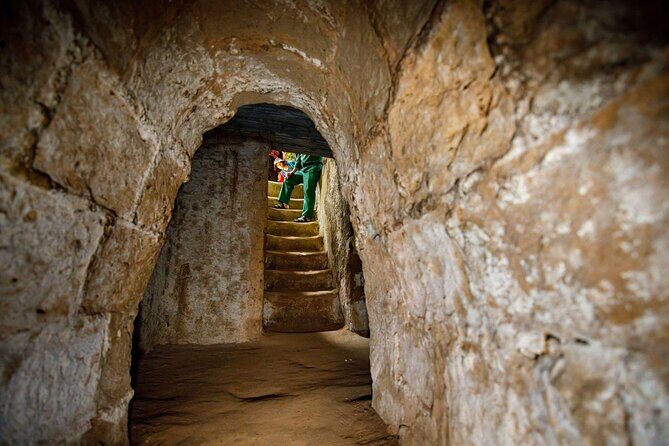
- Cu Chi Tunnels, about 2 hours: Enough time to understand the tunnel network without cutting it too close.
- A tight downtown route: Notre-Dame, the Central Post Office, and other landmarks are quick stops on purpose.
- War Remnants Museum + Independence Palace: These two anchor the day after Cu Chi.
- Lunch and entrance fees included: You won’t need to hunt for tickets mid-day.
- Small group cap (15): Easier pacing and better guide attention.
- English-speaking guidance: Your guide is in English, with other languages possible for a surcharge.
How this Cu Chi and Ho Chi Minh City day tour really fits together
This is a full-day “storytelling” format. You start underground, learning how the tunnel system helped people survive and resist during recent military conflicts, then you surface into the city to see how Vietnam chooses to remember those eras.
The route also keeps you focused on what matters most: the Cu Chi Tunnels for historical context, then central Saigon landmarks that show French-era architecture alongside war-era institutions. If you only have a day in Ho Chi Minh City, this kind of pairing is a smart way to build a mental map quickly.
Plan for an early start. The meeting time is 7:30 am, and the tour runs about 9 hours total. You’ll be picked up in the city center and transported in an air-conditioned vehicle, which is a real quality-of-life bonus in Vietnam’s heat.
You can also read our reviews of more city tours in Ho Chi Minh City



From pickup to the tunnel entrance: what the morning rhythm feels like
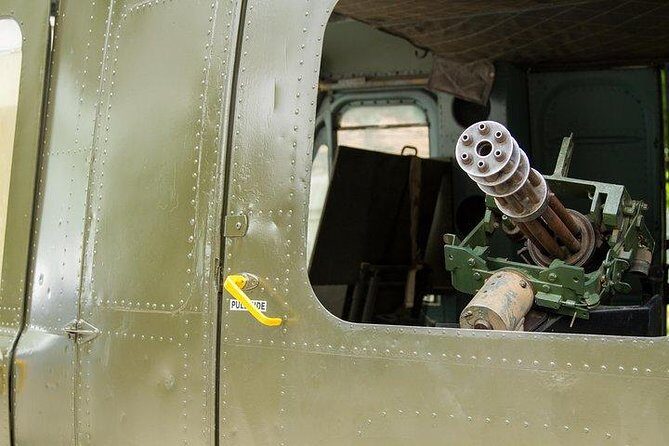
The tour includes hotel pickup and drop-off in Ho Chi Minh City center, plus bottled water and air-conditioned transport. That means you’re not scrambling for Grab rides or trying to line up multiple tickets before you even begin the main event.
The schedule is built around getting you to Cu Chi for a dedicated chunk of time—about 2 hours at the tunnels. For many people, that’s the sweet spot: long enough to learn and see, but not so long that the rest of the city feels rushed.
You’ll also be traveling as part of a group, with a maximum of 15 people. That usually creates a better flow for questions and timing than larger groups, especially when the day includes several “in and out” city stops.
Cu Chi Tunnels: a 250-kilometer underground world (and why the visit matters)
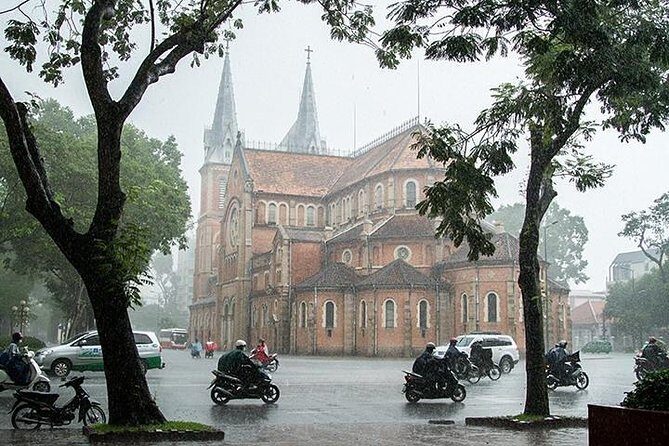
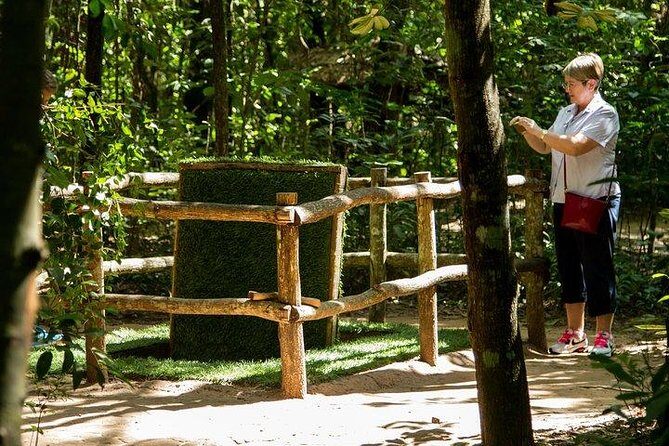
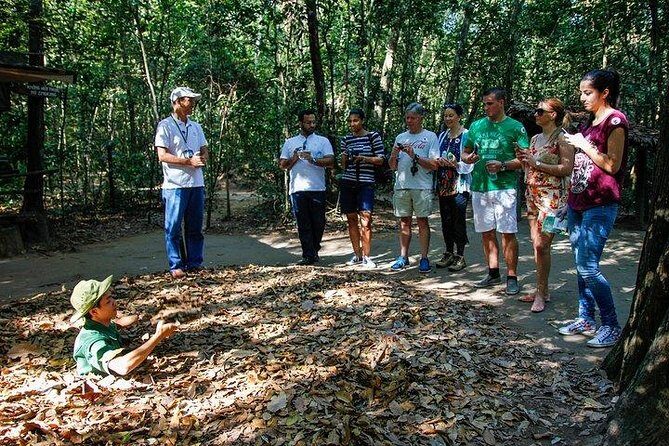
Cu Chi is the centerpiece, and the numbers alone tell you it’s not a small side trip. The tunnels stretch about 155 miles (250 kilometers), and you’ll learn how this sprawling network was created beginning in 1948.
What makes the visit meaningful is the way it connects the physical space to the human story. The tour is designed to explain the tunnels’ role during Vietnam’s independence effort and their importance during the Vietnam War, so you’re not just looking at a historical site—you’re learning why it existed and how it functioned in conflict.
A tour like this also helps you interpret what you see. Underground sites can be confusing if you’re left to guess. With an English-speaking guide (and other languages available for a surcharge), you’re guided through the key points so the tunnel system has meaning, not just atmosphere.
How to make the most of the tunnel time
Because your Cu Chi block is around 2 hours, you’ll want to be ready to listen and take notes mentally. If there’s a particular angle you’re curious about—daily life, survival, strategy—this is the time to ask. Your guide’s job is to connect the dots between the tunnels and the wider war story.
Also, keep expectations realistic. The day doesn’t allow deep, slow exploration of every corner of the site. It’s a “learn the essentials well” kind of stop.
Ba Thien Hau Temple: a quick cultural breather on Nguyen Trai Street
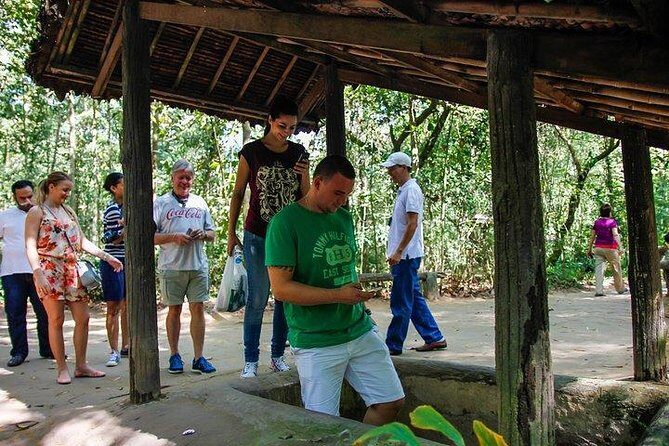
After the tunnels, the pace shifts to the downtown cultural landmarks. Stop two is Ba Thien Hau Temple, located right on busy Nguyen Trai Street.
This stop is short—about 15 minutes—but it has concrete details that make it more than a casual photo stop. You enter through an iron gate and cross a small courtyard, and the roof is decorated with small porcelain figurines made with delicate craftsmanship.
The value here is contrast. After hours of war-related history, a temple stop brings you back to everyday cultural presence. It’s also a reminder that Ho Chi Minh City isn’t only museums and memorials—it’s a living city with spiritual sites embedded right into the street grid.
One practical note: with only 15 minutes, treat it like a “look and learn” stop. If you want long quiet time, you may need a separate visit.
You can also read our reviews of more tours and experiences in Ho Chi Minh City





Notre-Dame Cathedral of Saigon: French-era architecture, fast

Next up is Notre-Dame Cathedral of Saigon. Your stop is brief—around 10 minutes—and admission is free.
This is one of those places where the main payoff comes quickly. Even in a short time, you can get your bearings and enjoy the French-colonial style at the heart of downtown. It’s also useful as a way to connect visual history: you see the older architecture in the same urban space where later war-era history became central.
The drawback is obvious but manageable: you won’t have time for a long interior visit or a slow architectural tour. If Notre-Dame matters a lot to you personally, you’ll likely want to pair this tour with extra standalone time later.
Saigon Central Post Office: a quick stop with included admission
Right after Notre-Dame, you’ll visit Saigon Central Post Office, also near the cathedral. This stop is another 10 minutes, and admission is included.
The post office works well as a short stop because it’s visually striking from the outside and easy to orient around. It’s a good chance to stretch your legs for a moment and reset between the larger history stops.
You can think of this stop as a “marker” on your mental map: French-era infrastructure, colonial influence, and a downtown landmark you can return to later if you want. The included ticket helps too, since you don’t have to figure out pricing or lines on the spot.
War Remnants Museum and Independence Palace: where the day’s story lands
This is where the tour earns its keep. After Cu Chi, you move into two major institutions that shape how Vietnam presents the war period and the turning points afterward.
War Remnants Museum: 45 minutes of strong perspective
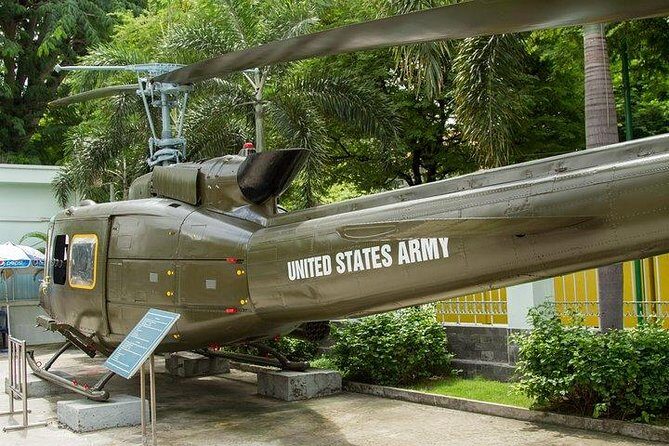
Your War Remnants Museum stop lasts about 45 minutes with admission included. The museum is operated by the Ho Chi Minh City government.
You’ll also get the historical background that the museum’s roots go back to an earlier opening on September 4, 1975, when it functioned as the Exhibition House for US and Puppet Crimes. Later, it evolved after 1995, following normalization of diplomatic relations (the tour materials provide this timeline).
This matters because museums don’t just show objects—they show viewpoint. Having context helps you make sense of what you’re seeing and why the museum was structured the way it was. The guide support is important here because the emotional impact of war-related exhibits can be intense, and you’ll get help connecting themes across the rooms.
Independence Palace (Reunification Palace): a landmark with a big name
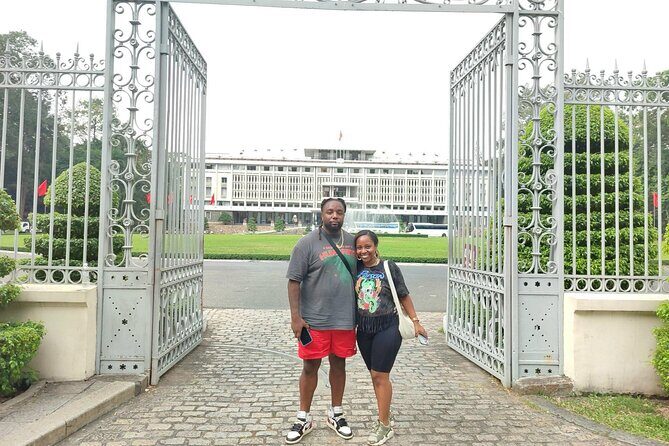
Then you’ll visit Independence Palace, also known as the Reunification Convention Hall. This stop lasts about 1 hour and admission is included.
The palace sits on the site of the former Norodom Palace. Even if you’re not a details-only architecture person, it’s the kind of landmark where the location itself matters because it relates to major historical events.
The tour pairs Independence Palace with the museum for a reason. Cu Chi explains conflict and survival underground. The museum and palace shift the story toward national turning points and how the war ended—so the day feels like one timeline rather than random stops glued together.
Price and value: does $100 make sense for this mix?
At $100 per person, this is not the cheapest way to spend a day in Ho Chi Minh City. But it can be good value because a lot of costs are bundled in.
Your ticket includes:
- Hotel pickup and drop-off in the city center
- Air-conditioned transportation
- Lunch
- Entrance fees
- English-speaking guide (other languages possible with a surcharge)
- Bottled drinking water
- Travel insurance
When you compare that to doing it piece by piece—transport, tickets, and guide time—the bundled format usually costs less than you’d spend trying to assemble everything yourself on a tight schedule. It’s especially useful if you’re short on time and don’t want to coordinate multiple departures.
Also, the tour notes group discounts and a small group cap. In practice, that often means the guide can keep the schedule moving without leaving you behind or wasting time herding a crowd.
Getting through the day smoothly: timing, comfort, and expectations
This is a full-day agenda with several quick stops, so your biggest enemy is time pressure. The good news: because pickup and admissions are handled, you’re not losing minutes to logistics.
Here are a few practical ways to make the day feel better:
- Wear comfortable shoes. You’ll be walking and moving between stops for hours.
- Keep your phone charged. The tour uses a mobile ticket, and you’ll want it handy.
- Plan for a “listen then look” rhythm. At Cu Chi and the museum, the guide’s explanation is a big part of why this tour works.
- Bring a bit of patience for the quick landmark stops. Notre-Dame and the post office are each around 10 minutes, so treat them like checkpoints.
Tips and money
Lunch is included, but tips and gratuities are not. If you like to tip, set aside a little cash or plan to tip via whatever method the guide indicates.
Who should book this Cu Chi and Saigon highlights tour?
Book it if you:
- Have limited time in Ho Chi Minh City and want a structured way to learn the Vietnam War context.
- Like pairing a major historical site (Cu Chi) with central city landmarks in one day.
- Appreciate an English-speaking guide and want admissions and lunch handled.
Consider skipping or adding extra time if you:
- Hate tight schedules and prefer slow, independent visiting.
- Want to spend lots of time inside buildings like Notre-Dame beyond quick stops.
- Prefer to focus only on one topic, like purely war history or purely architecture.
This tour is best for people who want clarity and momentum. It’s not a long, unhurried study of every site. It’s a day designed to help you get the story without needing multiple days.
Should you book this tour?
If you’re looking for a single-day way to connect underground history at Cu Chi Tunnels with major downtown sites like the War Remnants Museum and Independence Palace, I think this is a solid choice. The best part is the value mix: guide + transport + lunch + entrance fees, all in a schedule that fits about 9 hours.
If your idea of a great trip is slow wandering and deep sitting, you may feel rushed. But if you want the big ideas and the essential sights without extra planning, this tour does exactly that.
FAQ
What is the duration of the Cu Chi Tunnels and Ho Chi Minh City full-day tour?
The tour is about 9 hours.
What time does the tour start?
The start time is 7:30 am.
How much does the tour cost?
The price is $100.00 per person.
Does the tour include hotel pickup and drop-off?
Yes. Hotel pickup and drop-off are included for Ho Chi Minh City center.
Is lunch included?
Yes. Lunch is included.
Are entrance fees included?
Yes. Entrance fees are included.
Is the tour guided in English?
Yes. The tour includes English-speaking guides. Other languages may be available with a surcharge.
How long do you spend at the Cu Chi Tunnels?
You spend about 2 hours at Cu Chi Tunnels.
What is the group size limit?
The tour has a maximum of 15 travelers.
Can I cancel for a full refund?
Yes. You can cancel up to 24 hours in advance for a full refund. If you cancel less than 24 hours before the start time, the amount paid is not refunded.